Languages
Wednesday, October 21, 2026



News and Views from the Global South
Somalia
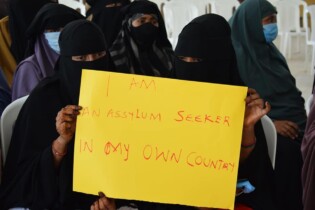
Stateless at Home: Kenyan Somalis Struggle to Reclaim Citizenship from Refugee Records
In 2006, Amina Saida was only two years old when her parents moved to the Dadaab refugee camp in northern Kenya, near the border with Somalia.
Regaining Progress on Birth Registration Is Critical to Child Protection
Registering the birth of a newborn, which is taken for granted in many countries, has profound lifelong repercussions for a child’s health, protection, and well-being. But after initially increasing this century, the global birth registration rate has declined in the past ten years, with some countries in the Pacific and Sub-Saharan Africa facing significant challenges. Embracing new registration technologies, increasing political will, and increasing parents’ understanding of its importance are paramount to reversing the trend.
Intra-Regional Relations the Key To Sustainable Development in the Horn of Africa
The Horn of Africa holds the resources and potential for lasting development and resilience. The countries in the subregion and development partners need to come together to invest in regional cooperation and resource management.
Embedding Education into Climate Finance Will Deliver Desired Learning, Climate Action Outcomes
Education is under threat as multiple crises push children out of school and into harms way. COP29 Baku could break historical barriers that hold back education from playing a unique, critical role to accelerate the ambition of nationally determined contributions (NDCs) to the Paris Agreement, protecting people and planet from life-threatening risks of climate change.
Education Cannot Wait Investments Transform Children’s Lives in Somalia
Ten-year-old Sabah Abdi from Ali Isse, a small rural village on the Somaliland-Ethiopian border, scored well in her recent exams, placing third overall in her local village school of 400 students. Yet is was just three years ago Sabah spent her days helping with household chores and herding goats, rather than studying because her pastoralist family could not afford her school fees.
Horn of Africa Drought Threatens Re-run of Famines Past
Humanitarian groups and the United Nations are warning of another drought in the Horn of Africa, threatening a repeat of the deadly dry spell and famine that claimed lives in Somalia and its neighbours eight years ago.
Mobilisation Needed for Climate-Related Disasters
Climate-related displacement and food insecurity is not a future possibility, but it is already happening and it’s only projected to worsen without urgent action in coming years.
Ethnic Violence in Ethiopia Amid Shadowy Politics
Ethnic animosity unleashed in Ethiopia has displaced hundreds of thousands as well as rendering all manner of usually sacrosanct loyalties obsolete.
Khat in the Horn of Africa: A Scourge or Blessing?
Throughout a Sunday afternoon in the Ethiopian capital, Yemeni émigré men in their fifties and sixties arrive at a traditional Yemeni-styled mafraj room clutching bundles of green, leafy stalks: khat.
South Sudan Declares Famine, Other Countries May Follow Warns UNICEF
South Sudan Monday became the first country to declare famine since 2012, as UNICEF warned that 1.4 million children are at risk of dying from starvation with famine also imminent in Nigeria, Somalia, and Yemen.
Still in Limbo, Somaliland Banking on Berbera
Crossing African borders by land can be an intimidating process (it’s proving an increasingly intimidating process nowadays in Europe and the US also, even in airports). But crossing from Ethiopia to Somaliland at the ramshackle border town of Togo-Wuchale is a surreally pleasant experience.
From Somalia to Afghanistan: The Dangers Local Journalists Face
On Sunday, June 5, three reporters were killed: Somali broadcast journalist Sagal Salad Osman, Aghan journalist Zabihullah Tamanna, and American photojournalist David Gilkey.
Response to Ethiopia’s Drought: A Story of Success or Anguish?
 Inside a health clinic run by the Catholic Daughters of Saint Anne, a nurse wraps a special tape measure around the upper arm of 2-year-old Rodas cradled in her mother’s arms. The tape reads yellow, meaning “moderately” malnourished, according to the attending nurse.

CPJ: Two Thirds of 2015 Journalist Deaths were Acts of Reprisal
Of the 69 journalists who died on the job in 2015, 40 per cent were killed by Islamic militant groups like Al-Qaeda and Islamic State. Startlingly more than two-thirds were targeted for murder, according to a special report by the Committee to Protect Journalists.
Migrants Waiting Their Moment in the Moroccan Mountains
In the middle of the mountains behind the border fence of Ceuta, the Spanish enclave in Morocco, and eight kilometres from the nearest Moroccan village of Fnideq, an uncertain number of migrants live in the woods. No one knows exactly how many they are but charity workers in Melilla, Spain’s other enclave in Morocco, say they could be in their thousands.
Impeachment Motion Stirs Political Waters in Somalia
The impeachment motion Somali parliamentarians filed against President Hassan Sheikh Mohamud on Aug. 12 has created a political standoff that might further threaten the country’s stability shortly ahead of planned elections in 2016.
Winning Women a Greater Say in Somaliland’s Policy-Making
Bar Seed is the only female member in Somaliland’s 82-person Parliament, but activists hope upcoming national elections may end her isolation.
Somali-Based Pirates Down But Not Out
While the economic cost of Somali piracy has fallen and considerable progress has been made in deterring pirate operations, the latest attacks on Iranian fishing vessels by Somali pirates in the Indian Ocean may be another signal that it is too early to cut back international counter-piracy efforts, according to a new report.
The U.N. at 70: Is It Still Fit for the Purpose?
Events are being organised around the world to celebrate the 70th anniversary of the founding of the United Nations, but a recent seminar held in the Austrian capital was not held to applaud the body’s past contributions.
Migrants Between Scylla and Charybdis
Not even a month has passed since over 700 hundred migrants lost their lives in their attempt to reaching the shores of Italy and the media spotlights have already faded on the island of Sicily, Italy’s southern region and main gateway to Europe.
U.N. Helpless as Crises Rage in 10 Critical Hot Spots
The United Nations is fighting a losing battle against a rash of political and humanitarian crises in 10 of the world’s critical “hot spots.”Next Page »





The Week with IPS

NEXT STOP - SDGs
Tracking global progress towards a sustainable world
Tracking global progress towards a sustainable world
