Languages
Sunday, October 11, 2026



News and Views from the Global South
Southern Africa

ANGOLA: Law on Domestic Violence a Step Forward for Women’s Rights
Domestically abused women who are financially dependent on their abusers can now report the crime with the assurance that they will be able to get financial and medical support from the state, thanks to the country’s new law on domestic violence.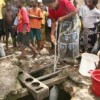
SOUTHERN AFRICA: Majority Still Lack Access to Safe Water
Only two in every five people in the Southern African Development Community has access to safe water for drinking and household use. Three quarters of those lacking access, live in rural areas and the majority of these are women and children.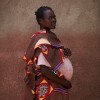
SUDAN: Starting from Scratch
In their hundreds of thousands they have crossed the border, arriving by boat, bus or on foot. After decades of civil war with the north, South Sudanese have come back home to witness the birth of their new nation on Jul. 9. The fight for independence has come to an end, but for many returnees, the struggle is far from over.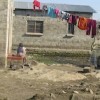
ZAMBIA: Millions Meant for the Poor Stolen or Missing
Every year the Zambia government allocates billions of Kwacha for poverty reduction, but much of the money has been stolen or misappropriated.
SOUTH AFRICA: Scientists Find Green Method to Purify Toxic Water
South African scientists have developed an environmentally friendly method to clean highly toxic water and convert it into drinkable water. Once available commercially, the method could drastically reduce the negative impact industry has on water pollution worldwide.ZIMBABWE: The Impossible Search for a Hangman
For over four years now, Tendai Dzingirai * has lived each day afraid that it may be his last. Dzingirai is one of almost 60 inmates on death row in Zimbabwe’s prisons. But like the other prisoners, Dzingirai does not know when he will finally meet his fate – especially since the country has not had an executioner for the last six years.
Women Keen to Ease Greenhouse Effect on Their Ability to Provide
A successful entrepreneurial programme in the north of Namibia that infuses farming practices with gender-responsive environmentalism may serve as a model for other countries on the African continent.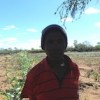
SOUTHERN AFRICA: Trying to Access Funding for Climate Change
Leaving out non-governmental organisations in climate finance strategies will result in little impact on the ground in the southern Africa region.TRADE: Brazil and Africa Ready to Do the Samba
African trade with India and China flourished over the past decade but, with unemployment rising and industrialisation failing to take hold, cracks are appearing in Africa’s much-vaunted "Look East" doctrine. Meanwhile, from across the Atlantic, Brazil is making inroads into the continent.
ZAMBIA: “Every Year Flooding Makes This Place a Little Hell”
During the rainy season, and many weeks afterwards, home is never the best place to be for Miriam Banda. Until the end of 2008, she enjoyed living at her house in Kanyama, a high-density settlement bordering the central business district in Lusaka, Zambia's capital.
SUDAN: The Point of No Return
From across the border, they anxiously watch the drama unfold. As their home land of South Sudan prepares itself to split from the Islamic north, fighting continues across the disputed oil-rich areas. During the decades of civil war, almost 400,000 refugees dreamt of the day independence would come. But now it is finally there, many are not ready to go home.
CLIMATE CHANGE: Water Sources Need to be Protected
Seventy-five-year-old Verdiana Protas is worried that the 20 cattle she bought with her pension money will soon die because the 10-kilometre-long river in her village in northwest Tanzania has been dry for two years now and finding alternative sources of water is getting more and more difficult.
Q&A: “Africa Can Provide More Than Minerals in South-South Trade”
South-South co-operation is firmly on Africa’s agenda. Leading the way is South Africa, which has recently joined up with Brazil, Russia, India and China’s BRIC formation to form a new global grouping of emerging markets, known as BRICS.
NAMIBIA: Investing in the Health of Farm Workers
In one of the most sparsely populated countries on the planet, people travel up to 200 kilometres in the simmering heat to see a nurse or get basic medication.
SOUTHERN AFRICA: Getting Water to the People
The Southern African region is underutilising its water – a resource to which its citizens already have limited access.Africa-Wide Trade Zone Could Boost South-South Cooperation
The plan to create a new 26-nation liberalised trade zone for Africa, spanning the length of the continent from Cape to Cairo, could open up more possibilities for South-South cooperation that would benefit Africans.
ZIMBABWE: Harvesting Water for Food Security
Earth mounds running across her field hold back the water that Caroline Ndlovu uses to grow maize, pumpkins, beans and watermelons long after the short rainy season in this arid part of Zimbabwe.
DR CONGO: Water Shortages Grip the Capital
In recent months, no one in the Congolese capital has been spared the effects of water shortages. Where spending entire days criss-crossing Kinshasa in search of water with battered containers in hand was previously the unhappy task of women and children, now men in suits have joined the fray.MALAWI: Power Interconnection Project Costly but Needed
In Malawi’s administrative and commercial capitals, Lilongwe and Blantyre, two things are clear, especially at night: blackouts and the sound of generators in various workplaces.
Gender Indicators for Global Climate Funds Still an Afterthought
Of the millions of dollars spent on climate change projects in developing countries, little has been allocated in a way that will benefit women. Yet, in Africa, it is women who will be most affected by climate change.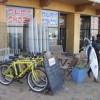
AFRICA: Bike-Share Systems Already Thrive
One winter morning in central Cape Town, despite the gale force wind and the threat of rain, Jacques Sibomana, who was going to be ‘up and down the city all day’, decided he’d rather cycle than brace against the wind on foot.« Previous Page — Next Page »





The Week with IPS

NEXT STOP - SDGs
Tracking global progress towards a sustainable world
Tracking global progress towards a sustainable world
