Languages
Sunday, October 4, 2026



News and Views from the Global South
Southern Africa
ECONOMY: South Africa Prepares to Head Into the BRIC fold
South Africa’s inclusion in the BRIC group of powerful emerging economies has sparked intense debate, with some saying it has done itself a disservice by trying to punch above its weight, and others lauding the inclusion as a step towards becoming a more important player on the global stage.ZIMBABWE: In the Eye of the HIV/Aids Storm
Teenage commercial sex workers are finding themselves at the centre of the HIV/AIDS storm amid concerns of widespread lack of condom use and a spike in the number of infections among this demographic, despite the country’s continuing HIV/AIDS campaigns, which health authorities say has seen a drop in prevalence in the past few years.
ECONOMY: Namibia Embarks on Nuclear Policy
Namibia is set to develop its rich uranium resources and intends to pursue uranium enrichment locally. It also plans to build its own nuclear electricity plant.
Cassava Combating Rural Hunger in Zambia
In Zambia, a silver lining has emerged for widespread rural hunger and poverty, thanks to homegrown agricultural research. Local scientists have successfully developed four new, early-maturing and high- yielding cassava cultivars in an ambitious research project conducted in the cassava-rich Luapula Province, under the on-going Root and Tuber Improvement Programme (RTIP).HIV/AIDS: Fund Rejection Worries Health Campaigners
Health rights activists in Malawi are expressing concern over the recent rejection of the country’s proposal for close to six hundred million dollars to the Global Fund to fight HIV, tuberculosis and malaria between 2011 and 2016.
HUMAN RIGHTS: Mauritian Sex Workers Demand Rights
"Sex workers rights are human rights", close to a hundred people shouted during a recent march in Rose-Hill, a major town in Mauritius. Their aim was to sensitise the population, particularly the parliamentarians, to the state of sex workers on the island.
AGRICULTURE – SOUTH AFRICA: Small Scale Farmers Face Uphill Battle
Just before sunrise 39-year -old Alan Simons, an emerging small-scale farmer, gets ready for his usual nine-hour day of harvesting, packing and deliveries. In his black Nissan van he drives ten kilometres to the seaside town of Strand outside of Cape Town to pick up his six workers, all of who are women.MALAWI: Women Claim Equal Share of Family Property
Seated on a wooden bench at her Katoto township house in Mzuzu, Grace Mkandawire’s face reflects the traumatic experiences she has endured since her husband’s death in 1998. She looks lost and confused and as she narrates her story there is fear, hatred and resignation that Malawi’s Marital Property Law of (1882) disenfranchises poor women like her.
POLITICS- NAMIBIA: Numbers of Women in Government Declining
Twenty years after independence, representation of women in senior government structures and in Parliament is declining in Namibia. According to the latest demographic survey results of August 2010, out of a population of around 2 million, women outnumber men 10:9. In 2001, the ratio was 94 males per 100 females.
MAURITIUS: They Do Politics Differently
"I do politics every day, but partisan politics? No, thank you," says Jane Ragoo, long-time trade unionist and social worker. She believes in working to bring about change in society and improve people’s lives but has no interest in clambering onto a truck to campaign for office.
AGRICULTURE: Desperation Over Subsidies
As the rains start to fall in Malawi, marking the beginning of the growing season, government is continuing to implement the fertiliser and seed subsidy programme which has since made the country a bread basket in the Southern African Development Community, SADC.
WATER: Early Rains Rekindle Interest in Rainwater Harvesting
In Thembekie Gwebu’s yard under the roof leaves stands a curious giant green plastic container with a plastic pipe connected to the gutter. She has been asked a number of times by curious visitors and passers-by what the contraption is, and she happily explains.
WATER: Miracle Man Eases Village’s Water Woes
Hermes Chimombo, a welder in his 50s, is a revered man in the impoverished Naotcha Township. Armed with rudimentary tools and a passion to ease people’s suffering, he has tapped a spring in the mountain above the slum to provide water for its 25,000 residents.LABOUR-ZIMBABWE: Redundancy Discrimination Fears for Women
Unskilled female workers employed in Zimbabwe’s struggling textile, security and other industries say they are increasingly finding themselves at the front of the redundancy line in cases that the affected women say reek of gender discrimination.
TB Care Moves to the Community in Swaziland
Ntombikayise Mabelesa (36) is a recovering multi-drug-resistant (MDR) TB patient from Hoseya in the southern part of Swaziland.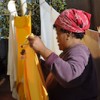
SOUTH AFRICA: Violence, Exploitation Fail to Dissuade Female Migrants
Since arriving in Cape Town five years ago, Erina Manyene (not her real name) has eked out a meagre living picking up shifts doing laundry and cleaning other people's homes in the city's leafy southern suburbs.
Southern Africa Collectively Gearing Up For REDD
The Southern African Development Community (SADC) is moving to support its member countries to tap into benefits from the reducing emissions from deforestation and forest degradation (REDD) framework.ZIMBABWE: Sixteen Days of Activism Not For All, Say Police
Hundreds of residents from civil society organisations marched in the streets of Bulawayo on Dec. 1 to mark the 16 days of Activism Against Violence Against Women and Girls . But sex workers and members of gay groups were barred by police from joining the demonstration.
AFRICA: Food Versus Biofuels Debate Continues
"We’re going to Cancún no better off than we were in Copenhagen," said Thuli Makama, the director of Friends of the Earth Swaziland, as she prepared to leave for the climate negotiations in Mexico.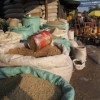
DEVELOPMENT-MOZAMBIQUE: Hunger Stalks 55 Percent of Adults
Baptista Macule is sitting on a sack of groundnuts in a dusty side-alley near the sprawling, makeshift Malanga market on the outskirts of Maputo. He squints into the sun as he tries to explain the extent of poverty in his country.
AFRICA: Threat of a Perfect Storm – AIDS and a Fresh Food Crisis
In November, the Food and Agriculture Organisation was just one of many voices warning that food prices have risen to levels last seen at the start of the 2007-2008 crisis. A majority of the countries most exposed to a repeat of that problem are in Africa, where vulnerability to food security is exacerbated by AIDS.« Previous Page — Next Page »


The Week with IPS

NEXT STOP - SDGs
Tracking global progress towards a sustainable world
Tracking global progress towards a sustainable world
