Languages
Sunday, September 27, 2026



News and Views from the Global South
Troubled Waters

WATER-ANGOLA: Smart Relief Needed as Floodwaters Fall
The flood waters are starting to recede as the rainy season ends for another year, but while the emergency is over in southern Angola, the long term outlook is bleak.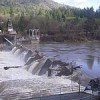
ENVIRONMENT-US: Free-Flowing Rivers Back in Vogue
It may come as no surprise that a dam impeding the flow of a major river would negatively impact fish populations, but it is only recently that benefits of free-flowing rivers in the U.S. Pacific Northwest are beginning to be valued more than those of dams.ENVIRONMENT: Extraordinary Abundance of Life in Oceans Past
Imagine large pods of mighty blue whales and orcas darkening the waters off Cornwall, England, while closer to shore blue sharks and thresher sharks chase herds of harbour porpoise and dolphins.ZIMBABWE: Long Road to Water Sustainability
As funds begin trickling in for Zimbabwe’s reconstruction efforts, the rebuilding of infrastructure battered by years of neglect is set to gobble a huge chunk.BURMA: Nature Conspires Against Cyclone Victims, Denying Them Clean Water
A year after powerful Cyclone Nargis tore through Burma’s Irrawaddy Delta and southern Rangoon, killing tens of thousands of people, nature continues to play a cruel trick on survivors.ENVIRONMENT: Deep CO2 Cuts May Be Last Hope for Acid Oceans
Ocean acidification offers the clearest evidence of dangers of climate change. And yet the indisputable fact that burning fossil fuels is slowly turning the oceans into an acid bath has been largely ignored by industrialised countries and their climate treaty negotiators, concluded delegates from 76 countries at the World Oceans Conference in Manado, Indonesia.MADAGASCAR: Education Hampered by Lack of Clean Water
Because most schools in Madagascar have no access to running water, lack of hygiene and sanitation have become a major problem for children on the Southern African island. Many pupils fall sick regularly, are unable to attend classes and hence don’t perform well at school.
WATER-GHANA: Something Doesn't Add Up
It looks like someone is not telling it as it is as far as meeting the Ghana’s Millennium Development Goals (MDG) on water supply is concerned.POLITICS: Maritime Treaty Would Boost U.S. Interests, Report Says
The U. S. should quickly accede to the U.N. Convention on the Law of the Sea, according to a new Council on Foreign Relations (CFR) report.CHILE: Scientist Warns of Threats to Rock Glaciers
A new government policy on glaciers adopted by Chile "is a step forward, but it doesn’t resolve all of the problems," German geographer Alexander Brenning, who blames mining companies for threats to this South American country’s rock glaciers, told IPS.
WATER-SOUTHERN AFRICA: Strengthening River Basin Management
Many of the adverse effects of floods which swamped northwest Botswana in early March could have been avoided if the Okavango River Basin Commission (OKACOM) had an early warning system in place.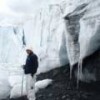
PERU: Water Isn’t for Everyone
The melting of glaciers resulting from climate change and the lack of adequate water management policies seem to be the main causes behind the water shortages that are fuelling conflicts in Peru.WATER-GUINEA BISSAU: Neglecting Infrastructure at the People’s Peril
The most recent cholera outbreak in Guinea-Bissau killed 225 people before it was brought under control in February; 14,000 people were infected by the water-borne disease, most of them in the capital, Bissau.
PERU: Where the Poor Pay More for Water
In Lomas de Manchay, an area of slum-covered hills outside of the Peruvian capital that is home to 50,000 people, mainly poor indigenous migrants from the highlands, clean water is worth gold – almost literally.
NAMIBIA: Tens of Thousands Displaced by Flooding
Namibia is experiencing flooding on a scale last seen nearly 50 years ago. The northern parts of the country are the worst hit.DEVELOPMENT: U.N. Offers New Political Profile for Sanitation
When the United Nations concluded its International Year of Sanitation (IYS) last December, it left behind some 2.5 billion people worldwide waiting in line for toilets that did not exist or were in short supply.ARGENTINA-BRAZIL: Planned Dam Above Famous Falls Draws Fire
While a dispute between Argentina and Uruguay over a pulp mill simmers on, a new environmental conflict over a border river is taking shape, this time involving a hydroelectric dam between Argentina and Brazil.
ZIMBABWE: Researchers Developing New Ways to Purify Water
Scientists at Bulawayo's National University of Science and Technology (NUST) have embarked on research to develop simple and affordable water purification methods, as more than a billion people live without safe drinking water in developing countries.DEVELOPMENT: Troubled Waters Hard to Bridge
The fifth World Water Forum (WWF) held in Istanbul ended Sunday with wide- ranging differences among governments and groups with an interest in water.
SOUTH AFRICA: Water Meters for the Poor: New Name, Old Problems
Many poor communities in South Africa continue to struggle for their constitutional right to clean, safe drinking water.
Q&A: Women’s Special Water Needs Find Voice
Climate change and corrupt practices are considered root causes for a potential water crisis of global proportions, leading to scarcity where water is needed most and flooding where it is needed the least.« Previous Page — Next Page »


The Week with IPS

NEXT STOP - SDGs
Tracking global progress towards a sustainable world
Tracking global progress towards a sustainable world
