Languages
Friday, October 23, 2026



News and Views from the Global South
Food Systems
Bangladesh’s Hidden Climate Bill: How Much Are We Losing Without Counting It?
Bangladesh has earned global recognition for reducing deaths from cyclones and floods. Early warning systems, cyclone shelters, embankments and community preparedness have transformed the country’s disaster response. Yet another climate crisis is receiving far less attention: the economic damage climate change is quietly inflicting on households, farmers, workers, businesses and public finances.
As Winter Approaches, Afghanistan Faces Record Hunger and Mounting Human Rights Abuses
In recent months, Afghanistan’s humanitarian crisis has severely deteriorated, with the UN reporting record-high levels of acute malnutrition and hunger. Compounded by rampant human rights violations, limited access to basic services, and persistent barriers to humanitarian aid, the UN warns that conditions could considerably worsen in the coming months.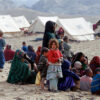
Food Insecurity and Child Malnutrition Worsen in Afghanistan Despite Strong Agricultural Season
Nearly 40 percent of the population of Afghanistan is projected to face high levels of acute food insecurity this winter, and cases of acute malnutrition are expected to soar during 2027, the Food and Agriculture Organization of the United Nations (FAO) and the United Nations World Food Programme (WFP) warned.
‘Prioritize Social Inclusion as Rapid Transformations Risk Leaving Millions Behind’
The United Nations Department of Economic and Social Affairs (UN DESA) new report, which addresses the rapid global transformations driven by artificial intelligence (AI), demographic shifts, climate change, and conflict, highlights the widening disparities in employment, social inclusion, and access to services.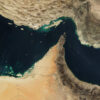
Middle East Escalation Could Leave 11.7 Million More Women and Girls Facing Food Insecurity by End-2026
An additional 11.7 million women and girls could face food insecurity by the end of 2026, as the escalation in the Middle East and disruption to the Strait of Hormuz drive up food prices and strain livelihoods and household resources, according to a new UN Women analysis published today.
Workers Help Feed the World but Starved of Dignity
A new report reveals widespread labour exploitation among food system workers, warning that keeping the world fed comes at the cost of human dignity.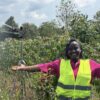
Renewables, Farmer Aggregation Offer Solutions to Africa’s Post-Harvest Losses
Post-harvest losses, particularly in rural areas, threaten the gains Africa is making in agricultural production and export capacity.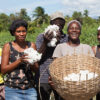
If We Can Start an Epoch, We Can Start a Farming Revolution
In November 1952, the United States detonated the world's first thermonuclear device at Enewetak Atoll in the Marshall Islands. The test, code-named Ivy Mike, erased the island of Elugelab and scattered a signature of plutonium across the planet that remains in lake beds, ice sheets and ocean sediments today.
“The Price of a Narrow Metric: Why Vulnerability Must Count”
From a distance, an island nation can appear to possess everything: pristine waters, a thriving tourism industry and a strong cultural identity. Its income figures may suggest prosperity.
BRICS: Growing Ambition, Zero Accountability
At the 18th BRICS Summit, held on 12 and 13 September in New Delhi, India’s Prime Minister Narendra Modi brought together presidents Xi Jinping of China, Vladimir Putin of Russia and Masoud Pezeshkian of Iran, along with Abu Dhabi’s Crown Prince, Sheikh Khaled bin Mohamed bin Zayed, representing the United Arab Emirates (UAE). Around the table sat longstanding rivals such as India and China and, in the case of Iran, Saudi Arabia and the UAE, states on opposite sides of an ongoing war. That the summit produced a joint declaration every member could sign was a modest multilateralist success.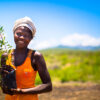
What Faith Can Teach Agriculture
Years ago, standing in a small farmer's field in Haiti, I began to suspect that we had agriculture backward. The development world saw a man in need of rescue. I saw a farmer who might help rescue the rest of us.
Fragmented Policies Hold Back Agroecology Adoption in Africa’s Congo Basin
Agricultural, land, forestry, environmental and trade policies in the Congo Basin remain compartmentalised at country levels, leaving proven agroecological models trapped at pilot stages due to a lack of advisory services, organic inputs, market outlets and sustainable financing.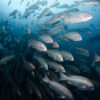
Norway’s Development Rethink Should See Ocean Investment as a Strategic Interest
As Norway undertakes Vendepunkt, or “Turning Point,” its reflection on the future of Norwegian development policy, it is critical that oceans remain a priority. Donors around the world are running similar audits, deciding which long-term partnerships to keep, and why. Norway has decades of expertise to offer, but also something significant at stake: healthy and well-governed oceans underpin food, livelihoods and economic activity in partner countries while supporting global seafood supply chains in which Norway itself participates.
When African Smallholders Access Finance, They’ll Show You What’s Possible
I was born in Rwanda, but my family soon became refugees in Uganda during the conflict and unrest on the cusp of independence. My father was a teacher and went to great lengths to make sure I was well educated. My parents were also smallholder farmers, and I saw firsthand the challenges my parents and other refugee families faced.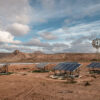
Africa Has the Technology to Achieve Food Security—Now It Needs Coordinated Deployment
Africa is emerging as the world’s fastest-growing technology market, with its innovation ecosystem attracting increasing global investment. The European Investment Bank’s recent €40 million commitment to the sector underscores this growing confidence.
United Nations Least Developed Country Category – Curse or Boon?
The UN General Assembly will soon vote – most likely favourably – on Bangladesh’s request to postpone the country’s graduation from the UN’s Least Developed Country (LDC) category, currently scheduled for November this year. The request for a 3-year extension was endorsed by the ECOSOC following the recommendation of the UN’s Committee for Development Policy (CDP). It is highly likely that the extension will also be justifiably granted to Nepal and Lao People’s Democratic Republic (Lao, PDR) – the two other countries scheduled to graduate with Bangladesh, given the fast deteriorating global economic situation and recent natural disaster in Nepal. In fact, the same argument for an extension may be admissible to all prospective graduating countries, such as Solomon Islands (2027), Cambodia (2029) and Senegal (2029).
African Farmers Demand Affordable Finance as Governments Fall Short on Funding
Agriculture remains underfunded in Africa as governments struggle to deliver on decades-old promises to dedicate 10% of national income to agriculture.
Investment in Irrigation Systems Is Vital in Preparing for the Next Climate Shock
When the African continent experiences erratic rains, crops fail, leaving millions of people facing hunger.
International Trade Theory Not Developmental
Most free trade advocates falsely claim that comparative advantage ensures developmental gains from trade liberalisation. Mainstream trade theory does not promise that partial trade liberalisation guarantees optimal international specialisation.
What 1.5°C Overshoot Means for Small Islands
The world is now expected to breach the 1.5 degrees Celsius warming limit that small island states have spent years defending as a threshold for survival.
Strengthen Africa’s Seed Systems as El Niño Threat Becomes Reality Again
As climate disasters frequent across the African continent, governments have been promoting climate-smart innovations, including the development of drought-resistant crops.Next Page »





The Week with IPS

NEXT STOP - SDGs
Tracking global progress towards a sustainable world
Tracking global progress towards a sustainable world
