Sunday, September 6, 2026



News and Views from the Global South
COP29
Robust Negotiations Still Needed to Push Rich Countries to Honor Financial Commitments
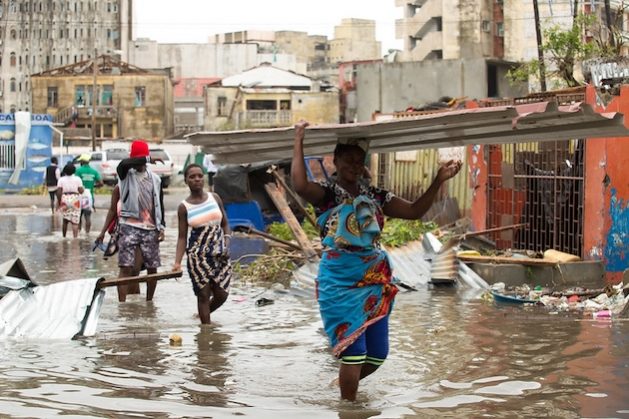
Cyclone Idah in 2019 caused catastrophic damage and a humanitarian crisis in Mozambique, Zimbabwe, and Malawi, leaving more than 1,500 people dead and many more missing. Credit: Denis Onyodi / IFRC/DRK
- The irony is that whatever the stakes, finance always features as the “crying onion” at each COP. Hence for the COP29, dubbed the finance COP, no wonder we reach an ocean of tears—especially in view of the current geopolitics, when the world is facing the likelihood of having its historically biggest financial contributor on climate pull out.
Yamide Dagnet, Senior Vice President, International at the Natural Resources Defense Council (NRDC), gave IPS an exclusive interview in which she shared her wisdom on COP29’s finance package, which expects a signal on the New Collective Quantified Goal (NCQG), adaptation finance, the Loss and Damage Fund, and to some extent, the carbon market.
Reflecting on her recent experience at COP16, Dagnet recalled, “I attended the Convention on Biological Diversity (CBD) in Cali, Columbia for the first time. While there were breakthroughs for local communities and businesses, the process ultimately ended in disarray, particularly regarding finance.”
If lack of accountability from developed countries showed some sort of nonchalance at COP16, they cannot do the same in Baku. They know they cannot sidestep their financial obligations and leave Baku without a decent deal. The world is watching, and civil society is mobilized to hold them accountable.
Addressing the influence of the recent U.S. elections, Dagnet remarked, “The elections overshadowed everything. Many developed countries feel overwhelmed, fearing they’ll need to cover for the U.S. Eyes are now turning to the EU and China to broker an agreement. But pressure should remain on other developed countries, especially Japan, Australia, and Canada, who are also expected to lead the way.
She added, “Reaching the USD trillions of investments needed will require enormous efforts not only from governments but scaled-up contributions from multilateral financial institutions (like multilateral development banks, including through the reform of the international financial architecture), the private sector and the mobilization of innovative sources of finance (such as possible levies Imposed on the most polluting sectors). What’s being proposed now simply doesn’t match the scale of the crisis.”

Yamide Dagnet, Senior Vice President, International at the Natural Resources Defense Council (NRDC).
Beyond the question of the quantum, access, quality and transparency also matter. She noted that compared to a year or even a few months ago, many of the most vulnerable countries are also asking for that funding to be allocated fairly. Questions remain about how much will go to the Least Developed Countries (LDCs), small island states, and Africa. There’s still a push to mobilize half of the funds toward adaptation efforts. Accessibility and transparency (to make sure that the funding pledge is allocated and reaching those who need it the most) are critical.
And let us be clear. What countries are negotiating “isn’t charity,” she emphasizes. “It’s about investment. The cost of inaction and non-investment far outweighs the investment required to achieve a transition toward a resilient and decarbonized economy equitably and effectively.”
On addressing carbon credits, Dagnet acknowledges that “carbon credits can play a role (in driving innovation, providing additional sources of revenue, including a share of proceeds towards adaptation) but shouldn’t be overestimated.” There may be unrealistic expectations about the carbon market’s potential, especially when it comes to its shared benefits.”
Dagnet emphasized the importance of environmental integrity and equity. These need to be central in the design of market-based projects and initiatives, stating, “Without robust rules ensuring environmental integrity and safeguards ensuring equity, there won’t be a fair distribution of benefits, especially for marginalized communities and those who need it the most. The risk of double counting would be higher and opportunities for additional emission reductions and ambition would be missed.”
Dagnet was asked to reflect on the human cost of climate inaction, like the adverse conditions in Mozambique for instance, year after year, leaving communities in a constant state of crisis. They can’t rebuild schools properly and live in tents for years, with their livelihoods repeatedly destroyed. Is this the future we want to accept?”
Dagnet welcomed this example, which reminds us of the importance of viewing finance as a means to an end rather than the end itself.
“What we see in Mozambique is a clear result of the losses and damages incurred by intensifying and increasing climate impacts. Following the breakthrough over the past two years regarding the establishment of a Loss and Damage Fund, the priority now is to ensure it is regularly replenished and the funds’ policies are in place to make sure the prompt deployment of these funds. While last year’s pledges reached about USD 700 million, it’s far from enough to provide adequate support to avert, minimize and address the losses and damage that occur despite mitigation and adaptation efforts—like the deaths triggered by the waves of extreme heat and the millions of people displaced due to floods, fires, hurricanes and sea level rise.”
Some of these losses are tangible, like the relocation expenses; some are not—like the loss of cultural heritage and psychological impacts. Hence the need for—diverse support mechanisms.”
Dagnet stressed the need for grant-based solutions designed with input from local communities.
“Solutions must not be purely top-down. Discussions within the Loss and Damage Fund should ensure funds reach frontline communities.” However, some countries resist this approach, preferring centralized control, leaving local communities and civil society unable to access these funds and build the resilience they need.” Discussion on the use of the “polluters pay principle,” especially on fossil fuel companies that rake in billions, so that they pay into the fund to help communities rebuild, adapt, and repair some of the damage they’ve caused.
Fossil fuel companies rake in billions. They must pay into the fund to help communities rebuild, adapt, and repair some of the damage they’ve caused.
Countries cannot leave Baku without a deal on finance. While some hopeful signals from countries like the UK and Brazil were sent following the announcement of their 2035 emission targets, most countries are still preparing their national climate and biodiversity plans, and developing countries in particular need assurance that the investment will make these plans a reality.
IPS UN Bureau Report

IPS UN Bureau, IPS UN Bureau Report, COP29, Baku, Azerbaijan,
 Print
|
Print
|