Wednesday, September 2, 2026



News and Views from the Global South
Q&A: "The Advice I Give Women Is to Leave Hang-Ups Behind"
Interview with Haïdara Ichata Cissé
- For women politicians in Mali, winning a seat in parliament is a tall order – difficult enough with party backing, and possibly harder still without it. But, this didn't stop Haïdara Ichata Cissé from taking her chances as an independent earlier this year.

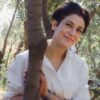
Haïdara Ichata Cissé, in office as an independent. Credit: Almahady Cissé
IPS correspondent Almahady Cissé sat down with Ichata Cissé recently to find out what made for this successful independent candidacy.
IPS: What led you to stand as an independent?
Haïdara Ichata Cissé (HIC): I decided to be an independent candidate because, firstly, I do not belong to a political party. I could have been a candidate for a political party; I received requests about this, for that matter. But I told myself that people already knew about…political parties…In a sense, people needed someone neutral, an independent, who would offer something other than what parties offered them. In presenting myself under the colours of a political party, I would not have been able to create consensus around myself. I needed to be independent for the activists of other parties to be at my side. And this is effectively what happened, and what enabled me to be elected.
IPS: How did you fund your campaign?
HIC: I financed my campaign, in the first place, with my resources – because when you decide to get involved in politics or get elected as a parliamentarian, you must first count on yourself before counting on others.
IPS: Did you manage to cover all your campaign costs?
HIC: Not completely…This year, the campaign was particularly expensive, especially in Bourem where I was confronted with outgoing parliamentarians who benefited from external aid coming from relatives, businessmen living in Algeria, and who had a lot of resources. So to compete with them you had to have resources. This caused me to overspend considerably in relation to what I had planned.
IPS: Can I ask how much you spent?
HIC: I won't tell, otherwise people will take me for a liar or a madwoman…I prefer to keep the…expenditures that I made during this campaign to myself.
IPS: Did you ultimately have to get help from your family, friends and volunteers with these cost over-runs?
HIC: My family helped me where it could. I have friends in Mali and abroad who helped me a lot. This was not on request, as my approach was not to beg. It was spontaneous. I am lucky to have many friends. Abroad, people understand the needs of a campaign. This meant that from the announcement of my candidacy, there were quite a few resources provided to me from abroad.
IPS: Did you have to come up with inventive campaign strategies to ensure that you received as much attention – especially from the media – as candidates from established parties?
HIC: Of course. These were essential, because it was already difficult for an independent candidate who didn't have a base, who was not affiliated to political structures, to enter the political arena and win an election.
My first strategy was to present myself as the candidate of the community of Bourem and not the candidate of a political party. I then developed a grass roots campaign, involving the local media extensively. And I believe this helped me stand apart from my opponents.
IPS: Did you ever encounter hostility from people – sections of the community – who thought that a woman's place was in the home?
HIC: Being a woman disadvantaged me a lot, but I don't regret it as this enabled me to make people understand that being a woman is not a handicap, and that a woman can aspire like men to the same positions, and achieve them.
In the beginning, I had a lot of problems. I already feared that I was going to have problems when agreeing to represent a town like Bourem, where the Muslim religion is deeply rooted. People there think that women must not stand up to men. They must stay at home, feed people and take care of the children. And, they don't allow women to leave this situation.
My adversaries were on the ground before me. They had time to "mine" it. There were even leaflets in Arabic in the mosques, and marabouts (spiritual leaders) interpreted them to say…that a woman should neither be a leader, nor allowed a position of responsibility.
Towards the end, there weren't many who held this view…Globally, people understood that everything which had been said was the dirty campaign tactics of my opponents…
I told them that today, I manage a successful company – NDLR, a travel agency – although I'm a woman. And, with the profits from this firm, I can help Bourem each time there are problems.
I then explained to them that (even) without an elective mandate, I was able to carry out projects in Bourem. Once elected, I would speak in their name and this would enable me to do more than I was doing…This message had a big effect.
IPS: How did candidates from parties react to your independent candidacy?
HIC: Well, I didn't have a direct confrontation with the political parties (but) there were certainly concerns. Some took a dim view of the fact that a woman was "wearing the trousers" in their presence and outdoing them. It's completely inevitable, (but) these are things I don't pay attention to. I suffered a lot in the second round (of voting) because of my female status. My opponents swore not to leave the fate of Bourem in the hands of a woman.
IPS: What advice would you give to other women who are thinking of running as independents?
HIC: The advice I give to women in general and to independent women (candidates) in particular is for them to leave hang-ups behind, to "free" themselves. In general, when you give something to a woman to do, she does it better than men. So, it shouldn't be that women are hung up in front of men; they should tell themselves that women have a role to play in the development of their countries. There are no reasons why women in Mali should not be at the top, or that they should not occupy positions of responsibility.
I ask women to…get it out of their heads that men are the strong sex. Women are also strong, even very strong. They should keep this in mind, and take part more and more in the affairs of the community. I thus urge women to get elected to defend better their interests and those of their community.
IPS: What are the issues you plan to focus on now that you're elected?
HIC: I can't say that I personally want to fight for and achieve something. I include my fight in a group effort, with the other women parliamentarians. We will fight together so that the problems of women are taken into account in the National Assembly.
 Print
|
Print
|