Languages
Tuesday, October 20, 2026



News and Views from the Global South
Opinion

Decapitating Terrorist Organisations Won’t End Terror
Killing terrorist organisations’ leaders is no effective way of fighting terrorism — as it’s political and economic crises on which terrorism feeds.
Caring for The Old
With the unprecedented ageing of populations worldwide, countries are struggling with the critical questions of who should be responsible for caring for the old and what should be the extent of care provided to women and men in old age.
Bob Dylan and the Ukraine Crisis
Fifty-nine years ago, Bob Dylan recorded “With God on Our Side.” You probably haven’t heard it on the radio for a very long time, if ever, but right now you could listen to it as his most evergreen of topical songs: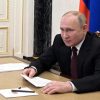
Ukraine: What’s Really Behind Putin’s Deployment of ‘Peacekeeping’ Troops? Experts Explain
Vladimir Putin’s recognition of the independence of the two breakaway republics of Donetsk and Luhansk followed a surreal live broadcast of a security council meeting in the Kremlin. Sitting facing the 13-member council, Putin cajoled and argued as, one by one, his most senior officials – including Dmitry Medvedev, a former president and prime minister, and the country’s foreign minister, Sergei Lavrov – took to the lectern to provide their boss with “reasons” for the formal recognition of the two republics in the country’s east as independent states.
Israel’s Glorious and Gloomy Reality
No people have ever risen from the ashes of near-extinction to form a country and achieve the height of development in every walk of life like Israel. These magnificent accomplishments are now tragically marred with domestically charged struggles which ominously undermine its very existence.
Financialization at Heart of Economic Malaise
COVID-19 has exposed major long-term economic vulnerabilities. This malaise – including declining productivity growth – can be traced to the greater influence of finance in the real economy.
Arc of History Bending Towards (Ab) Using Democracy & Human Rights: A Plea for Multi-Religious Civil Accountability
A “Joint Statement of the Russian Federation and the People’s Republic of China, issued on February 4, 2022 on International Relations Entering a New Era and the Global Sustainable Development”, contains laudable and strong language about commitment to democracy and human rights:
Ukraine Crisis: The Stakes are High
If the Ukraine crisis erupts into war – even intensified limited war in Eastern Ukraine with overt Russian intervention – the consequences will be severe and far-reaching.
Renewable Energy vs Coal: Where Does India Stand?
Coal—considered to be one of the most polluting fossil fuels and, therefore, one of the biggest contributors to climate change—took centre stage at COP 26. A last-minute intervention by India during the negotiations resulted in a crucial amendment to the coal pledge in the Glasgow Climate Pact.
Global Road Safety Crisis: Three Questions to Ask to Help Solve It
When we think about global crises, road safety isn’t one that comes to mind. The reality is that unsafe roads is a health crisis gone rogue.
International Accreditation in Education Can Bring Huge Benefits to the Pacific- If It Is Done Right
All over the world, students who attend tertiary education do so with the belief that the investment of their time, money and effort will provide them with returns on that investment that will change their lives and the lives of their families for years to come. As qualified graduates, those students emerge from their tertiary programmes with recognised skills and knowledge making them employable in their chosen fields, moving them forward along a career pathway and in many cases, bringing recognition to the institutions that trained them as they experience success and achievements related to their expertise.
The Weaponisation of Libya’s Elections
Libya was supposed to hold elections early this year. Instead, it now has two rival political administrations — a return of the divisions of the past.
A Step Toward Africa’s First Covid-19 Vaccine of Its Own
Efforts to combat the vast global inequity in access to Covid-19 vaccines just got a boost. A Cape Town company claims it successfully made a vaccine that mimics Moderna’s messenger RNA vaccine—without any help from Moderna. This copycat will still need to undergo clinical trials, but the effort could yield Africa’s first Covid-19 vaccine.
When the Fate of Half Our Planet is being Discussed, it’s too Important to Shut out Civil Society
Over the past two weeks, a petition signed by almost five million people globally was handed in to governments around the world. It called for a Global Ocean Treaty to help rescue our oceans.
‘Our Common Agenda’: Guterres’ Open Door to Corporate Capture of the UN
On 10 September 2021, UN Secretary-General (SG) Antonio Guterres released the “Our Common Agenda” (OCA) report. This report was in response to a request from UN member states to “report back before the end of the seventy-fifth session of the General Assembly with recommendations to advance our common agenda and to respond to current and future challenges”.
Peasants Marginalized by Big Farmers
A recent Food and Agriculture Organization (FAO) study shows the largest farms cultivate a high and increasing share of agricultural land in much of the world. Farm size concentration World Agricultural Census data for 129 countries show about 40% of the world’s farmland is operated by farms over 1000 hectares (ha) in size. About 70% is operated by the top 1% of farms, all bigger than 50 ha each.
ONE OCEAN SUMMIT – An Opportunity For Blue Transformation
The ocean covers more than 70 percent of our planet. There is no question it is critical for our health and well-being. It provides half the earth’s oxygen supply and every organism in existence depends on it to survive.
Responding to New Threats to Poverty Eradication in Asia
With consistent, robust economic growth, countries across Asia have made monumental strides in eradicating extreme poverty over the past 30 years. In Bangladesh, for example, the population living in extreme poverty dropped from 43% in 1991 to 10.5% in 2019. Similarly in Cambodia, poverty incidence fell from 53% in 2004 to below 10% by 2016.
Science Academies and Disciplinary Groups Have Work to do on Gender Equality
Women remain under-represented in science careers and research all over the world. There are several reasons for this, including stereotypes about what kind of work women “can” or “should” do; patriarchal attitudes; and a lack of support for women pursuing science, technology, engineering and maths (STEM) careers.
The Global South Moves Towards Vaccine Sovereignty
In 2021, Global South countries came out on the short end of vaccine supply deals. In 2022, they are building capacity to produce vaccines themselves.
Nobel Prizes and Donation Pledges
While living and working in Paris I joined the Cercle Suédois, a social club founded in 1891, at a time when Sweden and Norway were unified in one kingdom. By that time, Alfred Nobel was a frequent guest and in one corner I sometimes ended up standing in front of the writing desk where he in November 1895 had written his famous testament, stipulating that 94 percent of his total assets (equivalent to 120 million USD in today’s money value) was to be allocated to the establishment of five prizes. These prizes would every year be awarded to deserving individuals, who ”irrespective of their nationality” had contributed to ”the progress of humanity and preservation of peace in the world.”« Previous Page — Next Page »





The views expressed in these articles are those of the authors and do not necessarily represent the views of, and should not be attributed to, IPS-Inter Press Service

The Week with IPS

NEXT STOP - SDGs
Tracking global progress towards a sustainable world
Tracking global progress towards a sustainable world
