Languages
Wednesday, October 7, 2026



News and Views from the Global South
Opinion

“Global Peace Education Day” can Play a Pivotal Role in Transforming Education
Just a week ago, the international community commemorated the adoption of the United Nations Declaration and Programme of Action on a Culture of Peace, a monumental document that transcends boundaries, cultures, societies, and nations.
Why Investing in Water, Sanitation and Hygiene Pays Off
As the devastating images of flooding in Pakistan went round the world and the country declared a state of emergency, some 4,000 miles away in Stockholm, delegates had just arrived for World Water Week – an annual focal point for global water issues.
The New Cold War Over Access To Safe Abortion in Kenya
Fatuma is a 24 year old girl from Korogocho, an informal settlement in Nairobi. She died in December 2021, from complications arising from an unsafe abortion. Her friend and a few of her neighbors found her bleeding profusely and unable to move. They rushed her to the hospital. Unfortunately, she died before she could see the doctor.
How to Make COP27 a Success
Each year, low-emitting countries like Bangladesh are the greatest sufferers and, paradoxically, pay the biggest price in losses and damages resulting from climate change.
The Swedish Elections: A Victory for Populism
After general elections on the 12th September, Sweden is on the threshold of a new era. The Sweden Democrats (SD) won almost 21 percent of the votes and thus became the largest in a bloc of right-wing parties that now have a collective majority in the parliament. A nation that for a long time prided itself of being a beacon of tolerance and openness will now experience a historical transformation. The Sweden Democrats was once founded by Nazi sympathisers and for decades shunned by mainstream politicians. However, SD has now tipped the political scale in a country previously known for its stable and predictable politics, and some of the party’s former foes are now willing to co-rule with them.
Answering the Challenges Posed by Antimicrobial Resistance
Staphylococcus aureus is the source of a skin infection that can turn deadly if drug resistant. Estimates regarding the most common resistant variation, methicillin-resistant Staphylococcus aureus (MRSA), exceed 100,000 deaths globally in 2019.
Towards a More Secure Future Through Effective Multilateralism
As world leaders gather in New York for the opening of the 77th session of the United Nations General Assembly this week, the security horizon is undoubtedly dark.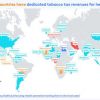
Innovative Financing to Protect Public Health During a Pandemic
Economic recovery since the COVID-19 pandemic has been uneven amidst a cautious loosening of restrictions. But even at the height of the pandemic, it was business as usual for the tobacco industry.
Inflation Targeting Farce: High Costs, Moot Benefits
Policymakers have become obsessed with achieving low inflation. Many central banks adopt inflation targeting (IT) monetary policy (MP) frameworks in various ways. Some have mandates to keep inflation at 2% over the medium term. Many believe this ensures sustained long-term prosperity.
Climate Change Crisis Nonacceptance
Many people around the world, especially those among the political far-right, do not accept the climate change crisis. Over the years their thinking, behavior, and policies dismissing climate change have largely continued and impaired global efforts to address global warming and environmental degradation.
Reflections on High-Level Meetings of the UN General Assembly
The high-level segment of the UN General Assembly (UNGA) is famous for its fiery speeches and the colorful personalities assembled in the GA Hall. But much more goes on beyond the hall itself –the frenzy of the press in the broadcast trucks, security personnel on every sidewalk, military aides in dress uniforms, and an endless round of receptions and parties of every kind.
Reimagining Urban Agriculture With Vertical Farming
Cities across the world including New Jersey and California, a State that is home to a multi-billion dollar agricultural industry, have continued to experience climate change linked extreme events including scorching temperatures, extreme heat events, heavy storms and flooding with devastating impacts on agriculture, food security, and food systems.
Equal Pay for Work of Equal Value
International Equal Pay Day, observed officially by the United Nations on 16 September, aims to draw attention to the gender pay gap – the difference between what a woman earns compared to a man for work of equal value – and the systemic inequalities it is rooted in.
Let’s Fight for What Counts to End AIDS, Tuberculosis and Malaria
Next week, taking place alongside the UN General Assembly, President Biden hosts a financing summit in New York of such importance that it will determine if millions of people live, will shape the world around us for years to come and will set the future direction of global health. At least $18 billion is needed to fund the work of the Global Fund to Fight AIDS, Tuberculosis and Malaria.
USA and Russia: Pursuit of Global Hegemony
Can a pitiless, offensive war waged against a sovereign state be justified? In my opinion the answer is an unequivocal “No!”. Ukraine has the right to defend itself against Russia’s reckless and extremely destructive invasion and EU’s support to a neighbouring country attacked by a superior enemy is definitely correct. However, several Latin American intellectuals and leaders are willing to accept Putin’s narrative, instead of Zelensky’s, namely that the war in Ukraine is actually a war between Russia and USA, which by stalling Russia’s and China’s ambitions intends to maintain its supremacy as a superpower, while using Ukraine as a pawn in its power game.
Pakistan Flooding Shows ‘Adapting’ to Climate Change Can Be a Dangerous Illusion
One third of Pakistan is now under water. The scope of the destruction is difficult to fathom, not just the enormity of the devastation its people are facing today, but also the damage to its infrastructure, its buildings, and its economy that will weigh heavily on the country for months and even years to come.
Unsettled Lives in a Troubled World
Cross-continent vacations seem to be the norm once again with the lessening of COVID-19 while new cities are being built with skyscraping $4M condos shooting up in a matter of months, and just-out-of-University millennials launching into their careers with minimum start-off salaries of $75K.
Building Leadership for Teachers in the Developing World
If we truly want to re-imagine the role education can play in the decades to come, it is going to be indispensable to take drastic measures to elevate the role of teachers in developing countries.
What Does the African Continental Free Trade Agreement Hold for Women?
Agnes Opus sells cereals in Busia, the border town between Kenya and Uganda. This is her lifeline through which she caters for her immediate family’s needs from school fees to housing and medical care and support to her extended family. While she dedicates all her energy and time to this work which she loves, she struggles to meet all her needs. She faces many non-tariff barriers including harassment by officials and unclear and ever-changing information on trade requirements.
What Must COP27 Deliver?
Preparations for COP27 in November are proceeding apace and we are now well past the halfway mark between the preparatory meetings in June in Bonn and the start of the summit in Sharm El-Sheikh, Egypt. The agenda for Sharm El-Sheikh is complex and challenging. Furthermore, the meeting is taking place during a time of international turmoil. So, what are the factors influencing whether Sharm El-Sheikh can be a success? And what, exactly, does COP27 need to deliver?
Africa Struggles with Neo-Colonialism
After a quarter century of economic stagnation, African economic recovery early in the 21st century was under great pressure even before the pandemic, due to new trade arrangements, falling commodity prices and severe environmental stress.« Previous Page — Next Page »





The views expressed in these articles are those of the authors and do not necessarily represent the views of, and should not be attributed to, IPS-Inter Press Service

The Week with IPS

NEXT STOP - SDGs
Tracking global progress towards a sustainable world
Tracking global progress towards a sustainable world
