Languages
Friday, November 27, 2026



News and Views from the Global South
Civil Society
UGANDA: Government Pushes Ahead With Repressive Media Law
The proposed media law is a monster, says Dr George Lugalambi, chair of a coalition fighting to preserve press freedom in Uganda. Publishers and journalists would have to apply annually for a licence, which could be revoked at will in the interests of "national security, stability and unity," or if coverage was deemed to be "economic sabotage."
Q&A: ‘Kyrgyzstan Has Undergone a Grassroots Revolution’
Apas Kubanychbek, who hails from the high mountainous area of Ysyk-Ata in the Chuyskaya province of Kyrgyzstan, was involved in the political movements and democratic struggles of the former Soviet republic in the early 1990s.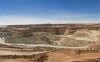
ENVIRONMENT-NIGER: French State-Owned Company “Poisoning” Poor
Recent research by Greenpeace suggests that French state-owned company Areva’s public claims of decontamination of populated areas near uranium mines in Niger are false. High radio-activity persists in towns and rural areas near the mines, affecting some 80,000 people.MIDEAST: ‘Poetic Justice’ in Jerusalem
President Barack Obama has made plain he means to deconstruct Israel’s 43-year-old grip on East Jerusalem. But, for all Washington’s pressure, Israel seeks to tighten its hold on the occupied part of the city.POLITICS-EGYPT: Critics Question ElBaradei’s Promises of Change
Mohamed ElBaradei, former head of the International Atomic Energy Agency (IAEA), rocked Egypt's political arena last year by announcing his desire to contest the presidency. But while the idea has fired the imagination of political activists, many analysts remain sceptical.ECUADOR: Environmental Inspection in Yasuni Park
Representatives of Ecuador's ombudsman's office and environmental groups are visiting the Yasuni National Park on Saturday, home to some of the world's last indigenous people still living in voluntary isolation, in order to verify reports of illegal activity by oil companies.CHILE: Custody Decision Violated Lesbian Judge’s Rights
The attorneys representing Chilean Judge Karen Atala, a lesbian who brought her case before the Inter-American Commission on Human Rights claiming discrimination in the loss of custody of her three daughters, accused the Chilean state of sending out "unequivocal" signals of a lack of will to implement the regional body's recommendations.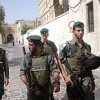
MIDEAST: Palestinian Christians Barred From Jerusalem for Easter
Israeli authorities prevented thousands of Palestinian Christians from entering Jerusalem and accessing Christianity’s most holy sites over Easter in an unprecedented clampdown on religious freedom.UGANDA: Trying to Blow the Whistle on Corruption
The Ugandan Parliament is debating a Bill that will involve citizens in the fight against corruption following an increase in embezzlement of public funds by public servants.GHANA: Political Parties Urged to Come Clean
There are growing fears that lack of transparency on how political parties are being funded has given rise to corruption.MIDEAST: Fatah Men Face Imminent Execution in Gaza
Nine Palestinians - most of them affiliated to the Palestinian Authority (PA) Fatah movement - face imminent execution by hanging or firing squad in Gaza.RIGHTS: EU Boosts Arms Manufacturers
Arms traders are to be given a central role in formulating a new European Union (EU) blueprint for stimulating weapons production, it has been confirmed.GUATEMALA-EL SALVADOR: Cross Border Opposition to Mine
The Cerro Blanco gold and silver mine in the southeastern Guatemalan province of Jutiapa, on the border with El Salvador, is under fire from environmentalists in both countries concerned about the threat it poses to the shared Lake Güija and rivers on either side of the border.RIGHTS: Death Penalty Lingers in Former Soviet Republics
The executions of two Belarus citizens in March and calls by Russian senators to reintroduce capital punishment for terrorists are being seen as indications that the death penalty is not about to fade out soon in the former Soviet republics.MIDEAST: Israel Gags News on Extra-Judicial Killings
An Israeli journalist remains under house arrest and another lives abroad, after they broke news on Israeli undercover units carrying out assassinations or "targeted killings" of non-combatant Palestinian political opponents.
RIGHTS-PERU: Generals on Trial for Murders of 37 Students
There is more than enough evidence to convict three generals and other army officers in the kidnapping and murder of 36 university students from the highlands city of Huancayo in Peru between 1989 and 1993, Víctor Lizárraga of the National Human Rights Coordinator (CNDDHH) told IPS.LEBANON: ‘Roumieh Prison Breeds Criminality Not Reform’
Lebanon’s notorious Roumieh prison, the scene of a stand-off between inmates and security personnel this month, is no stranger to rioting, escapes, corruption and abuse.UGANDA: NGOs Judging Oil Palm on Hearsay, Says U.N.
Non-governmental organisations (NGOs) are guilty of judging a palm oil project in Uganda on innuendo rather than its merits, the United Nations poverty agency supporting the controversial scheme said, as the project starts to bear fruit for smallholder farmers.MIDEAST: Palestinian Death Penalty Very Much Alive
Last November, Muhammad Al Saba, 36, from Rafah in the southern Gaza Strip was sentenced to death by hanging by a military court in Gaza for alleged acts of "treason and collaborating with hostile forces."
RIGHTS-SIERRA LEONE: Journalists Under Attack
Sierra Leone has become a place of torment for journalists practicing their profession.CLIMATE CHANGE: From Copenhagen to Cochabamba
A different way of fighting global warming will be tried out in the central Bolivian city of Cochabamba when government representatives and thousands of activists gather for the World People's Conference on Climate Change and the Rights of Mother Earth.« Previous Page — Next Page »


 Representatives of Civil Society, Sierra Leone. Credit: UN Photo/Eskinder Debebe
Civil society faces mounting threats worldwide, even as it remains essential for democratic accountability, especially in countries struggling with economic instability and social inequality. However, at the same time, nations with weak democratic governance structures also systemically suppress the power of civil society. Human rights activists across the Global South frequently challenge issues such as political persecution and gender oppression, but in return face state-sanctioned punishment for their advocacy. Imprisonment and exile are common mechanisms of punishment that seek to erode the strength of civil society. The 2026 World Press Freedom Index has reached its lowest level in 25 years, with more than half of the world’s countries now falling into the "difficult" or “very serious” category for press freedom. IPS seeks to highlight the work of civil society across the Global South as well as the challenges that they face.
Updated by Yilan Batista and Shuli Wong August 2026

The Week with IPS

NEXT STOP - SDGs
Tracking global progress towards a sustainable world
