Languages
Sunday, November 8, 2026



News and Views from the Global South
Education
School Lunches Make For Happy Pupils in Congo
It's noon at Jean-Félix Tchicaya Primary in Pointe Noire, the economic capital of Congo. Students are settling into their chairs, but not to resume their lessons. They are waiting eagerly for the hot meal that's served in the classroom each day, their plates already laid out on their desks.
DOMINICAN REPUBLIC: Four Percent for Education
The government of the Dominican Republic, where one-third of the population of is under 14 years of age, is facing a well- organised and growing citizens' campaign to increase the amount spent on public education.THAILAND: Debate on Monarchy Tests Academic Freedom
History professor Somsak Jeamteerasakul has weathered a storm of insults since mid-December for doing the forbidden: he offered an alternative assessment of the most dominant institution in the country, its monarchy, in a forum at his university. Now military officials are dropping hints he could face more than just verbal attacks.BURKINA FASO: Training Gives Domestics Hope of Escaping Their Lot
Emeline Djigma, a twenty-year-old domestic worker, is preparing for the entrance exam to the National Teachers' College this year. She hopes she'll make it, having finally obtained her secondary school certificate thanks to five years of evening classes.PAKISTAN: Higher Education Hits a New Low
University students and teachers have taken to the streets in a bid to prevent provincial governments from taking over the reins of higher education in Pakistan.INDIA: Some Brain Drains Back
They were the face of India’s "brain drain" - the best and the brightest government-educated scholars who eventually left for foreign shores. Now, they have opted to give back as a gesture of thanks for the top-notch education they received.
Sierra Leone Facing Facts of Teenage Pregnancy
On Apr. 5, the United Nations Children's Fund will launch a report on teenage pregnancy in Sierra Leone. Teenage pregnancies account for 40 percent of maternal deaths in the country, and the report comes as public health authorities recalibrate strategy to address a problem that endangers both mothers and children.Zimbabwe’s Braying Cavalry in Campaign for Literacy
Across Zimbabwe, economic and political crisis has forced students to do without books, classroom furniture, teachers - the basics of a conducive learning environment. These learners cannot go to libraries, so the libraries have gone to them.
PAKISTAN: Citizens and NGOs Step Forward to End Illiteracy
The man known as ‘Master Ayub’ holds classes for free, between three and seven o’clock. His classroom is a public park, and his students are street children six to 16 years of age who otherwise would be picking trash, begging, or slowly becoming petty thieves.DOMINICAN REPUBLIC: Managing Mental Illness on a Few Pesos a Month
Cristina, 41, was able to support the last two of her five children despite the fact that she could neither read nor write. Raised by a step-grandfather, she started working as a house cleaner when she was 14 and had the misfortune to have children by two alcoholic and abusive men.
INDIA: Engaging Africa With Software and Soft Power
India cannot match China’s massive investments in Africa, but it is using its information technology capabilities and its affordable university courses to stay relevant on the continent.
INDIA: Tech to the Rescue of School Lunch Model
Surrounded by lush green wheat and yellow flowering mustard fields at Ekdanta primary school, it is noon and the 57 children in two combined classes are fidgety - impatient for the school served midday meal.“Yes I Can” Say Illiterate Adults in Guatemala
Concepción González, 42, never went to school. She remembers with frustration having to stamp her fingerprint because she couldn't sign official documents, and having to respond "I don't know" to her children's homework questions.
WOMEN’S DAY: Overcoming Barriers in Central America
Amarilis Chilel, 15, left her hometown of Ixchiguán in northwest Guatemala to work as a domestic in the capital: a common story among rural girls and women in Central America. "I went to school up to fourth grade," she told IPS.
WOMEN’S DAY: Female Scientists Abound in Brazil – But Not at Senior Levels
There are nearly as many female as male scientists in Brazil. But in academia or in private laboratories, women face subtle barriers to career advancement and equal salaries.
Q&A: “The Sky Is My Laboratory”
When it comes to breaking through the glass ceiling, astronomers are among the most determined of female professionals. And they have high aspirations. "The sky is my laboratory," Argentine astrophysicist Gloria Dubner told IPS.Educate the Girl, Empower the Woman
Picture a mother, hunching over a field with a Medieval-style hoe in hand, spending day after day tilling the soil under a beating hot sun - only to retire home to care for her family without electricity or running water.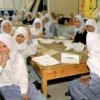
U.N. Task Force Pushes for Investment in Teen Girls
Risk of sexual violence, limited access to education, and health issues such as HIV/AIDS and forced female genital mutilation/cutting are just a few of the obstacles adolescent girls face in developing countries, yet these girls are the key to the future and the eradication of poverty, stress experts at the U.N. Commission on the Status of Women (CSW).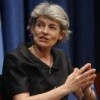
Q&A: “Education Must Reach the Marginalised”
Although more girls are enrolling in school - notably in countries with the greatest gender gaps like Chad, Saudi Arabia, Pakistan and Yemen - two-thirds of the world's illiterate adults are still women.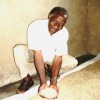
DEVELOPMENT-UGANDA: Better Coffee Brings Better Living Conditions
Producing quality Arabica coffee beans on the slopes of Mount Elgon in eastern Uganda is only viable once farmers are assured ready access to the global market. Fair trade has made this possible.
ENERGY-MALAWI: Rise in Paraffin Prices Leaves Traders in the Dark
Increasing energy prices have caused anxiety for many small-scale Malawian traders, especially those in rural areas and peri-urban areas who rely on paraffin for lighting their business premises.« Previous Page — Next Page »





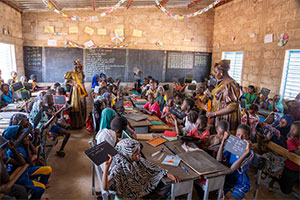 Two teachers work in a classroom in Forces Vives School in Dori, Burkina Faso. Credit: UNICEF/UNI978361
Safe and uninterrupted education is a fundamental right for all children. Education is paramount to global development, as it has been proven that investing in education – especially for girls and children – contributes significantly to economic growth and prosperity. Although more than 1 billion children go to school, many are subjected to conditions that are not conducive to a proper learning environment, including makeshift facilities, a lack of supplies, violence in classrooms, inadequate sanitation, untrained instructors, and widespread school closures. Since 2015, there have been immense gains in education with an increase of 109 million children in school. However, as of 2023, 272 million children are still out of school.
High poverty levels in developing countries also impede children’s access to a proper education. For example, from the early to mid 2000s, Sub-Saharan African nations witnessed a dramatic decline in trained teachers due to inadequate funding in the education sector. Furthermore, major cuts to United States international aid threaten an estimated 23 million additional children's access to education, as USAID‑funded school programmes across Africa and Asia face closure.
Various other factors contribute to the decline of education, notably hunger, which has increased as conflict and climate change interfere with global food production and dissemination. Meanwhile, certain social and cultural practices also impede children’s access to education, with gender inequality, discrimination, child labour, and child marriages preventing millions of children from attending school. Economic conditions such as the inaccessibility of higher education also affect disenfranchised communities across the world. In extreme situations, such as warfare where educational facilities are destroyed in their totality, notably in Gaza and Sudan, entire generations of children might grow up without access to education. Rebuilding educational infrastructure is a long and arduous process, especially when violence persists across generations, and this significantly stunts the development of societal prosperity and stability.
IPS is dedicated to telling the shocking truths about worldwide education through impassioned opinion pieces and comprehensive articles, highlighting global issues that impede worldwide education and the courses of action being taken by organizations such as UNICEF and Education Cannot Wait.

The Week with IPS

NEXT STOP - SDGs
Tracking global progress towards a sustainable world
Tracking global progress towards a sustainable world
