Languages
Thursday, October 8, 2026



News and Views from the Global South
Energy
The Africa We Want is Still Within Reach – & a Priority for the United Nations
The “Africa We Want” - as outlined in Agenda 2063 - embodies the African Union’s bold vision of an integrated, prosperous, and peaceful continent.
Clean Energies Seek to Overcome Obstacles in Argentina
The multitude of solar panels stands out along a dirt road in an unpopulated area. Although located just an hour's drive from Buenos Aires, the new solar park in the municipality of Escobar is in a place of silence and solitude, symbolic of the difficulties faced by renewable energies in making inroads in Argentina.
Achieving the SDGs in Extraordinary Times
The start of the “Decade of Action” to achieve the United Nations’ Sustainable Development Goals (SDGs) has also marked the start of an unprecedented period of overlapping crises.
“Made in Chile” Electric Buses, Another Stride Towards Electromobility
The manufacture in Chile of an electric bus christened Queltehue, a wading bird native to the country, is another step towards electromobility and in the fight against pollution that triggers frequent environmental crises and smog emergencies in Santiago and other cities.
The World is Burning. We Need a Renewables Revolution
Nero was famously accused of fiddling while Rome burned. Today, some leaders are doing worse. They are throwing fuel on the fire. Literally.
Mexico Makes Risky Bet on Liquefied Gas in New Global Scenario
Liquefied gas does not occupy a prominent position in Mexico's energy mix, but the government wants to change that scenario, to take advantage of the crisis unleashed by Russia's invasion of Ukraine and the need for new sources of the fuel due to the sanctions against Russia.
Climate Hypocrisy Ensures Global Warming
Rich country governments claim the high moral ground on climate action. But many deny their far greater responsibility for both historic and contemporary greenhouse gas (GHG) emissions, once acknowledged by the Kyoto Protocol. Climate injustice Worse, responsibility has not been matched by commensurate efforts, especially by the largest rich economies in the G7, which dominates the G20. Its continued control of international economic resources and policymaking blocks progress on climate justice.
Expensive Energy from Cheap Sources Hampers Brazil’s Economy
Brazil has abundant low-cost energy, but by the time it reaches the consumer it is one of the most expensive in the world. This contradiction hinders the country's human and economic development and the “solutions” found have actually aggravated the problem.
The Weaponization of Energy & Europe’s Way Out
The fast-changing environment requires Europe’s energy system not only to adapt but to also find the right mechanisms to ensure its unity in the face of turbulent challenges.
SWIFT Dollar Decline
US-led sanctions are inadvertently undermining the dollar’s post-Second World War dominance. The growing number of countries threatened by US and allied actions is forcing victims and potential targets to respond pro-actively. SWIFT strengthened dollar The instant messaging system of the Society for Worldwide Interbank Financial Telecommunication (SWIFT) informs users, both payers and payees, of payments made. Thus, it enables the smooth and rapid transfer of funds across borders.
Southern Winds in Magallanes Fuel Green Hydrogen in Chile
Patagonia’s strong winds are driving projects that will place Magallanes, in the extreme south of Chile, in a privileged position to produce and export green hydrogen and help the country move towards carbon neutrality.
Why Biden Just Declared Heat Pumps and Solar Panels Essential to National Defense
Solar panels, heat pumps and hydrogen are all building blocks of a clean energy economy. But are they truly “essential to the national defense”?
At Half-time, the European Green Deal is Still Grounded
This month marks the mid-point of the much-heralded European Green Deal. Taking office at the end of 2019, the European Commission went into rhetoric overdrive. This was Europe’s ‘man on the moon’ moment, we were told. The Green Deal would herald an economic paradigm shift, and “reconcile the economy with our planet…to make it work for our people” the new President, Ursula von der Leyen, said.
War & Peace 2.0: Ukraine Showing the World How to Fight Back
 It has been over 100 days since Russia first invaded Ukraine on 24 February 2022, turning the country into a slaughterhouse. The United Nations (UN) in this report says that, as of 1 June, 2022, more than 6.9 million refugees have left Ukraine and 2.1 million have returned, while eight million people are displaced inside Ukraine itself. War in Ukraine has caused the fastest growing refugee crisis since World War II.

Developing countries and the Perfect Storm
Part II: What Developing Countries Need to Do
Developing countries are facing a combination of crises that are unprecedented in recent times. Over the last three years they have had to face the COVID-19 crisis, the food crisis, the energy crisis, the climate change crisis, the debt crisis and, on top of all this, a global recession. The crises have overlapped, and each has added to the problems created by the previous ones.
Developing Countries and the Perfect Storm
Part I: What Should Developed Countries Do?
Developing countries – in Africa, in Asia, in Latin America and in the Middle East - are facing a combination of crises that are unprecedented in recent times. Over the last three years they have had to face the COVID-19 crisis, the food crisis, the energy crisis, the climate change crisis, the debt crisis and, on top of all this, a global recession. The crises have overlapped, and each has added to the problems created by the previous ones.

Sanctions Now Weapons of Mass Starvation
US and allied economic sanctions against Russia for its illegal invasion of Ukraine have not achieved their declared objectives. Instead, they are worsening economic stagnation and inflation worldwide. Worse, they are exacerbating hunger, especially in Africa.
What India Needs To Do To Achieve Net-Zero Status by 2070
The recent IPCC report that came out in the month of March 2022 says that, by the end of the century, the temperature rise is likely to be 2 to 3.7 degrees if global emissions, as they stand today, are not curtailed. In fact, according to the report, carbon dioxide (CO2) emissions need to come down by 45 percent globally (compared with 2005) by the end of 2030.
Oil Business Burns Enough Gas to Power the Whole Sub-Sahara or Two Thirds of Europe
While the attention of mostly Western media and politicians is quasi exclusively hoarded up by the proxy war in Ukraine and its consequences on the energy sector, the world’s big oil business continues to burn Planet Earth with its underreported though highly polluting, wasteful practice of gas flaring.
Opacity Surrounds Fossil Fuels in Mexico
In the northern Mexican state of Coahuila the current situation of coal, used mainly to generate electricity, is opaque.
The Sun Illuminates the Nights of Rural Families in El Salvador
After working on the family farm, Carlos Salama comes home and plugs his cell phone into a socket via a solar-powered electrical system, a rarity in this rural village in southern El Salvador.« Previous Page — Next Page »





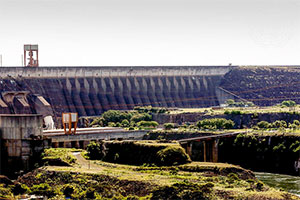 UN Power Plant, Paraguay. Credit: UN Photo/Evan Schneider
Energy has posed a great challenge for economies around the world. As global energy consumption skyrockets throughout the years, so does the need for sustainable solutions. The Sustainable Development Goals are essential in providing people with access to safe, affordable, and sustainable energy sources that minimize harm on the planet. Progress towards these goals opens the door for an advancement in modernization for communities on a global level and allows for a potential mitigation of tensions between nations.
The UN’s Summit of the Future in 2024 offered new initiatives that are being taken to achieve these goals, including a decreased reliance on fossil fuels, a switch to renewable energy sources, and improved climate financing.
IPS is well positioned to provide relevant, insightful, and compelling analysis of recent updates and measures being taken around the world to achieve a cleaner future.

The Week with IPS

NEXT STOP - SDGs
Tracking global progress towards a sustainable world
Tracking global progress towards a sustainable world
