Languages
Wednesday, October 21, 2026



News and Views from the Global South
Energy
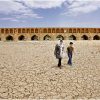
Urgent Action Vital to Stop Twin Crises of Nature’s Destruction & Climate Change
The Intergovernmental Platform on Biodiversity and Ecosystem Services’ report on the global state of biodiversity is shocking but not entirely surprising. The question is, how much more evidence and repeated warnings will it take for governments, companies and financial institutions to wake up to the urgency and act?
America First as a Threat to Mulitlateralism
On 25 April, Joseph Biden announced his candidacy for the US presidency, declaring that his decision was based on fears of Trump being re-elected: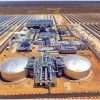
Is UAE Leading the Way for Concentrated Solar Power in GCC?
In April 2019, the International Renewable Energy Agency (IRENA) published a report on a “roadmap to 2050” in terms of renewable energy.
From Sanctioning Iran to War?
With the recent military moves announced uncharacteristically by the White House first, the world is witnessing with grim fascination what could turn out to be the early moves towards a war against Iran. How plausible is this scenario and what is likely to happen geopolitically if and when the US belligerence leads to an actual military confrontation with Iran?
Building a More Energy-Efficient Neighbourhood in Dubai
Dubai is an Emirate in the United Arab Emirates (UAE) with a population of about 3 million. The discovery of oil in the 1960’s transformed Dubai from a sleepy port town to a global metropolis. The recent shift to address environmental sustainability in Dubai draws attention to energy issues in the city.Sanctioning Iran: Will it work?
Sophocles in his tragedy Antigone has the line "evil[folly] appears as good in the minds of those whom god leads to destruction". First came the US unilateral exit from the historical Joint Comprehensive Plan of Action (JCPOA without the consent from our European allies with the resulting division between the US and Europe regarding policies towards Iran. US also restored sanctions against Iran but gave some time for energy-needy allies to import energy from Iran against a deadline. Some like Japan have complied grudgingly with the US orders. Others, particularly China and India have gone on importing Iranian energy.
Renewables to Become the Norm for the Caribbean
Jamaica and other Small Island Developing States (SIDS) are embracing renewable energy as part of their plans to become decarbonised in the coming decades.
Against All Odds, Indigenous Villages Generate Their Own Energy in Guatemala
In the stifling heat, Diego Matom takes the bread trays out of the oven and carefully places them on wooden shelves, happy that his business has prospered since his village in northwest Guatemala began to generate its own electricity.
Global Energy Consumption is Up — So Are Emissions
Our acceptance of climate change doesn’t keep pace with our energy consumption reduction. However, the latest International Energy Agency’s (IEA’S) Global Energy and CO2 Status Report for 2018 has some good news.
Pakistan’s Battle Against Climate Change
Pakistan, which has been listed as the 7th most vulnerable country affected by climate change, is now seriously tackling the vagaries of weather, both at the official as well as non-official level. Pursuant to an initiative launched by the Pakistan Parliament’s Upper House, the Senate, which specially entrusted a sub-Committee of the Standing Committee on Climate Change to focus on “Green and Clean” Islamabad, media, civil society and students have taken up the cudgels on combating climate change.
Q&A: Building Resilience through Waste Diversion and Reduction
Jua Kali is a social enterprise tackling waste management and helping to reduce reliance on St. Lucia’s only landfill, which will reach the end of its lifespan in 2023. The company, with its slogan ‘Trashing the Idea of Waste,’ hosts waste collection drives through pop up depots that encourage residents to bring in glass, plastic and tin cans in exchange for supermarket shopping points.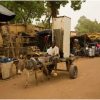
Staying Cool is Creating a Vicious Cycle on our Warming Planet
Our planet is heating up. 2018 was the fourth-warmest year on record, with peak temperatures engulfing the planet – from 43°C in Baku, Azerbaijan, to the low 30s across Scandinavia. The last four years have been the hottest since records began in 1880.
The Amazon Seeks Alternatives that Could Revolutionise Energy Production
A large steel wheel, 14 meters in diameter and 1.3 meters wide, could be the energy solution of the near future, generating 3.5 megawatts - enough to supply a city of 30,000 people, according to a company in the capital city of the state of Amazonas in northwest Brazil.
Militarised Government Attempts to Resume Mega-projects in Brazil
Two military-inspired initiatives are leading Brazil's new government, which includes a number of generals, down the path of mega-projects, which have had disastrous results in the last four decades.
Rising Inequalities in Asia-Pacific have become a Major Obstacle to Accelerating Progress
2019 will be a defining year for the 2030 Agenda; and the regional forums will pave the way for our first stocktaking on the SDGs in the General Assembly in September.
Seven Challenges for US Nominee for World Bank President
All incoming World Bank presidents bring a public record of their views about the bank and about development more generally. David Malpass, who is on track to become the bank’s next president, has not been shy in criticizing the role and management of the institution he now plans to lead.
Local School Is a Model for Energy and Water in Rapa Nui
A school in the capital of Easter Island (Rapa Nui, in the local indigenous tongue) gives an example of clean management with the use of solar energy, rainwater recovery and an organic vegetable garden, as well as rooms and spaces built with waste materials.
Solar Energy Provides Hope for Poor Neighbourhoods in Buenos Aires
Solar panels shine on the rooftop terraces of 10 neat buildings with perfectly straight lines and of uniform height, an image of modernity that contrasts with the precariously-built dwellings with unplastered concrete block walls just a few metres away, with rooms added in a disorderly manner, surrounded by a tangle of electric cables.
Blue Economy: The New Frontier for Africa’s Growth & How Japan Can Help
1. Why Blue Economy in Africa? What potentials does Africa have? The blue economy in Africa is neglected, ignored or underexploited, but it can offer a range of African solutions to African economic problems. More than one-quarter of Africa’s population lives within 100km of the coast and derive their livelihoods there. According to the International Energy Agency (IEA), by 2020, the annual economic value of energy activities related to maritime affairs will reach EUR 2.5bn.1 Out of the 54 African countries, 34 are coastal countries and over 90% of African exports and imports are transported by sea. The territorial waters under African jurisdiction cover a surface area of 13 million km², with a continental shelf of some 6.5 million km² comprising exclusive economic zones (EEZ). The continent covers 17% of the world’s surface water resources. The strategic dimension of the blue economy is an indisputable reality for African countries. It is for this reason that it has been included in the African Union’s Agenda 2063 and that a practical handbook on the blue economy was prepared by the United Nations Economic Commission for Africa in March 2016.
Venezuela
Alea Jacta Est!
The count down towards a tragic outcome in Venezuela has started. All outside powers express what they say is a shared concern for its peace-loving people that has the misfortune of sitting on what is maybe the largest oil reserves in the world. The problem is that geopolitics lead groups of foreign countries to express different, not to say opposed recipes as to how democracy can be restored and happiness pursued in Venezuela and want to make their own views prevail in this divided country. 
Mexican Village Wants to Turn Thermoelectric Plant into Solar Panel Factory
Social organisations in the central Mexican municipality of Yecapixtla managed to halt the construction of a large thermoelectric plant in the town and are now designing a project to convert the installation into a solar panel factory, which would bring the area socioeconomic and environmental dividends.« Previous Page — Next Page »





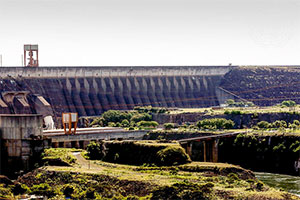 UN Power Plant, Paraguay. Credit: UN Photo/Evan Schneider
Energy has posed a great challenge for economies around the world. As global energy consumption skyrockets throughout the years, so does the need for sustainable solutions. The Sustainable Development Goals are essential in providing people with access to safe, affordable, and sustainable energy sources that minimize harm on the planet. Progress towards these goals opens the door for an advancement in modernization for communities on a global level and allows for a potential mitigation of tensions between nations.
The UN’s Summit of the Future in 2024 offered new initiatives that are being taken to achieve these goals, including a decreased reliance on fossil fuels, a switch to renewable energy sources, and improved climate financing.
IPS is well positioned to provide relevant, insightful, and compelling analysis of recent updates and measures being taken around the world to achieve a cleaner future.

The Week with IPS

NEXT STOP - SDGs
Tracking global progress towards a sustainable world
Tracking global progress towards a sustainable world
