Languages
Sunday, October 4, 2026



News and Views from the Global South
Energy

Uruguay Seeks Future as Oil Producer in Ultra-Deep Waters
Uruguay is just weeks away from finding out if it will have a chance to stop being totally reliant on oil imports at some point in the future, when the first offshore exploration well in national waters – which set a new world record in terms of water depth - is completed.
New Protocol Aims to Cut Trillion-Dollar Food Waste Bill
Four years ago, 27-year-old Tsering Dorji of western Bhutan’s Satsam village took to organic vegetable farming. Since then, thanks to composted manure and organic pesticide, the soil health of his farm has improved, and the yield has increased manifold.
Mega Dams Remain Controversial Source of Energy
Although mega dams can have devastating impacts on ecosystems and indigenous communities, many of the world’s poorest countries still see them as a way to fill gaping holes in their energy supplies.
Achieving Universal Access to Energy; Africa Caught Between a Rock and a Hard Place
“It is unacceptable that 138 years after Thomas Edison developed the light bulb, hundreds of millions of people cannot have access to electricity to simply light up the bulb in Africa,” says Africa Development Bank (AfDB) Group President, Akinwumi Adesina, mourning the gloomy statistics showing that over 645 million people in Africa lack access to electricity, while over 700 million are without clean energy for cooking.
Economic Interests Harming Global Health: WHO Chief
Putting economic interests over public health is leading the world towards three slow-motion health disasters, Margaret Chan, Director-General of the World Health Organization’s warned the world’s health ministers on Monday.
Natural Capital Investment Key to Africa’s Development
Plugging Africa’s funding gaps to accelerate social and economic development requires a fresh approach to using its natural capital, environment experts said on Monday.
Kenya’s Young Inventors Shake Up Old Technology
Emma Masibo and Lucy Bwire have many things in common.
Making Bangladesh Ready for Renewables
All his life, farmer Nasiruddin saw his poverty ridden village in complete darkness after dusk, with electricity being a distant dream. That changed last year when he installed a solar lantern system.
Justice for Berta Caceres Incomplete Without Land Rights: UN Rapporteur
The murder of Honduran Indigenous woman Berta Caceres is only too familiar to Victoria Tauli-Corpuz, the UN’s Special Rapporteur on the Rights of Indigenous Peoples.
Biomass Could Help Power Africa’s Energy Transition
As fuel, firewood remains the dominant source of energy in Uganda. It has a long history of being unsustainably harvested, leading to severe depletion of the country’s forest cover. But with new technology, biomass is now cleaning up its act.
Climate Change Leaves Kashmir’s Economy High and Dry
Trudging barefoot on his two-acre piece of land, 57-year-old Mukhtar Ahmad has little hope of growing any crops this year due to the sudden dry spell that has struck Kashmir’s winter.
WFO Calls for Farmer-Centred Sustainable Development
Over 600 delegates representing at least 570 million farms scattered around the world gathered in Zambia from May 4-7 under the umbrella of the World Farmers' Organisation (WFO) to discuss climate change, land tenure, innovations and capacity building as four pillars on which to build agricultural development.
Farmers Can Weather Climate Change – With Financing
Merian Kalala, a farmer in Solwezi, capital of the North-Western Province of Zambia, knows firsthand that climate change is posing massive problems for agricultural productivity.
No Farmers, No Food — True But Not Enough
Agriculture is the primary sector of all economies. It is the sector responsible for granting food and nutrition security to all human beings. Consequently it is responsible for social stability and health. And it provides work opportunities to families, men, women and youth, and largely contributes to the country Gross Domestic Product (GDP).
An Inclusive and Sustainable Approach to Rural Electrification in India: Case of Decentralized Renewable Systems
The Declaration of 2014- 2024 as the ‘Decade of Sustainable Energy for All’ by the United Nations (UN) is a clear manifestation of the importance attached to energy in the process of development. Setting ‘Universal Access to Energy’ as one of the goals of UN’s ‘SE4All’ initiative is reiteration of the fact that access to energy constitutes an essential ingredient in the process of economic development of any country. This underscores the complex and inextricable link that exists between energy and sustainable development.
Farmers Hold Keys to Ending Poverty, Hunger, FAO Says
With recent data showing that 793 million people still go to bed hungry, ending hunger and poverty in 15 years is the next development challenge that world leaders have set for themselves.
Seeking a New Farming Revolution
As the World Farmers' Organization meets for its annual conference in Zambia to promote policies that strengthen this critical sector, IPS looks at how farmers across the globe are tackling the interconnected challenges of climate change, market fluctuations, water and land management, and energy access.
The Waves of the Pacific Are on Chile’s Energy Horizon
Chile, a country with 6,435 km of Pacific Ocean coast line, could find in wave and tidal power a solution to its need to diversify its energy mix.
New Generation Aims to Plug Africa’s Research Deficit
The tonnes of uncollected garbage piling up on the streets of her home in Cairo was a brain wave for Sherien Elagroudy.
No Turning Back in the Global Fight Against Climate Change
As people around the globe observe Earth Day today, world leaders are making history at the United Nations in New York. Over 100 countries will sign the Paris Agreement on climate change, representing their commitment to join it formally. This marks a turning point in the story of our planet and may set a record for the largest number of signers to an international agreement in a single day. Moreover, last month, President Obama announced with President Xi Jinping that our two countries will sign the Paris Agreement today and formally join this year. We are confident other countries will do so too, with the intention of bringing this historic and ambitious agreement into force as quickly as possible.
Opinion: Unnoticed, We Are Close to Destruction of Our Planet
On the 17th of April, Italians were called to vote in a national referendum, on the extension of licenses to extract petrol and gas from the seas. The government, the media and those in the economic circles, all took a position against the referendum, claiming that 2000 jobs were at a stake. The proponents of the referendum (among them five regions), lost. Italy is following a consistent trend, after the Summit on Climate Change (Paris December 2015), in which all countries (Italy included) took a solemn engagement to reduce emissions.« Previous Page — Next Page »


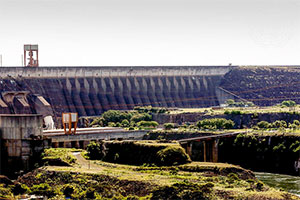 UN Power Plant, Paraguay. Credit: UN Photo/Evan Schneider
Energy has posed a great challenge for economies around the world. As global energy consumption skyrockets throughout the years, so does the need for sustainable solutions. The Sustainable Development Goals are essential in providing people with access to safe, affordable, and sustainable energy sources that minimize harm on the planet. Progress towards these goals opens the door for an advancement in modernization for communities on a global level and allows for a potential mitigation of tensions between nations.
The UN’s Summit of the Future in 2024 offered new initiatives that are being taken to achieve these goals, including a decreased reliance on fossil fuels, a switch to renewable energy sources, and improved climate financing.
IPS is well positioned to provide relevant, insightful, and compelling analysis of recent updates and measures being taken around the world to achieve a cleaner future.

The Week with IPS

NEXT STOP - SDGs
Tracking global progress towards a sustainable world
Tracking global progress towards a sustainable world
