Languages
Wednesday, October 7, 2026



News and Views from the Global South
Energy

UN Chief Seeks Fast-Paced Ratifications for Climate Change Treaty
Over 150 countries are expected to sign the Paris climate change agreement on April 22 but the historic treaty will not come into force until it has been ratified by 55 countries.
A World Drowning in Oil
Thanks to tensions between Saudi Arabia and Iran, major oil producers couldn’t come to an agreement in Doha to freeze their output to January levels to raise oil prices. The current low oil prices have a lot to do with the grim outlook for global economic growth while supply is growing. China, the second largest economy in the world, is slowing down. Not surprisingly, global oil demand is much lower at 94.8 million barrels a day vis-à-vis supply of 96.3 million barrels a day in the first quarter of 2016 according to the International Energy Agency.
Maquilas Help Drive Industrialisation in Paraguay
“There were cases of people who stopped coming to work after receiving their first wages and then came back a few days later to ask if there was more work,” because they were used to casual work in the informal economy, said Ivonne Ginard.
Sri Lanka Braces for Extreme Heat
Sri Lanka is facing the heat from a scorching sun for the past one month. In recent times, the country has imposed power cuts after almost a decade. The main reason was the stoppage at a coal power plant, but engineers at the Ceylon Electricity Board (CEB) admit that the island’s hydro-power generation capacity is at such a critical low that without additional coal, diesel and renewable generation, the country’s full demand for power cannot be met.
Papua New Guinea First to Finalize National Climate Plan Under Paris Agreement
On March 29, Papua New Guinea became the first country to formally submit the final version of its national climate action plan (called a “Nationally Determined Contribution,” or NDC) under the Paris Agreement. The small Pacific nation’s plan to transition to 100 percent renewable energy by 2030 is no longer just an “intended” nationally determined contribution (INDC) – it is now the country’s official climate plan.
Benefits of Backpack Biogas
Billions of dollars of aid has been pumped into Africa. Yet effective change too often remains an elusive outcome, leading to a vicious cycle: more needs, more aid but still little change. How to resolve this seemingly intractable dilemma?
Argentina’s ‘Shale Capital’ Suffers from Slowdown
The dizzying growth of Añelo, a town in southwest Argentina, driven by the production of shale oil and gas in the Vaca Muerta geological reserve, has slowed down due to the plunge in global oil prices, which has put a curb on local development and is threatening investment and employment.
Will the EU Become a Criminal Union Tomorrow?
The EUropean Union – a criminal? The EU that has peace as its top goal and received Nobel’s Peace Prize? The EU with Schengen and Dublin?
A “Colombian Triangle” for Daesh in Libya?
Besieged by US, UK, French, Russian and Syrian war crafts and ground intelligence, both in Syria and Iraq, the Islamic State of Iraq and Levant (Daesh from its original acronym in Arabic) has reportedly been searching for a new base in the North of Africa, specifically in Libya, in what has been called the “Colombian Triangle.”
Can Europe Survive – Back to a Better Yesterday?
The last formal act of European disintegration was the last negotiation between 28 European leaders and the Prime Minister of Turkey. The deal, against all international treaties, is a total capitulation to European values. Europe will give Turkey 6 billion dollars, and in exchange Turkey will keep refugees from coming to Europe. Or better, will screen everybody, and send to Europe only the Syrians who are eligible for political asylum.
Central America Makes Uneven Progress in Clean Energy
Over the last decade, Central America has managed to reduce its dependence on fossil fuels for the production of electric power, while expanding coverage. But the progress made by each country varies widely.UNDP Pledges to Help Eradicate Poverty, Hunger By 2030
The UN Development Programme (UNDP) celebrated its 50th anniversary this week with a pledge to help implement the UN’s post-2015 development agenda aimed at eliminating extreme poverty and hunger by 2030. When the agency was founded in 1966, one in every three people was living in poverty. But that number has changed to one in eight, according to UNDP figures.
Fall in Commodity Prices Rings Alarm Bells in Papua New Guinea
Resource-rich Papua New Guinea (PNG) is seen as an economic powerhouse in the Pacific Islands with a state-led focus on resource extraction initially expected to drive one of the world’s highest growth rates of 15 per cent last year. But in the wake of falling commodity prices, GDP growth has plummeted from 8.5 per cent in 2014 to a forecasted 3 per cent this year. As the government faces a growing deficit between revenue and expenditure, exacerbated by high public debt, experts in the country believe greater efforts to diversify the economy are essential.
UNDP at 50 Seeks Broad Coalition Targeting Sustainable Development
Fifty years ago, one in every three people around the world was living in poverty. It was against that backdrop that the United Nations Development Programme, UNDP, was founded in 1966. Ever since, UNDP has been a leader in working for a more fair and prosperous world for all. We have worked with governments, civil society, the private sector, and philanthropy to empower people and build resilient nations.
Costa Rica, UAE Cement Relations with Energy and Tourism
A visit by United Arab Emirates Foreign Minister Sheikh Abdullah bin Zayed Al Nahyan to Costa Rica paved the way for closer trade ties between the two countries, especially in the areas of tourism and sustainable energy.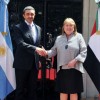
Argentina and United Arab Emirates Open New Stage in Bilateral Relations
With United Arab Emirates’ foreign minister Sheikh Abdullah bin Zayed Al Nahyan’s visit to Argentina, the two countries launched a new stage in bilateral relations, kicked off by high-level meetings and a package of accords.
Europe is disintegrating while its citizens watch indifferent
We are witnessing the slow agony of the dream of European integration, disintegrating without a single demonstration occuring anywhere, among its 500 millions of citizens. It is clear that European institutions are in an existential crisis but the debate is only at intergovernmental level.
United Arab Emirates Strengthens Ties with Argentina’s New Government
The new government of Argentina and the United Arab Emirates (UAE) are strengthening the relationship established by the previous administration, at a time when this South American country is seeking to bring in foreign exchange, build up its international reserves and draw investment, in what the authorities describe as a new era of openness to the world.Core Principals of Climate Finance to Realize the Paris Agreement
The Paris climate change conference brought together 197 countries and over 150 Heads of State – the largest convening of world leaders in history – to agree on measures and work together to limit the global average temperature rise.
The UAE’s Journey Towards Clean Energy
The discovery of hydrocarbon reserves brought tremendous prosperity for the UAE and made it a central player in the global energy market. With one of the highest gross domestic product per capita levels in the world, the UAE has generally used its wealth wisely to stimulate sustainable economic growth. However, volatility in oil markets, growing unrest across the region and the growing threat of climate change has concentrated minds on the need for immediate and decisive action.
Energy from All Sources, a Game of Chance in Brazil
Brazil, which boasts that it has one of the cleanest energy mixes in the world, is now plagued by corruption, poor market conditions, and bad decisions – a near fatal combination.« Previous Page — Next Page »





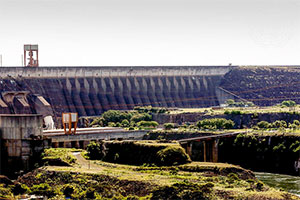 UN Power Plant, Paraguay. Credit: UN Photo/Evan Schneider
Energy has posed a great challenge for economies around the world. As global energy consumption skyrockets throughout the years, so does the need for sustainable solutions. The Sustainable Development Goals are essential in providing people with access to safe, affordable, and sustainable energy sources that minimize harm on the planet. Progress towards these goals opens the door for an advancement in modernization for communities on a global level and allows for a potential mitigation of tensions between nations.
The UN’s Summit of the Future in 2024 offered new initiatives that are being taken to achieve these goals, including a decreased reliance on fossil fuels, a switch to renewable energy sources, and improved climate financing.
IPS is well positioned to provide relevant, insightful, and compelling analysis of recent updates and measures being taken around the world to achieve a cleaner future.

The Week with IPS

NEXT STOP - SDGs
Tracking global progress towards a sustainable world
Tracking global progress towards a sustainable world
