Languages
Friday, October 2, 2026



News and Views from the Global South
Energy

UAE Described as Pioneer in the Field of Renewable Energy
When the government of Kenya hosted a U.N. Conference on New and Renewable Sources of Energy in Nairobi back in 1981, one of the conclusions at that meeting was a proposal for the creation of an international agency dedicated to renewable energy.
One Tune, Different Hymns – Tackling Climate Change in South Africa
Anti-nuclear energy activists are up in arms, and have taken to vigils outside South Africa’s parliament in Cape Town to protest against President Jacob Zuma’s push for nuclear development.
Kenya’s Climate Change Bill Aims to Promote Low Carbon Growth
Alexander Muyekhi, a construction worker from Ebubayi village in the heart of Vihiga County in Western Kenya, and his school-going children can now enjoy a tiny solar kit supplied by the British-based Azuri Technologies to light their house and play their small FM radio.
Faith Leaders Issue Global “Call to Conscience” on Climate
“We received a garden as our home, and we must not turn it into a wilderness for our children.”
Opinion: Addis Outcome Will Impact Heavily on Post-2015 Agenda – Part 2
The United Nations is the only universal forum that connects systemic issues to the global partnership for development. The latter recognises North-South cooperation based on historical responsibility and varying levels of development and capacity among member states of the U.N.
Calls Mount for “Bold” Climate Deal in Paris
A diverse coalition of 24 leading British scientific institutions has issued a communique urging strong and immediate government action at the U.N. climate change conference set for Paris in December.
Caribbean Seeks Funding for Renewable Energy Mix
A leading geothermal expert warns that the small island states in the Caribbean face “a ticking time bomb” due to the effects of global warming and suggests a shift away from fossil fuels to renewable energy is the only way to defuse it.
Security Council Defies U.S. Lawmakers by Voting on Iran Nuke Deal
When all 15 members of the Security Council raised their collective hands to unanimously vote in favour of the recently-concluded nuclear agreement with Iran, they were also defying a cabal of right-wing conservative U.S. politicians who wanted the United Nations to defer its vote until the U.S. Congress makes its own decision on the pact.
Opinion: Iran Deal Has Far-Reaching Potential to Remake International Relations
The Vienna agreement between Iran and the five permanent members of the United Nations Security Council acting in concert with Germany has the potential to remake international relations beyond the immediate goal of stopping Iran from acquiring nuclear weapons.
The Myths About the Nuclear Deal With Iran
The single biggest misunderstanding about the nuclear agreement with Iran is that it is a bilateral deal with the United States.
Big Oil Privately Accepted Global Warming, but Publicly Battled Climate Science
For decades, executives and decision makers at major U.S. and European fossil fuel companies were aware that carbon dioxide (CO2) emissions caused global warming, but still provided millions in funding to boost disinformation campaigns and sponsor scientists who denied climate change.
2014 Another Record-Shattering Year for Climate
A new report by the U.S. National Oceanic and Atmospheric Administration (NOAA) Center for Weather and Climate has found that 2014 was the warmest year ever recorded, with Eastern North America the only major region in the world to experience below-average annual temperatures.
Sixty-Five More Years Until Electricity for All in Africa – Report
Sub-Saharan Africa is still far behind in its ability to generate electricity, hampering growth and frustrating its ambitions to catch up with the rest of the world.
Nuclear Deal Takes U.S.-Iran Ties Out of Deep Freeze – Partly, at Least
A historic deal on Iran’s controversial nuclear programme was announced today during the early morning hours in Vienna over a decade after talks between Tehran and world powers began.
Opinion: U.N. Can Help Reform the International Financial System
The growth in global interdependence poses greater challenges to policy makers on a wide range of issues and for countries at all levels of development.
Fishing Families Left High and Dry by Amazon Dams
Small-scale fisherpersons were among the first forgotten victims of mega construction projects like the Belo Monte hydroelectric dam on the Xingú River in the Brazilian Amazon.
Science and Technology a Game Changer for Post-2015 Development Agenda
A group of international scientists, designated as advisers to U.N. Secretary-General Ban Ki-moon, has conveyed a significantly timely message to him: science, technology and innovation (STI) can be "the game changer" for the U.N.’s future development efforts.Groups Slam Green Climate Fund Approval of Firms Tied to Dirty Energy
Civil society representatives attending the board meeting of the Green Climate Fund (GCF) in Songdo, South Korea expressed strong disappointment Thursday with the board's decision to accredit Deutsche Bank - one of the world’s largest financiers of coal - to receive and distribute GCF funds.
Opinion: ASEAN Must Unite Against Climate Change
The Association of Southeast Asian Nations (ASEAN) started as a cooperation bloc in 1968. Founded by five countries - Thailand, Singapore, Malaysia, Indonesia and the Philippines - ASEAN has since evolved into a regional force which is slowly changing the landscape in global politics.
Opinion: SDGs, FfD and Every Single Dollar in the World
Ethiopia will host an important meeting on Financing for Development (FfD) Conference next week. One of the most-asked questions is: How much will it cost us to achieve the Sustainable Development Goals (SDGs)?
Climate Commission Issues Blueprint for Low-Carbon Economy
Up to 96 percent of the emissions reductions needed by 2030 to keep global warming below a critical threshold of two degrees C could be achieved through a series of 10 steps, says a new report released by the Global Commission on the Economy and the Climate.« Previous Page — Next Page »


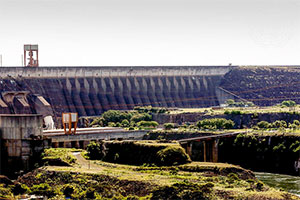 UN Power Plant, Paraguay. Credit: UN Photo/Evan Schneider
Energy has posed a great challenge for economies around the world. As global energy consumption skyrockets throughout the years, so does the need for sustainable solutions. The Sustainable Development Goals are essential in providing people with access to safe, affordable, and sustainable energy sources that minimize harm on the planet. Progress towards these goals opens the door for an advancement in modernization for communities on a global level and allows for a potential mitigation of tensions between nations.
The UN’s Summit of the Future in 2024 offered new initiatives that are being taken to achieve these goals, including a decreased reliance on fossil fuels, a switch to renewable energy sources, and improved climate financing.
IPS is well positioned to provide relevant, insightful, and compelling analysis of recent updates and measures being taken around the world to achieve a cleaner future.

The Week with IPS

NEXT STOP - SDGs
Tracking global progress towards a sustainable world
Tracking global progress towards a sustainable world
