Languages
Monday, October 26, 2026



News and Views from the Global South
Energy

Rio+20: Transforming Political Platitudes into Economic Realities
When world leaders endorse the final plan of action, titled "The Future We Want, at the Rio+20 summit in Brazil next week, a lingering question may remain unanswered: how best can the United Nations transform political platitudes into economic realities?
Germany’s Energy Revolution Hits Potholes
When the German government decided last year to phase out nuclear energy by 2022, following the catastrophe at the Fukushima power plant in Japan, it was clear that the process would require extraordinary effort, not only in further developing alternative energy sources, especially renewables, but also in upgrading the country-wide electricity grid.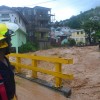
How Would You Measure Success at the Rio Summit?
When the heavily hyped three-day U.N. Conference on Sustainable Development (UNCSD) comes to a close in Rio de Janeiro Jun. 22, what would be the yardstick to measure its successes and failures?Trade, Military Cooperation to Top U.S.-India Talks
The ambassador of India to the United States, Nirupama Rao, on Friday suggested that high-level talks between the two countries, taking place here next week, would focus on "development" and the "people aspect of cooperation".New World Bank Environment Strategy Boosts Private Sector Role
The World Bank this week released its new environment strategy for the next decade, 2012 through 2022, saying the policy framework was crafted in response to "calls from governments and the private sector for new approaches to development in light of unprecedented environmental challenges".
Calls for an African Green Revolution, Only Smarter
To deal with looming food crises in the coming decades, Africa needs a Green Revolution on par with what took place in Asia during the 1960s and 1970s, according to experts in Washington.
Ahead of Rio+20, “The Economy is Already Turning Green”
While governments make a last desperate attempt to agree on a plan of action for next week's Rio+20 summit on sustainable development – including plans on the transition to a green economy and a set of sustainable development goals – the real economy is already turning green, according to Italy’s minister of environment, Corrado Clini.
RIO+20: A Stalemated U.N. in Do-or-Die Session on Action Plan
After weeklong negotiations, a meeting of the Preparatory Committee (PrepCom) to finalise a plan of action titled "The Future We Want" for next week's Rio+20 summit has failed to reach agreement - and deferred a decision to a final three-day session in Brazil.
RIO+20: Earth Summit Negotiated the Size of the Zero
Amidst much political fanfare, the 1992 Earth Summit in Rio de Janeiro concluded with the adoption of the Rio Declaration on Environment and Development and the landmark Agenda 21 blueprint for a sustainable future in the 21st century.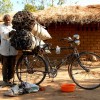
Malawi Turns to Mozambique for Power
On-again, off-again… it's the story of both Malawi's power supply and the interconnection project that could end blackouts with power imported from neighbouring Mozambique.
When Energy Begins to Flow Long Distance
With rising energy prices and stringent requirements for producing a higher proportion of energy from renewable sources in the near future, long-distance electricity cables are increasingly thought of as a viable option for providing electricity.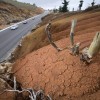
“Land Is Our Ally, But Its Patience Is Not Eternal”
Land degradation poses a threat to all life on Earth including humanity. To stop the enormous loss of life-giving land, the United Nations Convention to Combat Desertification (UNCCD) is pushing for a sustainable development goal of Zero Net Land Degradation (ZNLD) to be adopted at the upcoming Conference on Sustainable Development, known as Rio+20, in Brazil.
U.N. Aims To Offset its Own Carbon Footprint
As the international community readies for a global mega-conference on sustainable development in Brazil mid-June, the United Nations is determined to practice what it preaches to the outside world: improve resource efficiency and drastically reduce its own greenhouse gas emissions.
Dam Company in Chile Presses Gov’t for Supportive Policies
Colbún, the electricity generating company that co-owns HidroAysén and its multi-dam project in southern Chile, has recommended suspending the environmental impact assessment for power transmission lines that would connect the hydropower complex to the country's central grid, until the right conditions are in place.
For an Ailing Planet, the Cure Already Exists
The planet's climate recently reached a new milestone of 400 parts per million (ppm) of carbon dioxide in the Arctic.
Rio+20 – a Call to Responsibility, a Call to Action
We are all going through a period of great confusion and uncertainty.
Activists from Many Nations Condemn Chevron
More than 100 people gathered Wednesday outside the gates of Chevron's sprawling headquarters in upscale San Ramon in the San Francisco Bay area of California, where police and security barred those without passes to the shareholder meeting from entering.U.S. Corporations Send Mixed Messages on Climate Science
According to a report released by the Union of Concerned Scientists (UCS) here on Wednesday, at least half of the U.S. corporations under review have actively supported the misrepresentation of the science around climate change.
Biomass Plantations Can Power India
Valli, 50, and Sarasu, 60, have been working with Energy Plantation Projects India (EPPI) since inception in 2007, the income they earn forming an integral part of their household budgets. "We easily manage household work and a salary-paying job," they tell IPS.Energy Agency Looks to Natural Gas “Golden Age”
If a series of "golden rules" can be followed, a new report from the International Energy Agency (IEA) suggests, global natural gas usage could grow by more than 50 percent by 2035.
Q&A: North-South Divide Looms Heavily Over Rio+20 Summit
The 1992 Earth Summit in Rio de Janeiro was to a large extent derailed by a North-South divide: a battle between a coalition of rich industrial nations versus the world's developing countries led by the Group of 77.« Previous Page — Next Page »





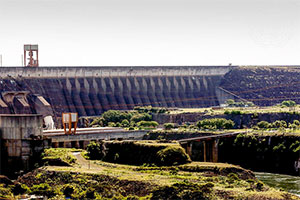 UN Power Plant, Paraguay. Credit: UN Photo/Evan Schneider
Energy has posed a great challenge for economies around the world. As global energy consumption skyrockets throughout the years, so does the need for sustainable solutions. The Sustainable Development Goals are essential in providing people with access to safe, affordable, and sustainable energy sources that minimize harm on the planet. Progress towards these goals opens the door for an advancement in modernization for communities on a global level and allows for a potential mitigation of tensions between nations.
The UN’s Summit of the Future in 2024 offered new initiatives that are being taken to achieve these goals, including a decreased reliance on fossil fuels, a switch to renewable energy sources, and improved climate financing.
IPS is well positioned to provide relevant, insightful, and compelling analysis of recent updates and measures being taken around the world to achieve a cleaner future.

The Week with IPS

NEXT STOP - SDGs
Tracking global progress towards a sustainable world
Tracking global progress towards a sustainable world
