Languages
Tuesday, October 27, 2026



News and Views from the Global South
Energy

Rio+20 is Everyone’s Conference
The United Nations Conference on Sustainable Development, otherwise known as Rio+20, is a once-in-a-generation opportunity.Native Canadians See Way of Life Under Assault
Canada's West Coast First Nations are feeling overwhelmed by crises affecting their land rights, economic well-being and health, prompting warnings in one territorial dispute with a local energy company that the country risks a degeneration of Aboriginal-federal government relations to a level unseen in two decades.
‘Green Economy’ – New Disguise for Old Tricks?
Though the current global economic and financial crises are undoubtedly devastating much of the world, they present the perfect opportunity for remodeling our economic system, according to participants at the ninth annual Terra Futura (Future Earth) exhibition of ‘good practices’ in social, economic and environmental sustainability held here from May 25-27.
Selling Ethanol Stoves in Mozambique to Generate Carbon Credits
Along a dirt road in Mozambique’s Sofala province, a long line of men on bicycles stretches into the distance, each carrying an impossibly big bag of charcoal strapped to his bike.
Outsourced Chilean Copper Workers “21st Century Slave Labour”
"Temporary and subcontracted workers in the copper industry are the slave labour of the 21st century. Lacking rights and social protection, they are vulnerable and defenceless," complained Cristián Cuevas, the leader of a union for outsourced Chilean copper workers.Brazil and China, Oiling the Wheels of Business
China's voracious demand for energy has prompted it to embrace Brazil as a major oil partner, fuelling the dramatic expansion of Chinese companies in this South American country. But while some see this as a boost to the Brazilian economy, others fear that it poses a risk to this country’s future self-sufficiency.
Big Hydropower Dams Trump Alternative Energy in Chile
Chile has enormous potential for producing non-conventional renewable energies (NCRE) like solar and geothermal, yet they only contribute three percent of the country's energy mix.
Belo Monte Dam Hit by Friendly Fire
Those who made the final decision on the design of Brazil’s Belo Monte hydroelectric dam will face legal action in the future for the damages caused. This is the kind of warning one would expect from environmentalists, but in this case it comes from a surprising quarter: staunch supporters of hydropower.
Guatemalan Communities Have No Say in Exploitation of Resources
"People haven’t been coming in for the past month or so because they are afraid again, like during war-time," complained Juan Gaspar, a shopkeeper in the northwestern Guatemalan town of Santa Cruz Barillas, where a fierce battle is raging between locals opposed to a hydropower dam and the security forces.
Brazil Drives Energy Integration in South America
Energy integration in South America will be a reality "in the medium to long term," driven by hydropower and drawing on Brazil’s experience, predicts Altino Ventura Filho, secretary of planning in this country’s Ministry of Mines and Energy.
From Mubarak To Worse
More than 15 months after Egypt's Tahrir Square uprising and four months after free parliamentary polls, many Egyptians say that daily living conditions are worse now than they were in the Mubarak era.
World Bank Accused of Ignoring Lessons on Mega Infrastructure
In a renewed funding focus on large-scale infrastructure, the World Bank, Group of 20 (G20) countries and other multilateral groups are wilfully overlooking lessons learned decades ago, a new report by International Rivers warns.Public Funds Could Help Provide Water and Electricity, Researchers Say
For several decades, governments around the globe have turned to privatisation as the best option to help relieve the world's destitute by providing them with health care services, water and electricity. By and large, however, this effort has failed.
Argentina Faces the Dilemma of Unconventional Oil and Gas
Vast reserves of natural gas and oil trapped underground, whose exploitation would signify major environmental impacts, will be the greatest challenge facing YPF, the Argentine oil company that recently returned to state control.
French Environmentalists Want ‘Green’ Without the ‘n’
As France’s president-elect Francois Hollande prepares to form a new government, many environmentalists are calling for the appointment of an ecology minister with real power who can deliver on promises to reduce the use of nuclear power as well as cut carbon emissions.
China Key to Green Tech Innovation?
With U.S. federal funding sources for renewable energy sources already drying up, coupled with a newfound antipathy towards "green" issues issue here in Washington, some are suggesting that China could offer an important opportunity for the future of renewables in the United States and around the world.
Renewable Energies Need New Incentives
Clean, renewable energies contribute to economic growth and job creation while decreasing dependency on imports. This is why governments should be increasing incentives for the development of renewable energy during a crisis like the one facing Europe today, German engineer Björn Pieprzyk told Tierramérica.
Egypt-Israel Gas Issue Becoming Explosive
The two weeks since Egypt's abrupt cancellation of a Mubarak-era gas-export deal with Israel have seen an exchange of indirect threats and warnings between the two countries, culminating in an apparent Israeli military build-up on the border of Egypt's Sinai Peninsula.
Renationalised YPF Aims to Bring Self-Sufficiency in Oil and Gas
After the Argentine Congress approved the renationalisation of YPF, the country’s biggest oil company, late Thursday, thousands of demonstrators from different political and social groups cheered the decision outside the legislature.
Standing Up for the Planet and the Future
What are you doing on Saturday? Peter Nix, a retiree, will be standing on a railway track on Canada's west coast blocking a coal train destined to ship U.S. and Canadian coal to Asia.
U.S. Corporations Sponsor Carbon Scam in Europe**
Major publicly traded U.S. corporations, including Dow Chemical, ConocoPhillips, Chevron and Cabot Corporation, have secured multi-million-dollar dubious carbon credits to compensate for their greenhouse gas emissions in Europe, as revealed in this investigative report.« Previous Page — Next Page »





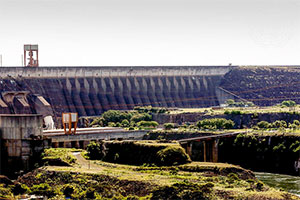 UN Power Plant, Paraguay. Credit: UN Photo/Evan Schneider
Energy has posed a great challenge for economies around the world. As global energy consumption skyrockets throughout the years, so does the need for sustainable solutions. The Sustainable Development Goals are essential in providing people with access to safe, affordable, and sustainable energy sources that minimize harm on the planet. Progress towards these goals opens the door for an advancement in modernization for communities on a global level and allows for a potential mitigation of tensions between nations.
The UN’s Summit of the Future in 2024 offered new initiatives that are being taken to achieve these goals, including a decreased reliance on fossil fuels, a switch to renewable energy sources, and improved climate financing.
IPS is well positioned to provide relevant, insightful, and compelling analysis of recent updates and measures being taken around the world to achieve a cleaner future.

The Week with IPS

NEXT STOP - SDGs
Tracking global progress towards a sustainable world
Tracking global progress towards a sustainable world
