Languages
Wednesday, October 28, 2026



News and Views from the Global South
Energy

Bolivia Boosts Incentives for Foreign Oil Companies
Almost six years after the nationalisation of gas and oil reserves in Bolivia, foreign companies maintain an active presence in the sector, and the government is now offering them greater incentives to increase oil production.
U.S. Lifestyle Is Not Up for Negotiation
Just before the 1992 Earth Summit in Rio de Janeiro, some of the industrial nations, and specifically the United States, were lambasted for their obscenely high consumption of the world's finite resources, including food, water and energy.
U.S.: Citizens Reclaim Energy Cooperatives
As the United Nations and countries around the world look at cooperatives as an alternative economic model for the production of energy, rural energy cooperatives have thrived for over eight decades in the U.S., and citizens in some parts of the country are beginning to reclaim them through the democratic process.
High Oil Costs Drive Jamaica’s Clean Energy Agenda
A growing appetite for oil and some of the Caribbean region's highest electricity rates and petroleum prices are driving Jamaica's thrust toward clean energy alternatives.
Q&A: The Road to Rio Goes Through Cairo
The U.N. Population Fund (UNFPA) rightly believes the road to Rio goes via Cairo - and that sustainable development and population are inextricably linked.OP-ED: Carbon Doxide Emissions on the Rise as the Kyoto Era Fades
At the Mauna Loa Observatory in Hawaii, the latest on-site measurements of carbon dioxide in the atmosphere by the Scripps Institute of Oceanography reveal that global atmospheric carbon dioxide (CO2) concentrations reached 391.3 parts per million (ppm) in 2011, up from 388.56 ppm in 2010 and from 280 ppm from pre-industrial times.
In New U.S. “Bioeconomy”, Industry Trumps Environment
The White House on Thursday announced the formulation of the National Bioeconomy Blueprint, aimed at shoring up the U.S. commitment to bioscience-related research.
But What in Place of Nuclear Power
In the wake of Fukushima, the Swiss government decided last year to slowly, but definitely phase out nuclear energy. But the new energy strategy for the next decade has drawn criticism, especially from environmental organisations.
Kenya “Becoming Economic Heartbeat of Africa”
When Kenya’s newly announced geothermal power generation project comes online, it will turn the East African country into an economic powerhouse in the region.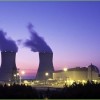
Legal Challenges Counter Plans for New Nuclear Reactors
Until this past February, the last time new nuclear power construction was approved in the United States was in 1978. But when the U.S. Nuclear Regulatory Commission (NRC) approved two proposed nuclear reactors at Plant Vogtle near Augusta, Georgia, on February 9 in a four to one vote, it took less than a week for the legal action to begin.
Q&A: Harnessing the African Information Renaissance
About 140 million Africans are now on the internet. With half of the population under age 15 and 70 percent of the population under 30, social media is becoming an important feature in the continent's development path.Iceland Finds New Power in Farms
"With the fuel from the agriculture project, we are encouraging farmers to look at possibilities they might have to produce their own energy, while at the same time getting the Agricultural University and Farmers’ Association to work towards supporting and encouraging the farmers," says Haraldur Benediktsson, chair of the Icelandic Farmers’ Association about the campaign to reduce energy bought by farmers by 20 percent by 2015 and 80 percent by 2020.
Intra-African Trade or Global Integration: A Chicken-and-Egg Dilemma?
Though the World Trade Organisation (WTO) has long held that trade between African countries is too low, experts at the South Centre, an inter-governmental think tank of developing countries, say intra-continental trade is already significant in manufactured goods and promises a new path to industrialisation.ARGENTINA-SPAIN: Business Must Go On
Hundreds of Spanish companies continue to do business in Argentina, despite Madrid’s campaign in defence of Repsol, which controls YPF – the oil company that the government of Cristina Fernández plans to renationalise.
CARIBBEAN: Turning Landfills into Energy
The tourist brochure shows pictures of lovely white sandy beaches, tall coconut trees and rolling mountains. Welcome to the Caribbean.Challenges for Future Nationalised Oil Co. in Argentina
One of the big challenges facing the Argentine government in its plans to regain state control of the country's biggest oil firm, YPF, is to make up for the time lost under private management, when production and exploration fell.
Indonesian Farmers Burned in Biofuel Drive
Dreams of sending his children to quality schools have vanished for 40-year-old farmer Muslikin, as the father of three now struggles to repay the bank loan he took out to finance his jatropha plantation in 2006.
OP-ED: Getting the Market to Tell the Truth
Moving the global economy off its current decline-and-collapse path depends on reaching four goals: stabilising climate, stabilising population, eradicating poverty, and restoring the economy's natural support systems.
Green Economy or Clean Energy With Equity for Latin America
Latin America and the Caribbean have the potential to uncouple regional economic growth from fossil fuel consumption and develop a "green economy" based on cleaner energy sources, while at the same time reducing social inequalities.
Brazil, U.S. Deepen Ties Ahead of Obama’s Latin America Week
Kicking off what some here have called President Barack Obama's "Latin America Week", the president and his Brazilian counterpart, Dilma Rousseff, touted a deepening of bilateral ties in her first visit to the White House as president of South America's superpower.
OP-ED: Where Economic and Environmental Prosperity Meet
One of the lesser-known catalysts of the 2011 Arab Spring uprisings was a global grain crop failure in 2010, caused by drought and flooding that year from Russia to Canada.« Previous Page — Next Page »





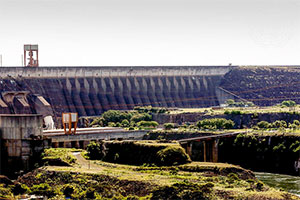 UN Power Plant, Paraguay. Credit: UN Photo/Evan Schneider
Energy has posed a great challenge for economies around the world. As global energy consumption skyrockets throughout the years, so does the need for sustainable solutions. The Sustainable Development Goals are essential in providing people with access to safe, affordable, and sustainable energy sources that minimize harm on the planet. Progress towards these goals opens the door for an advancement in modernization for communities on a global level and allows for a potential mitigation of tensions between nations.
The UN’s Summit of the Future in 2024 offered new initiatives that are being taken to achieve these goals, including a decreased reliance on fossil fuels, a switch to renewable energy sources, and improved climate financing.
IPS is well positioned to provide relevant, insightful, and compelling analysis of recent updates and measures being taken around the world to achieve a cleaner future.

The Week with IPS

NEXT STOP - SDGs
Tracking global progress towards a sustainable world
Tracking global progress towards a sustainable world
