Languages
Wednesday, October 28, 2026



News and Views from the Global South
Energy
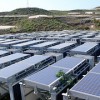
Oil Drilling Threatens Spain’s Renewable Energy Paradise
Environmentalists and local authorities are opposed to prospecting for oil in the waters off the Canary Islands, one of Europe’s leading tourist destinations and an area with great potential in the field of renewable energy.
U.N. Warns of Staggering Urbanisation in Asia, Africa
Asia and Africa will account for a hefty 86 percent of all increases in the world's urban population in the next four decades, the United Nations said in a report released Wednesday.
Wind Turbines Bring Relief and Resentment to Pakistan
"I still cannot fathom how electricity can be produced by the wind," said a nonplused Mohammad Ahmed, a 55-year-old local baker, as he gazed up at a row of giant wind turbines.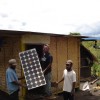
Solar Panels Reflect Bright Future for Rural Papua New Guinea
In Papua New Guinea (PNG), which has no national power grid but large river systems and abundant sunshine, renewable energy has tremendous potential to transform remote rural lives with clean and sustainable electricity.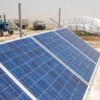
A Little Power to Some Palestinian People, For Now
A handful of makeshift homes built from small boulders and plastic tarps and secured with thick ropes sit in the isolated community of She’b El- Buttum in the South Hebron Hills. A few metres away, several rows of solar panels and two wind turbines are affixed to the rocky hilltop, providing electricity to the village’s 150 residents.
Petrol Guzzlers Send Venezuela’s Carbon Emissions Soaring
China may be the country that emits the most carbon dioxide (CO2), but oil-rich Venezuela and some of its Caribbean neighbours produce more of this greenhouse gas responsible for global warming on a per capita basis.
Soaring Energy Prices Push Anguilla Toward Renewables
The 15,000 residents of this British Overseas Territory had always prided themselves on having perhaps the most reliable and efficient source of electricity in the Caribbean.
Dominica Seeks Millions for Climate Change Strategy
Dominica presented its "2012-2020 Low Carbon Climate Resilient Development Strategy" to donors including the World Bank on Wednesday in a bid to gain wider access to funding and position itself as a regional leader in renewable energy.Opinions Divided Over Chevron Trial in Brazil
Opinions are divided in Brazil over the prosecution of U.S. oil giant Chevron for two oil spills. While some argue that the legal action is an over-reaction triggered by nationalism, others say it is necessary to show that Brazil is serious about protecting the environment.
Mexico, So Close to Oil, So Far from Clean Energy
Mexico is not only lagging in the development of renewable energies, but some of the projects that are being carried out actually pose a threat to the environment and biodiversity, such as a wind farm on the island of Cozumel, activists say.Energy: Chilean Community Wins First Round Against Brazilian Billionaire
Plans to build a massive thermoelectric power plant complex near an area of rich marine biodiversity has sparked fierce opposition from the small northern Chilean farming town of Totoral, which has now scored its first victory in court.
World Water Forums Expose Large Dams as ‘Unsustainable’
Numerous non-governmental organisations used the World Water Forum (WWF) held in Marseille last week as an opportunity to remind the international community about the serious global impacts of large dams all over the world.
World Wind Power Climbs to New Record In 2011
Wind energy developers installed a record 41,000 megawatts of electricity-generating capacity in 2011, bringing the world total to 238,000 megawatts.
Seoul Summit Aims at Nuclear Safety Amidst Rising Threats
Against the backdrop of a politically-waffling, nuclear-armed North Korea as its unpredictable neighbour, South Korea is hosting a nuclear security summit later this month to be attended by over 40 heads of state and government.
The Sun Shines Less on Solar Power in Germany
Germany is capable of producing as much solar energy as the rest of the world together. But now the German government is proposing dramatic cuts in subsidies for solar panels. They say consumer demand is so high it can no longer support the technology.
Integration Can Help Amazon’s Post-Megaproject Blues
Trade with the rapidly expanding market in Peru will aid Porto Velho, in northwest Brazil, to cushion the blow of job and business losses in the wake of the construction of two hydroelectric plants on the Madeira river.Malaysians Fight Radioactive Waste From Oz
Malaysians protesting against an Australian-owned rare earth refinery, that will generate radioactive waste, are determined to agitate until the project is abandoned.
Tense Tug-of-War over Peru-Brazil Energy Agreement
Brazil is keen to move ahead quickly with the construction of hydropower plants in neighbouring countries to supply its demand for electricity. But Peru is still stalling on an agreement between the two countries, due to a number of conflicting interests and demands.Dwindling Resources Trigger Global Land Rush
A global scramble for land and mineral resources fuelled by billions of investment dollars is threatening the last remaining wilderness and critical ecosystems, destroying communities and contaminating huge volumes of fresh water, warned environmental groups in London Wednesday.SOUTH AFRICA: Rural School Running on Methane Bio-Gas
Tucked against the rolling hills of South Africa’s Eastern Cape province, a small rural school has been turning its kitchen scraps, and agricultural and human waste into methane gas for cooking, and nutrient-rich fertiliser, and is even recycling its water.
Dwindling Resources Trigger Global Land Rush
A global scramble for land and mineral resources fuelled by billions of investment dollars is threatening the last remaining wilderness and critical ecosystems, destroying communities and contaminating huge volumes of fresh water, warned environmental groups in London Wednesday.« Previous Page — Next Page »





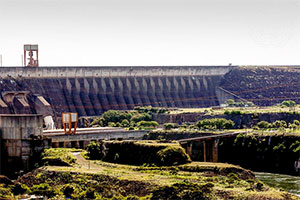 UN Power Plant, Paraguay. Credit: UN Photo/Evan Schneider
Energy has posed a great challenge for economies around the world. As global energy consumption skyrockets throughout the years, so does the need for sustainable solutions. The Sustainable Development Goals are essential in providing people with access to safe, affordable, and sustainable energy sources that minimize harm on the planet. Progress towards these goals opens the door for an advancement in modernization for communities on a global level and allows for a potential mitigation of tensions between nations.
The UN’s Summit of the Future in 2024 offered new initiatives that are being taken to achieve these goals, including a decreased reliance on fossil fuels, a switch to renewable energy sources, and improved climate financing.
IPS is well positioned to provide relevant, insightful, and compelling analysis of recent updates and measures being taken around the world to achieve a cleaner future.

The Week with IPS

NEXT STOP - SDGs
Tracking global progress towards a sustainable world
Tracking global progress towards a sustainable world
