Languages
Friday, November 6, 2026



News and Views from the Global South
Energy
Russia’s Agony a “Wake-Up Call” to the World
A wind turbine on an acre of northern Iowa farmland could generate 300,000 dollars worth of greenhouse-gas-free electricity a year. Instead, the U.S. government pays out billions of dollars to subsidise grain for ethanol fuel that has little if any impact on global warming, according to Lester Brown.ARGENTINA: Limits to Economic Growth Loom
The Argentine economy is making a rapid recovery after the impact of the global financial crisis last year, but experts warn about the limits to growth, which will reach a ceiling shortly unless investments increase.INDIA: End to Fuel Subsidies Brings Damaging Diversions
While India's opposition parties are agitating against moves by the pro-reform government of Prime Minister Manmohan Singh to remove subsidies on petrol and other fuels, experts say the country has laboured too long under price distortions that have not benefited poorer people -- or the environment.
PERU: Transparency a Challenge for Mining and Oil
Peru is the only Latin American country that has made steps towards joining the international Extractive Industries Transparency Initiative (EITI), but has a difficult stretch ahead as it tries to overcome industry resistance to reporting profits and the government's own obstacles.COSTA RICA: Working Towards Carbon Neutrality
With the elimination of certain taxes and the implementation of several green initiatives, Costa Rica is pressing forward in its aim to promote sustainable energy generation with a view to achieving "carbon neutrality" by 2021, the year this country will celebrate two centuries of independence.
Q&A: Clean Energy and Cultural Survival in Nicaragua
For the past six years, French and U.S. engineers have been installing solar panels and wind turbines in the southeastern Nicaraguan town of Bluefields, promoting clean energy and development among the region's Rama indigenous peoples.
CUBA: Village with English Past, Ecological Present
Only hurricanes disrupt the tranquility of Cocodrilo, a Cuban coastal village founded by immigrants from the Cayman Islands in the early 20th century.As Sanctions Rise, China Steps Deeper Into Iran
The European Union's new sanctions against Iran appear to open a new space for eager Chinese companies to expand their investments in a country viewed as a rogue player by much of the western world.VENEZUELA: Chronic Oil Leaks Sully Lake Maracaibo, Livelihoods
Dark oil slicks are spreading from the middle of Venezuela's Lake Maracaibo towards the shores -- the wetlands, mangroves, beaches and docks. Oil is permeating fishing nets, coating the garbage dumped into the water, killing off wildlife and driving away residents and tourists.Hopes Fade for Languishing U.S. Climate Bill
The Barack Obama administration has found success in passing healthcare reform and legislation touted as an "overhaul" of the U.S. financial system, but last week it became clear that the Democrats wouldn't advance a climate change bill until after the August recess and, more likely, until next year.
Spain’s Renewable Energy Heads West
Plagued by Spain's economic recession and subsidy cuts, renewable energy businesses are following the sun and wind to Latin America in search of profits.
BP Oil Poisons the Gulf of Mexico’s Food Chain
Shellfish in the Gulf of Mexico grow with drops of petroleum inside them, coyotes eat oil-soaked birds, and sharks suffocate when the oil coats their gills.Canada Coming With Worse Than Oil
Fears of a trade dispute with Canada have made European Union officials reluctant to categorise tar sands from North America as a more polluting fuel than conventional petrol.
CHINA-NIGERIA: New Refinery Planned for Lagos Free Trade Zone
Nigeria is a place where many more deals are announced than are ever completed. But July saw progress towards the construction of one of three new Nigerian refineries expected to reduce imports of refined petroleum products, a costly and ironic feature of the oil-rich nation's economy.China: Outsmarting the West in Africa
China's interest in Africa is frequently portrayed simply as that of a rising economic power seeking natural resources. Deborah Brautigam argues that this portrayal misses the full complexity of business relations between China and the continent.
LATIN AMERICA: Environment’s Poverty-Fighting Potential Largely Ignored
The environment remains a second-tier matter in Latin America and the Caribbean despite being interwoven with persistent poverty and stalled economic development in the region, according to a new report from the United Nations Environment Programme.CENTRAL AMERICA: Doors Wide Open for Renewable Energy
Heavy reliance on petroleum imports, the need for electricity in rural areas, and the ongoing effort towards sustainable development have focussed Central America's attention on renewable energy. But that doesn't mean there isn't opposition.
BRAZIL: Electricity Trumps Biodiversity for Xingu River
Herculano Porto de Oliveira, of Brazil, said he felt forced "to live in hiding on my own land, though I never fought with anyone or stole anything," just for making a living from the biodiversity of the Amazon's Xingú River Basin, where he was born 66 years ago.
EGYPT: Oil, Water and Tourism Don’t Mix
Egypt's Red Sea resort cities have grown up in the shadow of oil development, but with tourism booming and the country's oil reserves drying up, many stakeholders think it is time to exorcise the oil spectre.
Q&A: “Latin America Faces an Environmental Emergency”
The Latin American economy based on exploitation of natural resources does not create social well-being and is unsustainable in the context of climate change, says Uruguayan Eduardo Gudynas, lead researcher at the Latin American Centre for Social Ecology (CLAES).
COLOMBIA: Palm Planters and Displaced People Wait for New Government
Twenty-three African palm plantation owners, who invested 34 million dollars in Colombia up to 2003 and have spent another 15 million dollars on a palm oil refinery, are soon to be sentenced by a court.« Previous Page — Next Page »





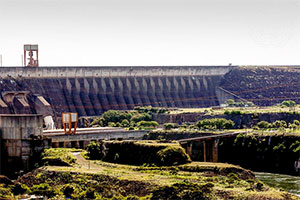 UN Power Plant, Paraguay. Credit: UN Photo/Evan Schneider
Energy has posed a great challenge for economies around the world. As global energy consumption skyrockets throughout the years, so does the need for sustainable solutions. The Sustainable Development Goals are essential in providing people with access to safe, affordable, and sustainable energy sources that minimize harm on the planet. Progress towards these goals opens the door for an advancement in modernization for communities on a global level and allows for a potential mitigation of tensions between nations.
The UN’s Summit of the Future in 2024 offered new initiatives that are being taken to achieve these goals, including a decreased reliance on fossil fuels, a switch to renewable energy sources, and improved climate financing.
IPS is well positioned to provide relevant, insightful, and compelling analysis of recent updates and measures being taken around the world to achieve a cleaner future.

The Week with IPS

NEXT STOP - SDGs
Tracking global progress towards a sustainable world
Tracking global progress towards a sustainable world
