Languages
Saturday, November 7, 2026



News and Views from the Global South
Energy
The Return of the Bicycle
The bicycle has many attractions as a form of personal transportation. It alleviates congestion, lowers air pollution, reduces obesity, increases physical fitness, does not emit climate-disrupting carbon dioxide, and is priced within the reach of the billions of people who cannot afford a car.AMERICAS: We Need Sustainable Development Banks, Say NGOs
Non-governmental organisations from across the Americas are demanding that the World Bank and the Inter-American Development Bank institute policies that favour sustainable energy and help mitigate climate change.
PERU: ‘Don’t Minimise’ Impacts of Amazon Oil Spill
Pluspetrol's Jun. 19 petroleum spill has left the Marañón River, in the Peruvian Amazon, with oil and grease levels thousands of times greater than the maximum allowed for human consumption, affecting more than 4,000 local residents.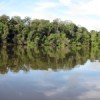
BRAZIL: Belo Monte Dam Means Floods for Some, Drought for Others
"There will be two years of abundance, and then famine," says Brazilian indigenous leader José Carlos Arara, laying bare his opinion of the promises that the Belo Monte hydroelectric dam will not alter the living conditions of the people in this part of the eastern Amazon.Gulf Spill Could Produce Wealth of Scientific Knowledge
Eventually, the oil spewing from the ruptured well of BP's Deepwater Horizon offshore rig will stop. And some time after that the bulk of the mess will be cleaned up. By then, though, the amount of damage done to the Gulf of Mexico may be catastrophic - but will we know just how catastrophic?U.N. Report Optimistic on Anti-Poverty Strides
Despite the ongoing financial crisis, global poverty rates are expected to fall by half in the next five years compared to 1990, according to the Millennium Development Goals (MDG) Report 2010 launched on Wednesday by Secretary-General Ban Ki- Moon.ECUADOR: Chinese Mega Loan for Dam Draws Fire
The opposition and experts in Ecuador are questioning a 1.68 billion dollar loan from China to finance 85 percent of the construction and equipment of the Coca Codo Sinclair hydroelectric dam.
ENERGY: Brazilian Dams in Peru’s Jungle, to Supply Brazil
An energy deal that Peru and Brazil signed this week in the Amazon city of Manaus in Brazil is opposed by environmentalists and local indigenous communities in Peru where the planned hydroelectric dams will be built. What is at stake?Obama Vows Clean Energy Push, Green Groups Want Details
Despite the pleas of some conservative politicians that parallels should not be drawn between the oil spreading over the Gulf of Mexico and the need to transition out of a reliance on fossil fuels, U.S. President Barack Obama made it clear Tuesday night that he sees the race against the spreading oil as inherently connected to the race against a changing climate.LATIN AMERICA: Predatory Harvests
Industrial-scale monoculture farming is violating the human rights to adequate food and housing, as well as labour, territorial and environmental rights in Latin America, according to a report released Monday in the Mexican capital.BRAZIL: Thirst for Energy Drives Construction of More Dams in Amazon
Electricity consumption in Brazil will rise by 5.9 percent a year until 2019, and hydroelectric plants will continue to be the main source of power because they generate it at a lower cost, the government announced.Europe’s Green Energy Portfolio Up in Smoke?
Europe seems hell-bent on burning the world's forests for bioenergy, even as it offers billions of euros to save them, critics say.Money Begets Environmental Evils, Study Finds
Rising global wealth spells disaster for the planet, with environmental impacts growing roughly 80 percent with a doubling of income, reports the first comprehensive study of consumption.BOLIVIA: Guarani, Tapiete Peoples Fight Gas Exploration
The explosive charges utilised in fossil fuel exploration in Bolivia's Chaco region divert underground water flows, scare off wildlife and harm the environment, charge the leaders of local indigenous Guaraní communities, which have been blocking access routes to keep oil company employees from entering the area.
More Deepwater Disasters on the Horizon?
Despite a federal moratorium on offshore oil drilling, new permits and controversial environmental waivers for oil rigs continue to be granted, sparking criticism from policymakers and environmentalists.EUROPE: Cutting Emissions, and Costs
Deeper cuts to the European Union's greenhouse gas emissions than those approved by its governments would be less expensive than previously thought, according to a new analysis.
MEXICO: Women Electrical Workers at Centre of Struggle for Jobs
"Our male coworkers have had to acknowledge it: we have worked side by side in this struggle," says Emilia Peña, describing the role of women in driving forward the battle waged by thousands of workers to reopen a state power company in Mexico.Peruvian Congress Calls in Debt from U.S. Oil Executive
The Peruvian Congress has opened proceedings to demand that U.S. businessman William Kallop pay the Treasury 482.2 million dollars -- taxes on the 900-million-dollar sale of a petroleum company and other debts to the government.GULF: Search On for Green Options to Forestall Water Shortage
Realising that achieving water security in the future is not an option but a necessity, oil-rich Gulf countries are striving to find new environment-friendly and more economical ways of producing freshwater.Reclaiming the Streets
Cars promise mobility, and in a largely rural setting they provide it. But in an urbanising world, where more than half of us live in cities, there is an inherent conflict between the automobile and the city.
Q&A: Can Democracy Survive the “Oil Curse” in Africa?
Africa’s economic boom, driven by oil, has undermined the idea that democracy is a prerequisite for economic development on the continent.« Previous Page — Next Page »





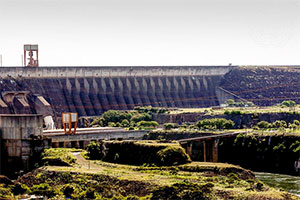 UN Power Plant, Paraguay. Credit: UN Photo/Evan Schneider
Energy has posed a great challenge for economies around the world. As global energy consumption skyrockets throughout the years, so does the need for sustainable solutions. The Sustainable Development Goals are essential in providing people with access to safe, affordable, and sustainable energy sources that minimize harm on the planet. Progress towards these goals opens the door for an advancement in modernization for communities on a global level and allows for a potential mitigation of tensions between nations.
The UN’s Summit of the Future in 2024 offered new initiatives that are being taken to achieve these goals, including a decreased reliance on fossil fuels, a switch to renewable energy sources, and improved climate financing.
IPS is well positioned to provide relevant, insightful, and compelling analysis of recent updates and measures being taken around the world to achieve a cleaner future.

The Week with IPS

NEXT STOP - SDGs
Tracking global progress towards a sustainable world
Tracking global progress towards a sustainable world
