Languages
Friday, November 20, 2026



News and Views from the Global South
Food and Agriculture
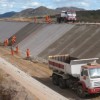
BRAZIL: Costly Water for the Poor Northeast
The visual impact is harsh: flattened hills, valleys full of mud, and kilometres and kilometres of bulldozed land - the modification of nature in Brazil's semiarid Northeast region is disturbing due to the enormous dimensions involved.
Q&A: ‘Soil is Key to Global Warming, Food Security’
Luc Gnacadja, in his second three-year term as executive secretary, United Nations Convention to Combat Desertification (UNCCD), is widely seen as delivering on his commitment to manage the world's drylands.MEXICO: Transgenic Cotton Harbours Hidden Dangers
Wild cotton in Mexico has been contaminated with genetically modified material, posing a risk to biodiversity, experts say.
AFRICA: “The Man Who Stopped the Desert”
Yacouba Sawadogo, a peasant farmer from Burkina Faso, is known as the "man who stopped the desert." But when he first tried to save his arid land from desertification by planting the trees that have since grown into a 15-hectare forest, people in his village thought he was mad.
SOUTH KOREA: Drylands Meet Deserts Gender
Delegates to the United Nations Convention to Combat Desertification’s (UNCCD) meeting underway in this South Korean city are convinced that women, though affected most by desertification, hold the key to addressing hunger through land regeneration.
Argentine Wine Industry Prepares for Global Warming
Even slight changes in temperature can have a serious impact on the quality of wine, whose production is closely intertwined with the particular qualities of local soils and microclimates.EUROPE: Agriculture Proposals ‘Failing Development’
The new European Commission proposals on a Common Agriculture Policy (CAP) have dropped every reference to development obligations, NGOs point out. They will not stop the European Union from threatening food security in developing nations, they say.Climate Solutions Need Strong Decision-Making
The year 2010 endured 950 natural disasters, 90 percent of which were weather-related and cost the global community well over 130 billion dollars.
Looking to the Sahel for Lessons in Pushing Back Deserts
Nearly all our food comes from the Earth's limited food- producing lands, but those lands continue to be degraded, guaranteeing far higher food prices and less food in the future, experts warn.Entrepreneurs Could Develop Africa and the World
He started with four rabbits and a will to succeed. Seven years later, Samuel Agossou has built a home for his family and employs a dozen other young people in his business.
SOUTH KOREA: Preventing Desertification Better Than Cure
"Humanity is the only desert-making species and we’ve been degrading usable land at one percent per year," says Luc Gnacadja, executive secretary of United Nations Convention to Combat Desertification (UNCCD).GUATEMALA: Little Headway against Rampant Malnutrition
"If we can manage it, we buy something at the butcher's every 15 days, even if it's only a bone, although we normally just eat maize and beans," says Marvin Fajardo, a small-scale farmer and father of three from the southern Guatemalan province of Escuintla.
LATIN AMERICA: High Food Prices Present Challenges and Opportunities
The global food crisis, which threatens to aggravate hunger and poverty, makes it necessary for agriculture to diversify, adapt to climate change and raise productivity, say FAO and experts.CUBA: More and More Women in the Fields
When Sara Gutiérrez began working her land, she knew a lot about hairdressing, her first profession, but nothing about agricultural techniques. "The first crops were really bad, until I learned how to get good yields even in difficult conditions," she said.CENTRAL AMERICA: Diversifying Farming to Fight Hunger
The countries of Central America have set their sights on research and innovation in the production of tomatoes, cassava, potatoes and avocados to increase food supply and combat hunger, which mainly affects rural areas.Conference Renews Eroded Efforts to Combat Desertification
Degradation of land is the world's quiet crisis, undercutting food production, increasing water scarcity, impoverishing hundreds of millions of people and affecting two billion overall. Nearly 20 million square kilometres of the earth's arable lands – an area twice the size of Canada – have already been degraded.
PERU: Campesinas Protect Traditional Diversity of Food Crops
Dina Apomayta is heir to the 3,500-year legacy of the Andean cultures of Tiwanaku and Lupaca, which venerated the land. And she and many other rural women in Peru continue to nurture the agricultural biodiversity that has been handed down from generation to generation.
Women in Rural Argentina Speak Out on Climate Change
Rural and indigenous women in northern Argentina, hit hard by the expanding agricultural frontier, deforestation and the spraying of toxic pesticides, spoke out about their problems and set forth proposals for discussion at the next global summit on climate change.
Farmers’ Networks Urge Government Action Against Land Grabbing
Civil society organisations and global farmers' networks are gathered in Rome this week to ask governments to stop the "disastrous practice of land grabbing", ahead of next week's Committee on World Food Security.
MEXICO: Rural Women Organise to Weather Multiple Crises
Adelaida Avelino, 60, is still devastated by the loss of her corn and wheat harvest, which were destroyed by the freeze that hit the Mexican state of Tlaxcala a month ago. But at least her medicinal plants survived.Biofuels, Speculators Driving Food Price Surges
A new report on global hunger pinpoints factors at the heart of spikes in food prices it says are exacerbating the unfolding food crisis in the Horn of Africa.« Previous Page — Next Page »


 Farming on the Outskirts of Juba. Credit: UN Photo/JC McIlwaine
Promoting human and planetary health is a central focus of the United Nations, as laid out in the 2030 Sustainable Development Goals (SDGs). World hunger and unsustainable farming practices continue to be pressing concerns for the world. According to the 2025 State of Food Security and Nutrition in the World report by the Food and Agriculture Organization (FAO), 673 million people faced hunger in 2024. There are stark regional disparities, with the FAO projecting that 60% of the world population facing hunger will reside in Africa by 2030. Globally, the prevalence of food insecurity has remained consistently higher for women than men.
Sustainable and efficient national food systems are essential in preserving health, education, environmental well-being, peace, economy, and security. However, creating sustainable food systems can be a challenging endeavor, as food production takes a heavy toll on the environment. The agricultural sector accounts for a significant portion of greenhouse gases. Finding safe, sustainable, and ethical strategies to feed the world is crucial in ensuring planetary longevity. A recent initiative from 2023, the EU Regulation on Deforestation-free Products (EUDR), seeks to advocate for sustainable food systems. The main driver of deforestation is the expansion of agricultural land used to produce commodities like cattle, wood, cocoa, coffee, etc. The EUDR is part of the 2020 European Green New Deal and the EU Biodiversity Strategy for 2030 and aims to limit Europe’s consumption of products linked with deforestation by requiring that companies prove that their products are deforestation-free. Despite aiming to achieve major strides in sustainability, policies such as EUDR also raise socioeconomic concerns for targeted countries. Many emerging Latin American economies are impacted by the policy, and have raised the question of how developing countries can grapple with the tensions between economic development and advancing sustainability.
IPS has been at the forefront of providing compelling and insightful stories on communities facing hunger as well as the cost of food production. IPS uses statistics from FAO, the World Food Programme (WFP) and the International Fund for Agricultural Development (IFAD) to bring relevant and hard-hitting facts to readers. This gathering of information and data from such organizations helps bring the best stories from IPS journalists working in the different regions in consultation with experts on the ground.

The Week with IPS

NEXT STOP - SDGs
Tracking global progress towards a sustainable world
Tracking global progress towards a sustainable world

