Languages
Friday, November 20, 2026



News and Views from the Global South
Food and Agriculture

Persistent La Niña Is Back Again
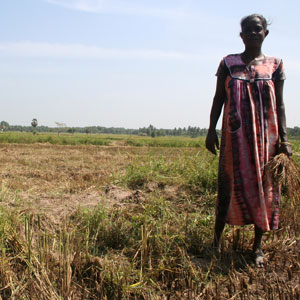
La Niña is back less than three months after the end of its last appearance, a particularly strong event that contributed to driving up global food prices.
Food Prices Set to Rise Further
Food price volatility featuring high prices is likely to continue and probably increase next year, making poor farmers even more vulnerable to poverty and food insecurity, the global report on food insecurity released Monday by the United Nations' three Rome-based food agencies predicts.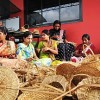
INDIA: Microcredit Fights to Regain Credibility
As microcredit institutions - once touted as the vital ‘last mile' in extending credit to poor rural women -fight a government backlash that has encouraged honest borrowers to turn defaulters, hopes for revival hinge on a new bill awaiting passage in India's parliament.Africa Ravaged by Continued Denial of Market Access
The poorest countries in Africa are not merely the victims of natural calamities. They are also ravaged by the continued denial of market access as promised in the Doha trade negotiations, say African trade diplomats.BRAZIL: Homegrown GM Bean Won’t Fight Hunger, Critics Say
Critics complain that a genetically modified bean developed in Brazil, resistant to one of the country's most damaging agricultural pests, was approved without enough debate or guarantees that the crop will not affect human health or the environment.ARGENTINA: Boosting Agribusiness – and Family Farms
A plan to boost agribusiness, but based mainly on family farming and cooperatives, in Argentina is geared to producing and exporting more food – in a more sustainable manner.Thai Rice Stirs the Global Pot
Thailand is preparing to stir the pot in the international rice market with its fragrant jasmine rice nurtured by a new policy. But while the new policy pays farmers a great deal more, there are fears that the high prices could make Thai rice uncompetitive.
U.S.: Battle Escalates Against Genetically Modified Crops
Home to a fast-growing network of farmers' markets, cooperatives and organic farms, but also the breeding ground for mammoth for-profit corporations that now hold patents to over 50 percent of the world's seeds, the United States is weathering a battle between Big Agro and a ripening movement for food justice and security.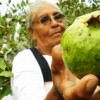
Salvadoran Campesinas Go Organic
The guavas grown by Mariana Rosales are big and bright green, and the best thing about them, she says proudly, is that she does not spend a single cent on fertilisers to produce them – something extremely rare in a country like El Salvador.MEXICO: Food from Trees to Fight Malnutrition
The exceptionally nutritious moringa tree, native to the foothills of the Himalayas and cultivated in several Latin American countries, could help fight malnutrition in this region.
Re-Greening Africa in the Footsteps of Wangari Maathai
Africa needs to remain focused and continue following the late Professor Wangari Maathai’s initiatives for environmental sustainability in order to address climate change across the continent, environmentalists say.
PERU: Councilwomen Fight Climate Change in Land of Melting Glaciers
Some symbolic acts are powerful reflections of a broader struggle. In March some 300 women planted trees in the Santa River basin in northwest Peru to demonstrate their determination to preserve the environment and help adapt to climate change.
INDIA: Facing Climate Change With Flower Power
Gazalla Amin’s office on the outskirts of this city, capital of Jammu & Kashmir state, is redolent with the fragrance of lavender wafting up from heaps of the dried flowers in a corner bowl.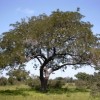
BURKINA FASO: Bonuses Help Reforestation Take Root
This year Fatimata Koama and her associates received more than half a million CFA francs as a reward for planting - and looking after - 1,200 trees in their small corner of Burkina Faso.CENTRAL AMERICA: Taxing Land to Improve Distribution
Taxing large landholdings in Central America could help curb the heavy concentration of land ownership that characterises the region, and contribute to rural development, experts say.Give Women the Seeds and They Can Feed the World
If women farmers were given more tools and resources, the number of hungry people in the world could be slashed by 100 to 150 million.HEALTH: China Scrambles Against Mutant Bird Flu
Veterinary experts in China and Vietnam are scrambling to produce a vaccine capable of beating a new strain of the deadly avian influenza (AI) virus, reports an official of the Food and Agricultural Organisation (FAO).
Drylands Not a Lost Cause, U.N. Summit Declares
"If this was a meeting about climate change, I am pretty sure that the room would have been more crowded," Luc Gnacadja, executive secretary of the United Nations Convention to Combat Desertification (UNCCD), commented at a press conference Tuesday.CLIMATE CHANGE-BRAZIL: Farmers “Have Good Reason to Worry”
Bananas are harvested where apples used to grow; cassava, a traditional crop, is disappearing from the Northeast; and the southeast is losing the fragrance of good coffee. This is the science fiction of a new distribution of crops in Brazil, South America's agricultural powerhouse.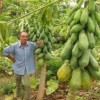
BRAZIL: Every Raindrop Counts
Brazil is considered a country rich in water resources, with its enormous underground aquifers and mighty rivers. But recognition of the vital importance of rainwater begins where it is most scarce: in the semiarid interior of the northeast.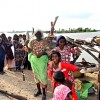
PAKISTAN: Flood Relief by Caste, Creed
With just the clothes on their backs, Moora Sanafdhano, 68, and his family of nine waded through waist-deep flood waters swirling through their village of Allah Ditto Leghari, saving themselves in the nick of time.« Previous Page — Next Page »


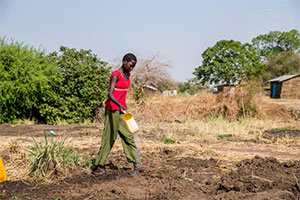 Farming on the Outskirts of Juba. Credit: UN Photo/JC McIlwaine
Promoting human and planetary health is a central focus of the United Nations, as laid out in the 2030 Sustainable Development Goals (SDGs). World hunger and unsustainable farming practices continue to be pressing concerns for the world. According to the 2025 State of Food Security and Nutrition in the World report by the Food and Agriculture Organization (FAO), 673 million people faced hunger in 2024. There are stark regional disparities, with the FAO projecting that 60% of the world population facing hunger will reside in Africa by 2030. Globally, the prevalence of food insecurity has remained consistently higher for women than men.
Sustainable and efficient national food systems are essential in preserving health, education, environmental well-being, peace, economy, and security. However, creating sustainable food systems can be a challenging endeavor, as food production takes a heavy toll on the environment. The agricultural sector accounts for a significant portion of greenhouse gases. Finding safe, sustainable, and ethical strategies to feed the world is crucial in ensuring planetary longevity. A recent initiative from 2023, the EU Regulation on Deforestation-free Products (EUDR), seeks to advocate for sustainable food systems. The main driver of deforestation is the expansion of agricultural land used to produce commodities like cattle, wood, cocoa, coffee, etc. The EUDR is part of the 2020 European Green New Deal and the EU Biodiversity Strategy for 2030 and aims to limit Europe’s consumption of products linked with deforestation by requiring that companies prove that their products are deforestation-free. Despite aiming to achieve major strides in sustainability, policies such as EUDR also raise socioeconomic concerns for targeted countries. Many emerging Latin American economies are impacted by the policy, and have raised the question of how developing countries can grapple with the tensions between economic development and advancing sustainability.
IPS has been at the forefront of providing compelling and insightful stories on communities facing hunger as well as the cost of food production. IPS uses statistics from FAO, the World Food Programme (WFP) and the International Fund for Agricultural Development (IFAD) to bring relevant and hard-hitting facts to readers. This gathering of information and data from such organizations helps bring the best stories from IPS journalists working in the different regions in consultation with experts on the ground.

The Week with IPS

NEXT STOP - SDGs
Tracking global progress towards a sustainable world
Tracking global progress towards a sustainable world