Languages
Friday, November 20, 2026



News and Views from the Global South
Food and Agriculture
NORTH KOREA: Women Wear Pants, Revive Markets
North Korea's communist government frowns upon women wearing pants, seeing it as a mark of ‘rotten bourgeois lifestyles.' Yet, wives, literally wearing pants, are selling goods in the local markets to supplement their husbands' meagre pay packets.U.S. Residents Poorer, Earning Less, and Less Insured in 2010
According to data released Tuesday by the U.S. Census Bureau, 2.6 million more people slipped into poverty in 2010, placing the number of U.S. residents living below the poverty line at 15.1 percent.Companies Vow to Shun Child Labour in Uzbekistan
With Fashion Week under way in New York, Milan and London, more than 60 apparel companies from the United States and Europe this week publicly pledged to not knowingly buy cotton that has been harvested by children forced to labour in the cotton fields of Uzbekistan.
Q&A: Africa Keen to Ensure Kyoto Protocol Survives
Durban should not be the burial ground for the Kyoto Protocol, says Kumi Naidoo, Executive Director of Greenpeace International, about his expectations from the 17th United Nations Framework Convention on Climate Change happening in his hometown in South Africa later this year.
East Africa Wants to Trade Beyond the EU
The East African Community (EAC) and European Union head back to negotiations on Monday to resolve the controversy over the delay in signing an economic partnership agreement between the two trading blocs.
JAMAICA: Women Coffee Farmers Seize a Plastic Lifeline
Jamaica's Blue Mountains are coffee country. Here, up among the clouds, farmers produce one of the world's most exclusive brands of boutique coffees.GUATEMALA: The War Over Land
The violent eviction of 91 rural families in northern Guatemala was the latest incident in the ageold conflict over land in a country where the army is frequently called in to force peasant farmers off their land.MEXICO: Climate Change Drives Migration
"We planted our seeds, but the earth is no longer productive. We've had too much rain, even more than last year, and the harvest was ruined," says Ermelinda Santiago of the Me'phaa indigenous people, who like everyone else in the village of Francisco I. Madero has been affected by the impact of extreme weather on agriculture in southern Mexico.MEXICO: Traditional Maize Can Cope with Climate Change*
Maize, Mexico's staple food as well as a symbol, has the potential to adapt to climate change and mitigate its effects without any need for genetically modified seeds, according to agricultural scientists.
CLIMATE CHANGE: Nepali Women Sow a Secure Future
Learning a lesson from crop failures attributed to climate change, Nepal’s women farmers are discarding imported hybrid seeds and husbanding hardier local varieties in cooperative seed banks.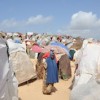
SOMALIA: Armed Militia Grab the Famine Business
Armed groups are withholding aid and preventing Somali famine refugees from leaving camps to ensure the continued supply of food by aid agencies that they are presently selling on the open market.HONDURAS: Dying for Land
The deployment of large numbers of troops in the Bajo Aguán region of Honduras is reviving the age-old conflict over land in an area torn between organised crime groups capable of undertaking armed actions, wealthy landowners and peasants demanding further land reform.
SOMALIA: Food Aid Stolen From Famine Victims
Masses of food meant for famine victims in Somalia are being stolen, an investigation has revealed.SRI LANKA: Less Guns Mean More Food
As paddy cultivation revives in Sri Lanka’s former war zones, prospects for the island’s food security have improved dramatically.IBSA: ‘Cash Grants Must Back Food Access’
Studies by the India-Brazil-South Africa (IBSA) Academic Forum on food security issues in the three countries suggest that providing food access works best when backed by cash transfers.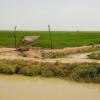
MAURITANIA: Fresh Attempt at Irrigated Agriculture
In a bid to reduce food insecurity, the Mauritanian government is turning to several new approaches to agriculture, including expanded irrigation schemes, popularising new crops and harnessing the energy of recent graduates.Global Warming Behind Somali Drought
The severe drought in the Horn of Africa, which has caused the death of at least 30,000 children and is affecting some 12 million people, especially in Somalia, is a direct consequence of weather phenomena associated with climate change and global warming, environmental scientists say.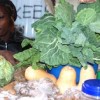
KENYA: Poor Struggle as Inflation Soars
As Kenya's inflation rate reached 15.53 percent, compared to 3.18 percent in October 2010, the country's poor have been struggling to afford the most basic of essentials. In some areas families can no longer rely on regular meals and have reduced them to one a day, others mostly eat potatoes to get by, and in one Rift Valley slum, poor families now buy toothpaste by the drop.OP-ED: Expanding Deserts, Falling Water Tables and Toxins Driving People from Homes
People do not normally leave their homes, their families, and their communities unless they have no other option. Yet as environmental stresses mount, we can expect to see a growing number of environmental refugees. Rising seas and increasingly devastating storms grab headlines, but expanding deserts, falling water tables, and toxic waste and radiation are also forcing people from their homes.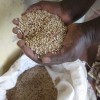
ECONOMY-ZIMBABWE: Good Policies Make for Good Business
With effective political and economic policies, Africa can be a haven for multinational companies (MNCs) even in the continent's least developed countries.
KENYA: Lime Improves Maize Harvest
As the world’s worst food security crisis continues across the Horn of Africa, including in Kenya, some smallholder farmers in the western part of the country are still feeding their families with last year’s abundant harvest.« Previous Page — Next Page »


 Farming on the Outskirts of Juba. Credit: UN Photo/JC McIlwaine
Promoting human and planetary health is a central focus of the United Nations, as laid out in the 2030 Sustainable Development Goals (SDGs). World hunger and unsustainable farming practices continue to be pressing concerns for the world. According to the 2025 State of Food Security and Nutrition in the World report by the Food and Agriculture Organization (FAO), 673 million people faced hunger in 2024. There are stark regional disparities, with the FAO projecting that 60% of the world population facing hunger will reside in Africa by 2030. Globally, the prevalence of food insecurity has remained consistently higher for women than men.
Sustainable and efficient national food systems are essential in preserving health, education, environmental well-being, peace, economy, and security. However, creating sustainable food systems can be a challenging endeavor, as food production takes a heavy toll on the environment. The agricultural sector accounts for a significant portion of greenhouse gases. Finding safe, sustainable, and ethical strategies to feed the world is crucial in ensuring planetary longevity. A recent initiative from 2023, the EU Regulation on Deforestation-free Products (EUDR), seeks to advocate for sustainable food systems. The main driver of deforestation is the expansion of agricultural land used to produce commodities like cattle, wood, cocoa, coffee, etc. The EUDR is part of the 2020 European Green New Deal and the EU Biodiversity Strategy for 2030 and aims to limit Europe’s consumption of products linked with deforestation by requiring that companies prove that their products are deforestation-free. Despite aiming to achieve major strides in sustainability, policies such as EUDR also raise socioeconomic concerns for targeted countries. Many emerging Latin American economies are impacted by the policy, and have raised the question of how developing countries can grapple with the tensions between economic development and advancing sustainability.
IPS has been at the forefront of providing compelling and insightful stories on communities facing hunger as well as the cost of food production. IPS uses statistics from FAO, the World Food Programme (WFP) and the International Fund for Agricultural Development (IFAD) to bring relevant and hard-hitting facts to readers. This gathering of information and data from such organizations helps bring the best stories from IPS journalists working in the different regions in consultation with experts on the ground.

The Week with IPS

NEXT STOP - SDGs
Tracking global progress towards a sustainable world
Tracking global progress towards a sustainable world

