Languages
Friday, November 20, 2026



News and Views from the Global South
Food and Agriculture

Landgrabbing in Ethiopia: Legal Lease or Stolen Soil?
Kneeling in the middle of a sugar cane field in blistering 40 degree heat, a young boy is digging up weeds while an Indian worker stands over him to make sure he does not miss any. Red is eight years old and earns 73 pence for one day's work - less than the cost of using pesticides.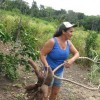
Brazil Commits to Quality Food for All
Representatives of the Brazilian federal and municipal governments and of indigenous, black and riverbank communities and other groups that make the population of this country so diverse assumed a commitment to fight for "the human right to an adequate diet."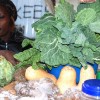
G20 Remiss in Tackling Food Security
Last Friday Benoit Miribel, President of Action Against Hunger, delivered a strong indictment of the outcome of the Group of 20 (G20) summit in the south of France: "The G20 meeting in Cannes has been a missed opportunity."
BRAZIL: Proper Nutrition – the Next Food Challenge
Fighting malnutrition is not just about putting food on everyone's table every day, according to Brazil's Fourth National Conference on Food and Nutrition Security, meeting in the capital of the northeastern state of Bahia.
MIDEAST: Festive Season Highlights Deprivation
Crowds of women waving coupons worth two kilograms of beef line the stairwell to Secours Islamique France’s Gaza City office several hours before the aid agency begins its meat distribution for Eid. Aid workers struggle to climb the stairs, hauling large bags of fresh meat to assist impoverished families in Gaza this holiday season.
Brazil Takes the Fight Against Hunger Abroad
The Brazilian government is extending its fight against hunger to the world stage, by inaugurating a Centre of Excellence Against Hunger to transmit its positive experiences to other developing countries with the help of United Nations agencies.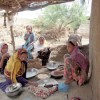
PAKISTAN: Wanted: A Revolution For Girls
Sixteen-year-old Noor Bano believes nothing short of a revolution will convince the men in Malangabad – her remote village in the Khairpur district of the Sindh province, some 460 kilometres from the southern port city of Karachi – to treat women as equals.
Zambian farmers blame climate change for drought
 Zambian farmers say a lack of rain is putting a strain on their crops and they are starting to point their fingers at climate change. Brian Moonga reports from Lusaka.

Q&A: Cooperatives: “Meeting Human Need, Not Just Human Greed”
Different countries may celebrate Oct. 31 in a variety of ways, but this year, the 193 member states of the United Nations (U.N.) launched the International Year of Cooperatives 2012 to raise awareness about the impact of cooperatives on the development of communities where they operate.
Q&A: “Food Is Not a Business, But a Human Right”
Rural women and small-scale producers play a key role in providing food security and food sovereignty, but many large multinational corporations threaten that progress by undermining populations' independence when it comes to food.
CUBA: The Elusive Horn of Plenty
Cubans are still waiting for changes and measures implemented in agriculture to translate into cheaper food. Meanwhile, the government is adjusting its budget, because more than the 1.6 billion dollars initially allocated for food spending will likely be needed.
GREECE: Austerity Measures Responsible For Athens’ ‘New Poor’
Harsh austerity measures and a struggling economy have given birth to the ‘new poor’ in Athens, a term used to describe those suffering the impacts of social exclusion and rapidly shrinking civic welfare institutions.
INDIA: Kashmir’s Fence Eats Crops
Touseef Bhat’s seven-acre farm in this scenic alpine valley of Bandipora district has an incongruous feature – an electrified barbed wire fence running through it.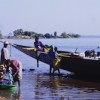
WEST AFRICA: Niger River under Pressure from Dams
Several major new dams are being constructed on the Niger River. It's a positive sign of growing investment in agriculture and energy, but it also has some observers worried.
AFRICA: Regulating the Rush for Land
The adoption of international guidelines to regulate so-called land grabs has been pushed to next year after negotiators failed to agree on conditions for large-scale land investments and enforcement.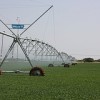
OP-ED: China’s Farming History Misapplied in Africa
As sub-Saharan Africa grapples with high food prices in some regions and famine in others, many experts argue that increasing food production through a programme of hybrid seeds and chemical inputs is the way to go.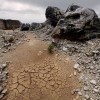
Hard Targets Needed to Halt Land Degradation Crisis
Every six seconds, a child dies of hunger-related causes. That disturbing reality seems as remote as the moon here in the ultra-modern Changwon Convention Centre, where delegates struggled to create effective ways to stem the ongoing decline of food-producing lands.VENEZUELA: Government Distributes Land to Yukpa Indians
The Venezuelan government's decision to expropriate 25 ranches to distribute 15,800 hectares of land to communities of Yukpa Indians in the northwest of the country partially makes up a long-standing debt to the native group.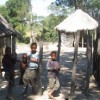
Civil Society Groups Call for Action to Curb Land Grabbing
Civil society organisations are calling on governments in developing countries to stop leasing and selling out land to transnational corporations because it leads to land degradation and food insecurity.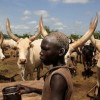
SOUTH SUDAN: Protecting Cattle Saves People
With his bright orange hair, Angelo Waranyang cuts a striking figure as he strides amongst his cattle. His hair colour – dyed with a mixture of cow urine and ash from burnt dung – is symbolic of the close connection that he and the majority of South Sudanese have with their revered animals.
AFRICA: Gov’ts Fail to Invest in Hungriest, Poorest Regions
For millennia, people have coped with drought in the Horn of Africa, comprised mainly of drylands. Yet today, more than 13 million people there are starving because of political instability, poor government policies and failure to invest in the world's poorest people, say experts here in Changwon.« Previous Page — Next Page »


 Farming on the Outskirts of Juba. Credit: UN Photo/JC McIlwaine
Promoting human and planetary health is a central focus of the United Nations, as laid out in the 2030 Sustainable Development Goals (SDGs). World hunger and unsustainable farming practices continue to be pressing concerns for the world. According to the 2025 State of Food Security and Nutrition in the World report by the Food and Agriculture Organization (FAO), 673 million people faced hunger in 2024. There are stark regional disparities, with the FAO projecting that 60% of the world population facing hunger will reside in Africa by 2030. Globally, the prevalence of food insecurity has remained consistently higher for women than men.
Sustainable and efficient national food systems are essential in preserving health, education, environmental well-being, peace, economy, and security. However, creating sustainable food systems can be a challenging endeavor, as food production takes a heavy toll on the environment. The agricultural sector accounts for a significant portion of greenhouse gases. Finding safe, sustainable, and ethical strategies to feed the world is crucial in ensuring planetary longevity. A recent initiative from 2023, the EU Regulation on Deforestation-free Products (EUDR), seeks to advocate for sustainable food systems. The main driver of deforestation is the expansion of agricultural land used to produce commodities like cattle, wood, cocoa, coffee, etc. The EUDR is part of the 2020 European Green New Deal and the EU Biodiversity Strategy for 2030 and aims to limit Europe’s consumption of products linked with deforestation by requiring that companies prove that their products are deforestation-free. Despite aiming to achieve major strides in sustainability, policies such as EUDR also raise socioeconomic concerns for targeted countries. Many emerging Latin American economies are impacted by the policy, and have raised the question of how developing countries can grapple with the tensions between economic development and advancing sustainability.
IPS has been at the forefront of providing compelling and insightful stories on communities facing hunger as well as the cost of food production. IPS uses statistics from FAO, the World Food Programme (WFP) and the International Fund for Agricultural Development (IFAD) to bring relevant and hard-hitting facts to readers. This gathering of information and data from such organizations helps bring the best stories from IPS journalists working in the different regions in consultation with experts on the ground.

The Week with IPS

NEXT STOP - SDGs
Tracking global progress towards a sustainable world
Tracking global progress towards a sustainable world

