Languages
Friday, November 20, 2026



News and Views from the Global South
Food and Agriculture

CLIMATE CHANGE-AFRICA: Farming By Phone
Francis Mburu used to keep indigenous cattle in Entasopia village in the semi- arid Kajiado region, 160 kilometres southwest of Nairobi. However, increasing temperatures and frequent droughts in Kenya have made this difficult in recent years.
Nicaragua Sows Quality Seeds to Reap Quantity
"Using high quality seed, I harvested 20 quintals (one quintal = 100 pounds), while with ordinary seed I only get 10 quintals," Vilma Rodríguez, a beneficiary of a seed production programme in the northwestern Nicaraguan province of Estelí, told IPS.
West African farmers see climate changing
 Women in West Africa have over the years relied on fishing and farming as their traditional source of income. But as Sam Olukoya reports from Lagos, changing weather patterns caused by climate change have put their livelihood under threat.

Q&A: ‘New Donors Can Help Farming Sector’
Rising food prices, natural disasters and an energy crisis that is turning wheat into ethanol instead of bread have raised the spectre of inadequate global food supply that hits the poor. This grim reality has finally turned the spotlight on agricultural aid and its link to development effectiveness.
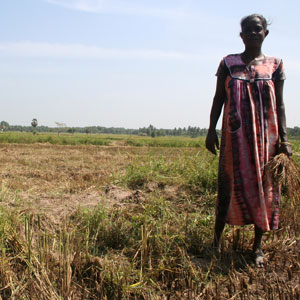
SRI LANKA: Road Signs Indicate Better Times
The rough road is almost indistinguishable from the mud huts and dilapidated surroundings of this village - still pockmarked by the artillery duels of Sri Lanka’s fierce civil war that ended more than two years ago.
CLIMATE CHANGE: Making a Hot Cup of Rooibos Tea Unaffordable
South Africa’s Rooibos tea has become a popular drink all around the globe. But prices of the herbal brew could shoot up within the next decade, as the Rooibos plant can only grow in one small region in the world – which is severely affected by climate change.
Aid Not Effectively Reaching Africa’s Poor
Kenyan tea and coffee farmers remain disgruntled about the minimal profits they make selling their cash crops, the country’s leading foreign currency earners, as the government receives millions in funding for training and subsidies that most of these farmers are yet to see materialise.
Coffee growers feel climate change
Women coffee growers speak to Martha Nyambura about the impact of climate change on their production.

Millions Stand to Benefit from Farmers’ Co-ops
The 925 million people who went hungry in 2010 are just one facet of an ever-worsening food security crisis. Both food producers and consumers face the consequences of price volatility and unsustainable agricultural practices - challenges that leave leaders on local and global levels alike seeking sustainable models for agriculture.
SOUTH AFRICA: Acid Mine Drainage Water Can Be Put to Use
Toxic water from derelict gold and uranium mines has reportedly destroyed Elize Strydom's dream to be a farmer in her retirement.
NEPAL: Community Forestry Unfazed by Political Turmoil
Nepal’s joint forest management system has taken such deep roots that the country’s prolonged political instability has had little effect on it.
Oil discoveries hold back agriculture
Zuki Zimela reports from Libreville, Gabon: Farmers organisation say oil discoveries in Africa are holding back agricultural development. 
AFRICA: Change the Donors Climate
When donor-funded horticultural projects failed in Kalacha village at the edge of the Chalbi Desert in North Eastern Province, Kenya, the local pastoralist community proposed their own idea, which turned out to be the solution to their problems.
SOMALIA: Aid Dwindles, Disease Spreads
Doctors in Mogadishu are warning that famine victims in internally displaced camps have become vulnerable to contagious diseases like cholera and measles, as conditions here are ripe for an outbreak. This comes as internally displaced persons complain that relief aid to some camps has dwindled or stopped.
CARIBBEAN: Cuba Shares Its Experiences in Agroecology
Farmers and experts on agriculture from Haiti, Guadeloupe and Martinique are touring fields in Cuba this week, along with local colleagues, to exchange experiences to foment ecological fruit growing on Caribbean islands.
Africa’s farmers still face serious challenges
Stakeholders in agriculture from Western and Central Africa are meeting in Gabon for the 6th International Fund for Agricultural Development (IFAD) regional forum. As Zukiswa Zimela reports, they are talking about the challenges facing smallholder farmers.

CLIMATE CHANGE-PERU: Rural Women Share Their Trials and Wisdom
"This year the freeze killed my crops, our small livestock died, and now I can't even sleep because I'm worried sick thinking about how to put food on my family's table, since I'm a widow," said Rosaura Huatay, an indigenous farmer in Peru's northern Andes highlands.
CLIMATE CHANGE: A Threat to Food Security in Africa’s River Basins
While Africa has successfully avoided conflict over shared water courses, it will need greater diplomacy to keep the peace as new research warns that climate change will have an effect on food productivity.
CUBA: Co-operatives Set to Expand
The creation of co-operatives forms part of the current "updating" of the Cuban economy, even though no official information has been provided about the expansion of this form of business management, which has already been tested, with mixed results, in agriculture.
Q&A: “Grabbing of Drylands is a Serious Concern”
Designated Drylands Ambassador, United Nations Convention for Combating Desertification (UNCCD), at its 10th Conference of the Parties (COP10) in South Korea in October, Dennis Garrity is mandated to raise awareness of land degradation.
Regional farmers union wants agriculture in COP17 text
The Southern African Confederation of Agricultural Unions, SACAU, says the COP17 discussions in Durban later this month is an opportunity to put agriculture on the climate change map. Tinus de Jager asked Ishmael Sunga, the confederation CEO, what they are pushing for at the end of November.
« Previous Page — Next Page »


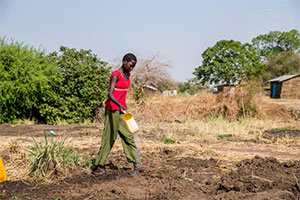 Farming on the Outskirts of Juba. Credit: UN Photo/JC McIlwaine
Promoting human and planetary health is a central focus of the United Nations, as laid out in the 2030 Sustainable Development Goals (SDGs). World hunger and unsustainable farming practices continue to be pressing concerns for the world. According to the 2025 State of Food Security and Nutrition in the World report by the Food and Agriculture Organization (FAO), 673 million people faced hunger in 2024. There are stark regional disparities, with the FAO projecting that 60% of the world population facing hunger will reside in Africa by 2030. Globally, the prevalence of food insecurity has remained consistently higher for women than men.
Sustainable and efficient national food systems are essential in preserving health, education, environmental well-being, peace, economy, and security. However, creating sustainable food systems can be a challenging endeavor, as food production takes a heavy toll on the environment. The agricultural sector accounts for a significant portion of greenhouse gases. Finding safe, sustainable, and ethical strategies to feed the world is crucial in ensuring planetary longevity. A recent initiative from 2023, the EU Regulation on Deforestation-free Products (EUDR), seeks to advocate for sustainable food systems. The main driver of deforestation is the expansion of agricultural land used to produce commodities like cattle, wood, cocoa, coffee, etc. The EUDR is part of the 2020 European Green New Deal and the EU Biodiversity Strategy for 2030 and aims to limit Europe’s consumption of products linked with deforestation by requiring that companies prove that their products are deforestation-free. Despite aiming to achieve major strides in sustainability, policies such as EUDR also raise socioeconomic concerns for targeted countries. Many emerging Latin American economies are impacted by the policy, and have raised the question of how developing countries can grapple with the tensions between economic development and advancing sustainability.
IPS has been at the forefront of providing compelling and insightful stories on communities facing hunger as well as the cost of food production. IPS uses statistics from FAO, the World Food Programme (WFP) and the International Fund for Agricultural Development (IFAD) to bring relevant and hard-hitting facts to readers. This gathering of information and data from such organizations helps bring the best stories from IPS journalists working in the different regions in consultation with experts on the ground.

The Week with IPS

NEXT STOP - SDGs
Tracking global progress towards a sustainable world
Tracking global progress towards a sustainable world