Languages
Friday, November 20, 2026



News and Views from the Global South
Food and Agriculture
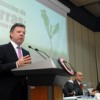
Uribe and Other Hurdles for Colombia’s Land Law
Although it was to be expected, former president Álvaro Uribe's return to politics in Colombia has caused a stir and has a clear aim: to block two of his successor Juan Manuel Santos's pet projects -- reparations to victims of the armed conflict and the restoration of land to displaced peasant farmers.
Organic Gardens Feeding People from Argentina to Haiti
Neither hurricanes nor floods, nor the devastating January earthquake or Haiti's chronic political instability managed to wipe out the organic gardening initiative underway in that country since 2005. The seed was planted in Argentina twenty years ago.
LATIN AMERICA: Competition for Best Land Access Projects
Poor indigenous and peasant farmers who have developed initiatives to gain access to land have been invited to take part in a global competition that will award prizes for innovative, effective approaches to the struggle for property rights.
Could Water-Efficient Maize Boost Africa’s Food Security?
As controlled field trials of a genetically modified (GM) crop are about to begin in five African countries amidst promises of improved crops grown under poor conditions, critics are charging organisations with selling out the interests of African farmers.Migrant Workers in Mexico Left to Hoe Their Own Row
Every year since 1975, Castro Solano has left his home in the town of Tlapa de Comonfort, in the southern Mexican state of Guerrero, to work in other parts of the country as a seasonal farm labourer.
Malawi Herbalist Joins Fight Against Deforestation
Decades of shifting cultivation by rural farmers have threatened forests in the district of Karonga in northern Malawi. The loss of forest cover has also threatened the livelihood of Benjamin Kalowekamo, a herbalist who depends on local plants to mix his healing concoctions.World Bank Extends Food Crisis Fund
Amidst fears of a recurring food crisis, the World Bank has reactivated its Global Food Crisis Response Programme (GFRP), dedicating up to 760 million dollars to countries at risk of food price volatility.
ZAMBIA: Widespread Poverty Threatens to Reverse MDG Gains
Civil society organisations warn that unless Zambia addresses its high poverty levels, the strides the country already made in achieving some of the Millennium Development Goals (MDGs) may be reversed.INDIA: Many Scientific Reports Plagiarsed
Embarrassing retractions of scientific papers and a thinly-disguised report favouring introduction of genetically modified crops by the country's top science academies have revived calls for more stringent action against plagiarism and unethical practices.
DEVELOPMENT-KENYA: Micro-Credit Helping Farmers to Plough Ahead
Seventeen years ago it seemed like an impossible dream to provide thousands of low-income farmers with a way to borrow small amounts of money. But people working in the tea sector in the rural areas of central Kenya were determined to address farmers’ lack of access to credit. They started the Muramati Savings and Credit Cooperative Society.
LATIN AMERICA: Radioactive Attack on Flesh-Eating Screw-Worm
A biological control method used to eradicate screw-worm, a livestock parasite, in the United States, Mexico and Central America, has just been tested successfully in South America, where its adoption is being considered in the countries of the Southern Common Market (Mercosur): Argentina, Brazil, Paraguay and Uruguay.‘Food Empires Creating Agricultural Crisis’
Forget speculators, forget biofuel farmers. The real cause behind the permanent food and agricultural crisis is the imperial food regime, squeezing money out of agriculture, a Dutch professor says.Ending Africa’s Hunger Means Listening to Farmers
Africa is hungry - 240 million people are undernourished. Now, for the first-time, small African farmers have been properly consulted on how to solve the problem of feeding sub-Saharan Africa. Their answers appear to directly repudiate a massive international effort to launch an African Green Revolution funded in large part by the Bill and Melinda Gates Foundation.Okavango’s Resurgent Floods Test Disaster Management
Despite early warnings about higher-than-usual flooding of the Okavango Delta in 2010, homes, fields, latrines and boreholes in the delta were flooded.ZAMBIA: Bumper Harvest May Prove an Embarassment of Riches
Buoyed by government’s fertiliser subsidy, Zambia’s farmers produced 2.8 million tonnes of maize in the 2009/10 growing season. Initial delight over the increased harvest - up from 1.8 million tonnes the previous year - gave way to worry as farmers realised they could be stuck with most of the crop.FOOD-GUATEMALA: Bad Omens for 2011
Guatemala needs to take steps to prepare for even worse problems of hunger in 2011, caused by climate change and farmers' heavy dependence on a few basic crops like corn and beans, experts warned on the occasion of World Food Day, celebrated Saturday.Nourishing a Budding Sustainable Agriculture Movement
With a record number of people undernourished last year – and that number only down about 10 percent this year – this year's World Food Day, to take place Saturday, carries with it a new sense of urgency. But in the conferences and events being held to commemorate the day, there will also likely be a sense of hope and opportunity.DEVELOPMENT: To Feed the World, Gov’ts Break New Ground with Civil Society
For over a decade, seasoned activist Sarojini Rengam’s efforts to storm the bureaucratic barricades at global food security meetings in Rome hardly produced any cracks. The tightly structured agenda at the Food and Agriculture Organisation (FAO) gatherings she went to were unequivocal about where activists stood – in the margins.AFRICA: Hunger Intensifying But Cash Transfers Improving Lives
Chronic hunger is intensifying in Africa, despite the world’s commitment to address this Millennium Development Goal and reduce world hunger by half by 2015.
Lesotho Could Beat Drought With Irrigation
Bonang Charles's fields are a richly green rarity in October's parched landscapes along the Phutiatsana River. It's a vivid demonstration of the limited reach of irrigation to Lesotho's small-holder farmers.
LATIN AMERICA: Growth and Social Inclusion Must Be Linked to Fight Hunger
The concept that the state plays a key role in overcoming chronic hunger is not a new one. But the latest figures from Latin America show that more public money and social programmes alone are ineffective solutions.« Previous Page — Next Page »


 Farming on the Outskirts of Juba. Credit: UN Photo/JC McIlwaine
Promoting human and planetary health is a central focus of the United Nations, as laid out in the 2030 Sustainable Development Goals (SDGs). World hunger and unsustainable farming practices continue to be pressing concerns for the world. According to the 2025 State of Food Security and Nutrition in the World report by the Food and Agriculture Organization (FAO), 673 million people faced hunger in 2024. There are stark regional disparities, with the FAO projecting that 60% of the world population facing hunger will reside in Africa by 2030. Globally, the prevalence of food insecurity has remained consistently higher for women than men.
Sustainable and efficient national food systems are essential in preserving health, education, environmental well-being, peace, economy, and security. However, creating sustainable food systems can be a challenging endeavor, as food production takes a heavy toll on the environment. The agricultural sector accounts for a significant portion of greenhouse gases. Finding safe, sustainable, and ethical strategies to feed the world is crucial in ensuring planetary longevity. A recent initiative from 2023, the EU Regulation on Deforestation-free Products (EUDR), seeks to advocate for sustainable food systems. The main driver of deforestation is the expansion of agricultural land used to produce commodities like cattle, wood, cocoa, coffee, etc. The EUDR is part of the 2020 European Green New Deal and the EU Biodiversity Strategy for 2030 and aims to limit Europe’s consumption of products linked with deforestation by requiring that companies prove that their products are deforestation-free. Despite aiming to achieve major strides in sustainability, policies such as EUDR also raise socioeconomic concerns for targeted countries. Many emerging Latin American economies are impacted by the policy, and have raised the question of how developing countries can grapple with the tensions between economic development and advancing sustainability.
IPS has been at the forefront of providing compelling and insightful stories on communities facing hunger as well as the cost of food production. IPS uses statistics from FAO, the World Food Programme (WFP) and the International Fund for Agricultural Development (IFAD) to bring relevant and hard-hitting facts to readers. This gathering of information and data from such organizations helps bring the best stories from IPS journalists working in the different regions in consultation with experts on the ground.

The Week with IPS

NEXT STOP - SDGs
Tracking global progress towards a sustainable world
Tracking global progress towards a sustainable world

