Languages
Saturday, November 21, 2026



News and Views from the Global South
Food and Agriculture
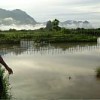
DEVELOPMENT: Laos Struggles With Dam Dilemma
The Lao government places great hopes on plans to build hydroelectric dams to generate electricity for the country and to sell to neighbouring Thailand. But for residents along the Hinboun River in the central province of Khammouane, the reality has been different.SPAIN: Only Banks Get Aid, Anti-Poverty Protesters Complain
"We think it’s disgraceful that billions of dollars are available to bail out banks, and there is no money to eradicate poverty in the world," said Marina Navarro, the spokeswoman for some 1,000 social organisations in Spain taking part in demonstrations against poverty between Friday and Sunday.AUSTRALIA: Poverty on the Rise Down Under
Australian cities rank high among the world’s most liveable in ‘quality of life’ surveys and car bumper stickers proclaim the nation as ‘young and free’. But an increasing number of people are living in grinding poverty, a situation that will likely be exacerbated by the ongoing global financial crisis.BRAZIL: Hunger Beats a Steady Retreat
Brazil is winning its battle against hunger thanks to a comprehensive package of food security legislation, institutions and new concepts, in addition to programmes geared towards stimulating more balanced economic growth.EUROPE: The Appetite Is for Money
Faced with the prospect that a number of banks could collapse, European Union governments have this week approved a rescue plan worth more than 1,800 billion euros (2,460 billion dollars). Faced with a food crisis which has seen a major leap in the numbers of people suffering from hunger, the EU's policy makers are mulling over a proposal to give 1 billion euros to farmers in poor countries.
WORLD FOOD-DAY-PAKISTAN: Hunger, Poverty Initiatives Suspect
As Pakistan’s food crisis deepens, with an estimated 60 million people facing food insecurity, the GCAP (Global Call to Action Against Poverty) plans to hold rallies through the weekend demanding ‘’public accountability’’ even for hunger and poverty alleviation initiatives.
Q&A: "I Smell A Fantastic Aroma"
As Africa and the rest of the world seek to end the current food crisis - which could get worse with the flu sweeping across global financial markets - it is time Africa made gains from the food crisis.ZIMBABWE: Food Crisis Worsens
Zimbabwe's agricultural production has been hit by a long list of difficulties - several rounds of severe drought, a collapsed currency that has made fertiliser and other farm inputs very expensive, ill-considered land redistribution, and brutal pre- and post- election violence by the ruling ZANU-PF that has hurt rural populations most.WORLD FOOD DAY: Eating Less, Paying More
Despite wall-to-wall media coverage of the financial crisis rocking the U.S. and, increasingly, other financial systems around the world, a crisis with a larger scope is brewing with little attention.WORLD FOOD DAY: Zambia's Women Farmers Demand Policy Changes
Zambia's tens of thousands of peasant farmers are crucial to the country's food security, yet they have little voice in agricultural policy. Cecilia Violet Makota is one of the rare exceptions.WORLD FOOD DAY-LATAM: Learning Lessons
"We can’t wait for crises to happen to start guaranteeing the right to food. We have to act before a crisis hits," José Graziano da Silva, Food and Agriculture Organisation (FAO) regional representative for Latin America and the Caribbean, told IPS.
LAOS: Unexploded Cluster Bombs Hold Up Farming
As the country affected most by cluster munition in the world Laos is a natural leader in the global campaign to have the deadly ‘bomblets’ banned.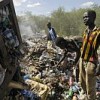
DEVELOPMENT: A Billion Hungry People Need Rescue Plan Too
Relief for the world's hungry remains a distant prospect, with this year's "Global Hunger Index" (GHI) attesting that even before the ongoing food crisis, 33 countries had "alarming" or "extremely alarming" levels of hunger.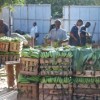
AGRICULTURE: A Better Banana For Africa
With the eyes of a predator and attention to detail of a master craftsman, Benjamin Maina combs the 100-acre Khosla plantation for fallen banana trees. The good health of this crop is everything to the many people whose lives depend on trading banana -– the best selling fruit in the world.DEVELOPMENT: Crisis Both a Distraction and an Opportunity
Despite intense media focus on the U.S. presidential campaign and the ongoing economic turmoil, organisers of "Stand Up and Take Action" events this weekend are confident that hundreds of thousands of citizens in this country will not forget the world's poorest.TRADE-AFRICA: Red Faces Over EPAs Red Herring
Senior European Union officials have admitted being embarrassed at how the bloc’s own procedures are delaying them from signing economic partnership agreements (EPAs) with Africa.DEVELOPMENT: Challenging the Bio-fuel-Hunger Paradigm
Participants at The Third India-Brazil-South Africa (IBSA) Business Forum 2008 came together here to debunk the belief that development of bio-fuels would invariably exacerbate global hunger. Conventional wisdom has it that increased production of bio-fuel - particularly ethanol - will invariably result in decreasing acreage for food grain production, rising food prices and a surge in hunger and malnutrition. Participants at the Forum - held in New Delhi during the lead-up to the third IBSA Summit - declared that this was not necessarily true.ECONOMY: Poor Sidelined in Rush to Contain Financial Crisis
The worst market crisis since the 1930s has dominated financial leaders' talks here, stoking misgivings that the world's poor are being overlooked.
DEVELOPMENT: Signs of Hope for Ethiopia’s Children
Amid the hardship facing Ethiopia's children, there are signs that conditions may be improving and that children's lives are changing for the better.PARAGUAY: Rally Clashes with Aid for Drought Victims
The suspension of a traditional rally in the western Paraguayan region of the Chaco, severely affected by a prolonged drought, has pitted the Fernando Lugo administration and local indigenous communities against the organisers of the automobile race.ECONOMY-CHINA: Flirting With Land Tenure Reforms
Faced with a deepening global financial meltdown, the Chinese communist party is contemplating far-reaching internal reforms capable of insulating the country from the worst effects of the crisis such as by loosening its grip over land ownership.« Previous Page — Next Page »


 Farming on the Outskirts of Juba. Credit: UN Photo/JC McIlwaine
Promoting human and planetary health is a central focus of the United Nations, as laid out in the 2030 Sustainable Development Goals (SDGs). World hunger and unsustainable farming practices continue to be pressing concerns for the world. According to the 2025 State of Food Security and Nutrition in the World report by the Food and Agriculture Organization (FAO), 673 million people faced hunger in 2024. There are stark regional disparities, with the FAO projecting that 60% of the world population facing hunger will reside in Africa by 2030. Globally, the prevalence of food insecurity has remained consistently higher for women than men.
Sustainable and efficient national food systems are essential in preserving health, education, environmental well-being, peace, economy, and security. However, creating sustainable food systems can be a challenging endeavor, as food production takes a heavy toll on the environment. The agricultural sector accounts for a significant portion of greenhouse gases. Finding safe, sustainable, and ethical strategies to feed the world is crucial in ensuring planetary longevity. A recent initiative from 2023, the EU Regulation on Deforestation-free Products (EUDR), seeks to advocate for sustainable food systems. The main driver of deforestation is the expansion of agricultural land used to produce commodities like cattle, wood, cocoa, coffee, etc. The EUDR is part of the 2020 European Green New Deal and the EU Biodiversity Strategy for 2030 and aims to limit Europe’s consumption of products linked with deforestation by requiring that companies prove that their products are deforestation-free. Despite aiming to achieve major strides in sustainability, policies such as EUDR also raise socioeconomic concerns for targeted countries. Many emerging Latin American economies are impacted by the policy, and have raised the question of how developing countries can grapple with the tensions between economic development and advancing sustainability.
IPS has been at the forefront of providing compelling and insightful stories on communities facing hunger as well as the cost of food production. IPS uses statistics from FAO, the World Food Programme (WFP) and the International Fund for Agricultural Development (IFAD) to bring relevant and hard-hitting facts to readers. This gathering of information and data from such organizations helps bring the best stories from IPS journalists working in the different regions in consultation with experts on the ground.

The Week with IPS

NEXT STOP - SDGs
Tracking global progress towards a sustainable world
Tracking global progress towards a sustainable world

