Languages
Saturday, November 21, 2026



News and Views from the Global South
Food and Agriculture
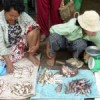
DEVELOPMENT-CAMBODIA: Women Take to Fishing As Catches Decline
Cambodia’s fishing industry may still be viewed as a male bastion, but as household fish catches decline, putting pressure on food security, women are rising to the challenge and becoming involved in growing numbers.ARGENTINA: Newspaper Brings to Light Abuses against Poor Farmers
Small farmers in the northern Argentine province of Santiago del Estero are publishing their own newspaper in an attempt to raise awareness about the constant abuses they suffer at the hands of wealthy landowners, who are encroaching on their small plots of land.
Q&A: Trade Liberalisation No Silver Bullet Against Poverty
Countries around the world aim to eradicate poverty and hunger by 2015 as one of the Millennium Development Goals (MDGs).PARAGUAY: Agreement with Rural Activists Puts End to Protest
Rural and social activists ended three days of protests Friday in the Paraguayan capital after their leaders met with President Fernando Lugo and reached a preliminary agreement for addressing their demands.VIETNAM: Good Harvests Don’t Bring Good Sales
Farmers in the Mekong Delta, who produce most of the rice responsible for making this country a top exporter of the staple, are unable to negotiate good prices for their produce.PARAGUAY: The Struggle for Land
The government of Paraguayan President Fernando Lugo is facing its first big challenge: providing solutions for the age-old dispute over land ownership between peasant farmers, large landholders and Brazilian settlers.
TRADE-EAST AFRICA: Low Crop Prices Drive Farmers to Marijuana
Kenyan small-scale farmers have moved across the border into Tanzania to cultivate marijuana or ‘‘bhang’’, as the cannabis sativa plant is locally called. One of them is 25-year-old Steve Odhiambo. He believes that the international and local campaign against bhang harms only the small growers while the true profiteers get away.HAITI: Activists Urge World Bank to Erase Crippling Debt
On a recent visit to the hurricane-ravaged island of Haiti, World Bank President Robert Zoellick declared that 500 million dollars of Haiti's 1.7-billion-dollar foreign debt had been cancelled, and the rest would be soon be written off as well.CHILE: Maize Contaminated with Transgenics
The Institute of Nutrition and Food Technology (INTA) at the University of Chile has detected genetically modified organisms in four samples of conventional maize grown near fields where transgenic maize seeds are being produced for export.SOUTH-EAST ASIA: Financial Meltdown Prompts Return to Agriculture
As South-east Asia feels the heal of the global financial meltdown leaders are turning to the informal sector, particularly agriculture, as a potential provider of employment.
EAST AFRICA: Trade Opportunities Turn Out To Be Death Traps
New trade opportunities after 20 years of fighting in Southern Sudan have turned out to be death traps for Ugandan traders because of violence and physical intimidation by the military and civilians alike.ECONOMY: Civil Society Has Something to Say
Governments cannot deal with the current financial crisis on their own, and need the support of the people they govern, which is "best translated by the opinions of the civil society movement," said Werner H. Schleiffer, executive coordinator of CONGO, the global umbrella of NGOs with consultative status with the United Nations.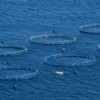
ARGENTINA: Caution and Enthusiasm for Fish Farming
Fish farming is expanding in Latin America, fuelled by the demands of a global market that is facing the stagnation of commercial fishing. But some people are warning about the limits of industrial production of fish and the environmental and social risks.
KENYA: Biofuels Boom and Bust
The Kenyan government has hailed bio-diesel as an innovation that combines green politics with poverty reduction. But recent drops in biofuel prices have caused concern about the sustainability of alternative fuel production.PHILIPPINES: 'Women Take the Brunt of Climate Change'
Filipina farmer Trinidad Domingo views the coming rice harvest season with trepidation. A typhoon destroyed much of her crop and Domingo estimates that her two-hectare plot will produce less than the usual 200 sacks of rice.
EGYPT: Food For The People
Caught between low wages and rising prices, many Egyptians have had to replace meat and vegetables with cheaper food.ECONOMY: Rich-Poor Divide Worst Among Rich Countries
The "American Dream" of upward social mobility appears to have emigrated from its birthplace in the United States to northern Europe, according to a major new report by the Organisation for Economic Cooperation and Development (OECD) on the growth of economic equality over the past 20 years.DEVELOPMENT: Reviving the Family Farm
The world is in a phase of transition, in which family farming is emerging as an "anti-cyclical" alternative for guaranteeing economic growth and food security, said Brazilian expert Laudemir André Müller.ECONOMY: Usual Suspects Eyeing Zimbabwe for Massive Deregulation
As the global financial crisis unfolds and more questions are asked about excessive deregulation, the World Bank and others are preparing economic policy prescriptions that will throw open Zimbabwe’s economy to the whims of the world markets.
ENVIRONMENT-AUSTRALIA: Eat Kangaroos to Save Climate?
Representations of kangaroos are used on everything from Australia’s coat of arms to the national airline, military markings and sporting teams. But the nation’s iconic marsupial may also be able to make significant contributions to reducing Australia’s greenhouse gas emissions.
TRADE: Cotton Subsidies Remain Big Hurdle in WTO Doha Round
The Doha Round was launched in 2001 in Doha, Qatar, to provide a developmental dimension to global trade by enabling developing and least developed countries to secure enhanced access for their products in rich country markets. However, there is a pronounced shift in the negotiations in the last seven years - from developmental issues to the purely market-driven concerns of the dominant players.« Previous Page — Next Page »


 Farming on the Outskirts of Juba. Credit: UN Photo/JC McIlwaine
Promoting human and planetary health is a central focus of the United Nations, as laid out in the 2030 Sustainable Development Goals (SDGs). World hunger and unsustainable farming practices continue to be pressing concerns for the world. According to the 2025 State of Food Security and Nutrition in the World report by the Food and Agriculture Organization (FAO), 673 million people faced hunger in 2024. There are stark regional disparities, with the FAO projecting that 60% of the world population facing hunger will reside in Africa by 2030. Globally, the prevalence of food insecurity has remained consistently higher for women than men.
Sustainable and efficient national food systems are essential in preserving health, education, environmental well-being, peace, economy, and security. However, creating sustainable food systems can be a challenging endeavor, as food production takes a heavy toll on the environment. The agricultural sector accounts for a significant portion of greenhouse gases. Finding safe, sustainable, and ethical strategies to feed the world is crucial in ensuring planetary longevity. A recent initiative from 2023, the EU Regulation on Deforestation-free Products (EUDR), seeks to advocate for sustainable food systems. The main driver of deforestation is the expansion of agricultural land used to produce commodities like cattle, wood, cocoa, coffee, etc. The EUDR is part of the 2020 European Green New Deal and the EU Biodiversity Strategy for 2030 and aims to limit Europe’s consumption of products linked with deforestation by requiring that companies prove that their products are deforestation-free. Despite aiming to achieve major strides in sustainability, policies such as EUDR also raise socioeconomic concerns for targeted countries. Many emerging Latin American economies are impacted by the policy, and have raised the question of how developing countries can grapple with the tensions between economic development and advancing sustainability.
IPS has been at the forefront of providing compelling and insightful stories on communities facing hunger as well as the cost of food production. IPS uses statistics from FAO, the World Food Programme (WFP) and the International Fund for Agricultural Development (IFAD) to bring relevant and hard-hitting facts to readers. This gathering of information and data from such organizations helps bring the best stories from IPS journalists working in the different regions in consultation with experts on the ground.

The Week with IPS

NEXT STOP - SDGs
Tracking global progress towards a sustainable world
Tracking global progress towards a sustainable world

