Languages
Saturday, November 21, 2026



News and Views from the Global South
Food and Agriculture
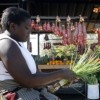
POVERTY-ZIMBABWE: Gardening Lifeline for Urban Women
Growing and selling vegetables has become a lifeline for 41-year-old Mavis Dube at a time when millions of Zimbabweans face increasing poverty and hunger after years of debilitating economic recession.FRANCE: Passionate About Principled Trade
Just like humanitarian relief, fair trade is a field that attracts passionate individuals with complex world views. Most are not in it for the money. But it is also rife with controversy, as personalities driven by conviction often clash over principles and practice. No two fair traders are alike, which probably explains many of their arguments.
DEVELOPMENT: Change Comes To Villages in Uganda
In her village they call her ‘councillor’. But Jenipher Namugwere is no ordinary councillor elected by the people to represent them in the local council.Q&A: "How Are We Going to Sustain Gender Approaches?"
The negative aspects of Africa's experience with structural adjustment programmes beginning in the 1990s have been well-documented - facing high debt loads, African governments agreed to liberalise their economies, privatise public enterprises, and sharply reduce social spending with often painful effects on the most vulnerable.
DEVELOPMENT-LATAM: Solutions from Below
The global financial crisis has not demoralised those involved in community projects throughout Latin America and the Caribbean who took part in ECLAC’s fourth social innovation fair, which ended Friday in this city in northwest Colombia.LATIN AMERICA: Indigenous Journalists Plant a Seed
Journalists from indigenous communities in Colombia, Ecuador, Venezuela, Peru, Guatemala and Bolivia came together in La Paz to take the first step towards creating a network to work together and support each other.TRADE: Rich Countries Apply ‘Double Standards’ in WTO Doha Round
South Africa says the major industrialised members of the World Trade Organisation (WTO) are applying double standards when it comes to their interests and those of African countries in the Doha Round trade negotiations.
UGANDA: On the Global Market Track to Prosperity
Uganda's finance ministry has ambitious plans to reduce the country’s donor dependence. With foreign funds accounting for almost 50 percent of the national budget, officials believe a slew of measures announced in the 2008/09 budget could bring that down to about 30 percent.CLIMATE CHANGE-AFRICA: Trade Carbon for Food Security
Forget the view of climate change as impending catastrophe for a moment: if negotiators can recognise sustainable agriculture by African smallholders and forests as mitigating factors in climate change, carbon trading could become an important support for Africa's food security.PARAGUAY: Uncontacted Ayoreo Threatened by Deforestation
Large swathes of native forest have been turned into pasture land in the northern part of Paraguay’s semi-arid Chaco region, as large Brazilian cattle ranchers expand their property in this country.
TRADE-WEST AFRICA: Swollen Shoot Disease Devastating Cocoa Trees
On a hot November afternoon, Opanin Owusu Adu showed me around his farm on the outskirts of Suhum, a town in the Eastern Region in Ghana.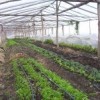
SOUTH AMERICA: Young People Want to Give Farming a Chance
Unlike so many in their grandparents’ generation, today’s young farmers in South America’s Mercosur trade bloc say they want to live off the land where they were born, and not move to cities where there is no longer a place for them.
WORLD: More Questions About Fair Trade Practices
So-called fair trade is booming in Germany but it is facing strong criticism from activists against neoliberal globalisation on the grounds that companies taking part in ‘‘fair trade’’ do not live up to its humanitarian and developmental principles.PARAGUAY: Mixed Results for Lugo’s First 100 Days
Amid social demands, political conflicts and uncertainty over Paraguay's economic future, President Fernando Lugo has completed the first 100 days of his term, during which positive achievements have been made in the fields of health and fighting corruption.
BRAZIL: Using Science and Thinking Small to Relaunch Biofuels
Clean and renewable energy sources are the new "El Dorado" in these times of economic crisis and global warming. While most people, it seems, want to have a car, travel and consume endlessly, the planet is giving us signs that it can no longer withstand a production model based on fossil fuels.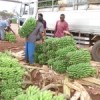
TRADE: Kibuzi Bananas Follow Ugandans to London
‘‘We have lots of orders for apple banana. There is a ready market for kibuzi in London. It is eaten from Monday to Monday. But how to get it there is the issue. Almost 60 percent of the cost goes to freight.’’
AGRICULTURE: Swazi Input Trade Fairs Falling Short
Mary Ntshangase sits under a big umbrella - a packet of beans in one hand and a packet of peanuts in the other - wooing customers to her stall.
DEVELOPMENT-SOUTH AFRICA: From A ‘‘Red Bush’’, Opportunity Is Born
Nestled in a valley in the Cederberg region of the Western Cape, South Africa’s southern most province, lies the charming little village of Wupperthal.DEVELOPMENT-NAMIBIA: Land Reform Reaping Fruits Despite Problems
Almost two decades after independence Namibia’s land reform shows positive results and is guided by fair laws, but bureaucracy, slow progress in transformation of land ownership and unclear criteria for expropriation are overshadowing successes.
ENVIRONMENT-AUSTRALIA: Harvesting Stormwater as Drought Bites Hard
With large parts of southern and eastern Australia enduring an ongoing drought, the regional centre of Orange - some 260 km west of the nation’s largest city, Sydney - is developing Australia’s first scheme to harvest stormwater in order to service the town’s requirements.BRAZIL: Speculative Prices Block Land Reform
Rising land prices in Brazil, driven up by the boom in investment in rural property and the expansion of biofuels, are hindering agrarian reform, says João Pedro Stédile, an activist with the international peasant movement Via Campesina.« Previous Page — Next Page »


 Farming on the Outskirts of Juba. Credit: UN Photo/JC McIlwaine
Promoting human and planetary health is a central focus of the United Nations, as laid out in the 2030 Sustainable Development Goals (SDGs). World hunger and unsustainable farming practices continue to be pressing concerns for the world. According to the 2025 State of Food Security and Nutrition in the World report by the Food and Agriculture Organization (FAO), 673 million people faced hunger in 2024. There are stark regional disparities, with the FAO projecting that 60% of the world population facing hunger will reside in Africa by 2030. Globally, the prevalence of food insecurity has remained consistently higher for women than men.
Sustainable and efficient national food systems are essential in preserving health, education, environmental well-being, peace, economy, and security. However, creating sustainable food systems can be a challenging endeavor, as food production takes a heavy toll on the environment. The agricultural sector accounts for a significant portion of greenhouse gases. Finding safe, sustainable, and ethical strategies to feed the world is crucial in ensuring planetary longevity. A recent initiative from 2023, the EU Regulation on Deforestation-free Products (EUDR), seeks to advocate for sustainable food systems. The main driver of deforestation is the expansion of agricultural land used to produce commodities like cattle, wood, cocoa, coffee, etc. The EUDR is part of the 2020 European Green New Deal and the EU Biodiversity Strategy for 2030 and aims to limit Europe’s consumption of products linked with deforestation by requiring that companies prove that their products are deforestation-free. Despite aiming to achieve major strides in sustainability, policies such as EUDR also raise socioeconomic concerns for targeted countries. Many emerging Latin American economies are impacted by the policy, and have raised the question of how developing countries can grapple with the tensions between economic development and advancing sustainability.
IPS has been at the forefront of providing compelling and insightful stories on communities facing hunger as well as the cost of food production. IPS uses statistics from FAO, the World Food Programme (WFP) and the International Fund for Agricultural Development (IFAD) to bring relevant and hard-hitting facts to readers. This gathering of information and data from such organizations helps bring the best stories from IPS journalists working in the different regions in consultation with experts on the ground.

The Week with IPS

NEXT STOP - SDGs
Tracking global progress towards a sustainable world
Tracking global progress towards a sustainable world

