Languages
Saturday, November 21, 2026



News and Views from the Global South
Food and Agriculture
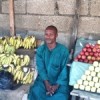
NIGERIA: Ramadan Marred By High Food Prices
As the holy month of Ramadan draws to a close, residents of the northern Nigerian city of Kano have endured double pain: already high food prices have been driven through the roof.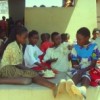
EDUCATION-ZAMBIA: Food Insecurity Hits Schools
"Sometimes there is barely any food at home, so I only eat at school, at lunch," said Justin Banda, a 12 year old student, at Chikumboso school in Lusaka’s Ngombe township.DEVELOPMENT: Food Security Hostage to Climate Trends
More than 50 African leaders meeting at the United Nations this week focused on strategies to overcome a myriad of interrelated problems - food shortages, droughts, HIV/AIDS, an energy crisis, climate change and military conflicts - on the troubled continent.
DEVELOPMENT: Poverty Hearings Show People Behind the Numbers
Benjamine Agbodjan Ablavi of Togo says she scraped together the money to pay her own school fees by selling fruit.ECONOMY-CUBA: No Calm After the Storm
Contrary to the saying that after a storm comes a calm, in Cuba the shockwaves left by hurricanes Gustav and Ike will prevent any peace of mind for people living not only in the most affected areas but in the whole country for a long time to come, as they ask themselves if the worst is really over yet.WORLD: Fair Trade – An Old Idea That’s Become a Fashion Statement?
The idea of making trade fair is as old as ethics itself.
AGRICULTURE-SOUTHERN AFRICA: Investment, Information Keys To Productivity
Sustained investment in agriculture accompanied by effective and inclusive policies are key strategies for Southern Africa to address the global food crisis.DEVELOPMENT: Home Stretch for MDGs Looks Bumpier Than Ever
At a time when the world's cash-strapped developing nations, particularly in Africa, have admitted their inability to meet most of the U.N.'s eight Millennium Development Goals (MDGs), one Latin American country stands apart - confident it could even beat the deadline set by the United Nations.DEVELOPMENT: Matching Struggling Farmers with the World’s Hungry
In a significant policy shift, the Rome-based World Food Programme (WFP) announced Wednesday that it will start buying food directly from local farmers' associations in developing countries.ARGENTINA: Imprisoned Paraguayan Activists on Hunger Strike
Six rural activists from Paraguay who are in prison in Argentina have been on a hunger strike since Aug. 15 to protest what they claim is their "unjust detention" carried out with the "complicity" of the Argentine government.
Q&A: "Haiti Is Going From Catastrophe to Catastrophe"
Peasant leader Chavannes Jean-Baptiste has been at the forefront of the struggles of Haiti's peasants for over 35 years. Born in the village of Papay in Haiti's Plateau Central, Jean-Baptiste helped found the Mouvman Peyizan Papay (MPP) peasant union as well as the Mouvman Peyizan Nasyonal Kongre Papay (MPNKP), the latter a 200,000-member national congress of peasant farmers and activists.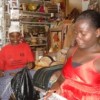
UGANDA: Women Wield Fair Trade Tools to Beat Poverty
Producing baskets and mats in central Uganda has traditionally been women’s work. Women made these items for use in homes. The National Association of Women Organisations in Uganda (NAWOU) has changed this practice into a powerful force fighting poverty.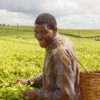
KENYA: Tea Market Tumultuous as Trading Partners Change
Tea used to be Kenya’s major cash crop earner but ever since the world’s largest consumer of tea, Pakistan, entered into a free trade agreement with seven of its Asian neighbours, the local tea industry has been haemorrhaging.ENVIRONMENT: Push for Biofuels Losing Energy
The European Union's only directly elected body has urged that a contentious target for using agricultural crops to meet one-tenth of the bloc's transport demands should be reduced.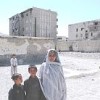
AFGHANISTAN: Severe Hunger Can Help Taliban
If 11-year old Zayainullah doesn't bring home enough money today, he says he will get beaten. "We don't have food and my aunt threatened me, saying I have to bring back enough money to buy bread," he says.JAPAN: Tainted Rice Scam Shakes Consumer Confidence
Consumer confidence in quality-conscious Japan has been badly shaken by a scandal over contaminated rice that was discovered to have been imported and distributed to restaurants, hospitals, schools and stores.ARGENTINA: Soup Kitchens Feel Impact of Rising Food Prices
"It breaks my heart because I know these kids don't have anything to eat, but I can’t serve any more people," says Estela Esquivel, talking about children who have been turned away at dinnertime from the La Casita de la Virgen soup kitchen in La Cava, a slum neighbourhood on the north side of the Argentine capital.DEVELOPMENT: Ending Africa's Food Crisis
Africa's food crisis can be alleviated by modernising agriculture and reforming supply chains so that small-scale farmers get cheaper fertiliser and high-yield seeds, experts and officials at a conference in Oslo have argued. But so far, they say, funding is lacking.WEST AFRICA: Cotton Symbolises Global Trade System’s 'Iniquity'
The international cotton trade has been a sad tale for West African countries. The region produces five percent of the world’s cotton and 15 percent of the global cotton fibre trade. Yet West African cotton farmers are among the poorest in the world.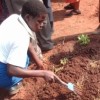
AGRICULTURE-SWAZILAND: Young Farmers Improving Food Security
When her friends go out to play with skipping rope during break, 12 year old Noncedo Masina takes her watering can and goes to work on her plot at the school vegetable garden.EUROPE: Transgenic Crops’ Days May Be Numbered
Pressure from the president of the European Commission has not succeeded in advancing the cause of transgenic crops. In spite of the power wielded by the executive organ of the European Union, the bloc’s member countries are gradually discontinuing the use of genetically modified seeds.« Previous Page — Next Page »


 Farming on the Outskirts of Juba. Credit: UN Photo/JC McIlwaine
Promoting human and planetary health is a central focus of the United Nations, as laid out in the 2030 Sustainable Development Goals (SDGs). World hunger and unsustainable farming practices continue to be pressing concerns for the world. According to the 2025 State of Food Security and Nutrition in the World report by the Food and Agriculture Organization (FAO), 673 million people faced hunger in 2024. There are stark regional disparities, with the FAO projecting that 60% of the world population facing hunger will reside in Africa by 2030. Globally, the prevalence of food insecurity has remained consistently higher for women than men.
Sustainable and efficient national food systems are essential in preserving health, education, environmental well-being, peace, economy, and security. However, creating sustainable food systems can be a challenging endeavor, as food production takes a heavy toll on the environment. The agricultural sector accounts for a significant portion of greenhouse gases. Finding safe, sustainable, and ethical strategies to feed the world is crucial in ensuring planetary longevity. A recent initiative from 2023, the EU Regulation on Deforestation-free Products (EUDR), seeks to advocate for sustainable food systems. The main driver of deforestation is the expansion of agricultural land used to produce commodities like cattle, wood, cocoa, coffee, etc. The EUDR is part of the 2020 European Green New Deal and the EU Biodiversity Strategy for 2030 and aims to limit Europe’s consumption of products linked with deforestation by requiring that companies prove that their products are deforestation-free. Despite aiming to achieve major strides in sustainability, policies such as EUDR also raise socioeconomic concerns for targeted countries. Many emerging Latin American economies are impacted by the policy, and have raised the question of how developing countries can grapple with the tensions between economic development and advancing sustainability.
IPS has been at the forefront of providing compelling and insightful stories on communities facing hunger as well as the cost of food production. IPS uses statistics from FAO, the World Food Programme (WFP) and the International Fund for Agricultural Development (IFAD) to bring relevant and hard-hitting facts to readers. This gathering of information and data from such organizations helps bring the best stories from IPS journalists working in the different regions in consultation with experts on the ground.

The Week with IPS

NEXT STOP - SDGs
Tracking global progress towards a sustainable world
Tracking global progress towards a sustainable world

