Languages
Saturday, November 21, 2026



News and Views from the Global South
Food and Agriculture
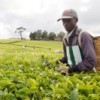
TRADE: Africa’s Export Performance Still Dismal, Says UNCTAD
Despite the liberalisation of trade over more than two decades, the level and composition of Africa’s exports have not substantially changed, according to the 2008 report by the United Nations Conference on Trade and Development (UNCTAD) on economic development in Africa.SOUTH PACIFIC: Cherry Picking Labour
Doubts remain over the "development" potential - promoted by the government and farmers - of a recently-announced scheme which will see Pacific islanders handed temporary working visas to pick Australian fruit.
BRAZIL: Courts – the Battleground for Fight Against Paper Mills
The battle against the wood pulp ndustry has intensified in the Brazilian courts, especially in those states where eucalyptus plantations have expanded the most: Bahia and Espírito Santo in the east and Rio Grande do Sul in the south.
DEVELOPMENT-WORLD: What Is So Fair About Fair Trade?
Fair trade is held up as promoting fair prices for producers and guaranteeing social and environmental standards. These ideas are neither new nor controversial. But the recent boom in fair trade has drawn attention as standards and models multiply while authentication mechanisms lag behind.VIETNAM: Rising Mekong Tests ‘Living With Floods’ Strategy
Rising water levels, the result of heavy monsoon rains across Vietnam’s southern Mekong Delta, are sounding alarm bells throughout the country, and proving to be a major test for its flood control strategy.
Q&A: Zimbabwean Women Have Had ‘‘More Trauma'' After Independence
Zimbabwean women have experienced higher levels of trauma, including violence and lack of food, after the country's independence from Britain in 1980 than before.ASIA PACIFIC: MDGs – Children Under Five Straggling
Children under five years across Asia and the Pacific are being left behind in the race to reduce poverty even as the region boasts impressive strides in meeting major United Nations development goals.
DEVELOPMENT-MALAWI: Irrigation Promises to Increase Food Security
Wyson Chandanga, a small-holder Malawian farmer from the northern district of Mzimba, does not care if the country receives enough rain this year. He is also not concerned on whether the rains come on time or not.
PHILIPPINES: Organic Farming – The Way Forward
Sustainable agriculture was far from farmer Peter Desisto’s mind when he went to an organic farming seminar organised by the Philippine Rural Reconstruction Movement (PRRM) ten years ago. He and other farmers attended because they heard that PRRM was giving out loans.
TRADE-KENYA: A Woman Navigating the Obstacles to the ‘Big Money’
‘‘I enjoy the trade,’’ says Sonia Gateri as she ushers me into her office next to the Yaya Centre in the Kenyan capital. It is a hot afternoon and she has been busy most of the morning, preparing for a trip to Tanzania later in the evening.RIGHTS-ZIMBABWE: NGO Activity Still Limited
Despite the Aug. 29 lifting of a ban on the operations of non-governmental organisations (NGOs) in Zimbabwe, representatives of civil society report they are still unable to operate freely.
COLOMBIA: Oil Palms, Right Abuses Hand in Hand in Northwest
As of this week, there is one less human rights defender in the northwestern Colombian region of Bajo Atrato. Jimmy Jansasoy of the Inter-Church Justice and Peace Commission was forced to flee the area, where oil palm plantations have encroached on the collectively-owned jungle territories of traditional black communities.LATIN AMERICA: Food Price Hikes Hit Poor Hard – ECLAC
The countries of Latin America have coped relatively well so far with the rising global food and fuel prices. But the main challenge they face is to focus more attention on the plight of the poor, experts said at a seminar being held in the Chilean capital.DEVELOPMENT-SWAZILAND: Don't Blame Donor Dependency
What happens to a nation whose people depend on the largesse of international donor agencies for their existence, once support is withdrawn?TRADE: Old Talks Never Die
"History tells us that multilateral trade negotiations never die, and the current Doha Round is no exception," said economist Carlos Pérez del Castillo, Uruguay’s former permanent representative to the World Trade Organisation (WTO) and chairman of the global body’s General Council in 2003 and 2004.CUBA: Foreign Investors Keen on Sugar Production
Foreign direct investment in the sugar industry is acceptable to the Cuban government for producing alcohol and other derivatives, but it continues to be a topic that the authorities prefer not to talk about, at least in public, although experts regard it as desirable for the recovery of the industry.
NEPAL: Dependence on Rice Adds to Food Crisis
Every year, around June, people living in the impoverished western half of this mountainous country suffer from food scarcity. This year was no different, except that the problem got aggravated by increasing dependence on rice flown in rather than locally grown food grains.VENEZUELA: Yukpa Indians Clash with Ranchers and Soldiers
"The army's rifles should be used to protect Venezuela or its people, not to fire over our heads," Sabino Romero, the young deputy "cacique" (chief) of the Yukpa community of Chaktapa, complained to reporters, describing the behaviour of the armed forces in the northwestern mountains of Perijá, near the Colombian border.DEVELOPMENT: Africa Still Hampered by Lack of Geographical Data
Geographic Information Systems (GIS) could play a vital role in improving agriculture and boosting food security in Africa. However, only a few African countries are capable of developing such systems, partly because of a lack of basic geographical data.
ETHIOPIA: Choosing Among One's Own Amid Food Crisis
The global food crisis has forced families to make grievous choices. When Mulu Baboche travelled from the Ethiopian capital to visit her home town in the drought-stricken southern countryside, she found her brother weakened, his animals emaciated and his nine children wilting from hunger.
TRADE-SOUTHERN AFRICA: FTA Will ‘‘Choke’’ Small Business
The Free Trade Agreement (FTA) that Southern African Development Community (SADC) governments agreed to will boost large South African companies’ reach in the region at the expense of small-scale producers and shops.« Previous Page — Next Page »


 Farming on the Outskirts of Juba. Credit: UN Photo/JC McIlwaine
Promoting human and planetary health is a central focus of the United Nations, as laid out in the 2030 Sustainable Development Goals (SDGs). World hunger and unsustainable farming practices continue to be pressing concerns for the world. According to the 2025 State of Food Security and Nutrition in the World report by the Food and Agriculture Organization (FAO), 673 million people faced hunger in 2024. There are stark regional disparities, with the FAO projecting that 60% of the world population facing hunger will reside in Africa by 2030. Globally, the prevalence of food insecurity has remained consistently higher for women than men.
Sustainable and efficient national food systems are essential in preserving health, education, environmental well-being, peace, economy, and security. However, creating sustainable food systems can be a challenging endeavor, as food production takes a heavy toll on the environment. The agricultural sector accounts for a significant portion of greenhouse gases. Finding safe, sustainable, and ethical strategies to feed the world is crucial in ensuring planetary longevity. A recent initiative from 2023, the EU Regulation on Deforestation-free Products (EUDR), seeks to advocate for sustainable food systems. The main driver of deforestation is the expansion of agricultural land used to produce commodities like cattle, wood, cocoa, coffee, etc. The EUDR is part of the 2020 European Green New Deal and the EU Biodiversity Strategy for 2030 and aims to limit Europe’s consumption of products linked with deforestation by requiring that companies prove that their products are deforestation-free. Despite aiming to achieve major strides in sustainability, policies such as EUDR also raise socioeconomic concerns for targeted countries. Many emerging Latin American economies are impacted by the policy, and have raised the question of how developing countries can grapple with the tensions between economic development and advancing sustainability.
IPS has been at the forefront of providing compelling and insightful stories on communities facing hunger as well as the cost of food production. IPS uses statistics from FAO, the World Food Programme (WFP) and the International Fund for Agricultural Development (IFAD) to bring relevant and hard-hitting facts to readers. This gathering of information and data from such organizations helps bring the best stories from IPS journalists working in the different regions in consultation with experts on the ground.

The Week with IPS

NEXT STOP - SDGs
Tracking global progress towards a sustainable world
Tracking global progress towards a sustainable world

