Languages
Wednesday, November 11, 2026



News and Views from the Global South
Food and Agriculture

‘Organic is the Future’
Vandana Shiva, a pioneer of organic farming in India, is incensed by the 2019 draft law to compulsorily register all seeds used by farmers. On a wintry afternoon, at her farm Navdanya in the Himalayan foothills, the noted ecologist spoke on the future of the organic farming movement in India. Excerpts: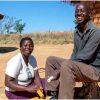
Biofortified Crops Improve Farmers’ Livelihoods in Zimbabwe
Steven Seremwe, who is 57 years old, was retrenched from his job as an administrator at Lake Shore Missions in 2012. He decided to focus on farming, and he started growing various crops—white maize, sugar beans, and sweet potatoes, among others—for consumption and sale.
School Lunch Programmes for Progress
If well planned, coordinated and implemented, a government funded school feeding programme for all primary school children can be progressively transformative. Such a programme, involving government departments and agencies working together, can benefit schoolchildren, their families, farmers and public health, now and in the future.
Genuine Reform Culture Lacking in Zimbabwe
Zimbabwe needs urgent economic and political reforms to transform its economy amidst a growing national crisis, researchers say in a new study that urges swift policy changes and a sound financial framework to attract investment.
Climate Change: A Tale of Weather Extremes with Mixed Fortunes for Zambia
It is early Saturday morning and Planeta Hatuleke, a small scale farmer of Pemba District in Southern Zambia, awakens to the comforting sound of rainfall. As the locals say, the “heavens have opened” and it is raining heavily after a prolonged dry spell.
In Dealing With Climate Change: Foresight is Key
United Nations World Food Program recently released 2020 Global Hotspots Report. According to the report, millions of citizens from Sub-Saharan African countries will face hunger in the first half of 2020 for several reasons including conflict, political instability and climate-related events such as below-average rainfall and flooding.
The United Nations Reforms-From Ideas to Actions
One of the highlight activities as the United Nations commemorates its 75th anniversary this year will be the launch of an “annual temperature check” on Sustainable Development Goals (SDGs), progress. With only ten years left to the final whistle for the Goals, this activity that will take place each September will provide a snapshot of what’s working, and where countries need more action.
Does Africa’s Food Future Really Lie with Young Farmers?
Africa will starve or survive on expensive food imports because it is not growing new farmers, research shows. And the challenge remains among researchers, policy makers, public and private sector actors to get African youth interested in agriculture on a continent where a growing number of people go to bed hungry every night.
A Tribute to Sir Fazle Hasan Abed (1936 – 2019)
“When I think about Bangladesh, I think about everybody. Not everybody is enjoying Rabindranath and the great literature and culture that Bangladesh has. But I think everybody has got the right to have this experience”, deeply felt by late Sir Fazle Hasan Abed, founder of BRAC (Building Resources Across Communities), a unique, integrated development organization that many have hailed as the most effective anti-poverty organization in the world; who passed away December 20, 2019at the age of 83.
Food Security Is Priority of Russian Sustainable Development Assistance
Food security holds a special place among Russia’s priorities in its efforts to achieve sustainable development globally. We believe that this task, which is reflected in Sustainable Development Goal 1, requires a comprehensive and multidimensional approach.
Address Malnutrition, Not Just Food Security
Malnutrition remains a formidable challenge in most societies, with less than a tenth of countries in the world not experiencing at least one major malnutrition problem. In relatively more food secure countries, where almost everyone has enough to eat, and few live in fear of a sudden loss of access to food, micronutrient deficiencies and diet-related non-communicable diseases (NCDs) often still loom large.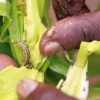
Coordinated Global Action Is the Best Way to Control the Fall Armyworm Pest
Dealing with transboundary pests is tricky at the best of times. Standards, practices, capacity levels and engagement vary across countries and regions, and responses are often ad hoc and ineffective. However, matters become even more complex when the pest in question flies over borders, threatens the food security and livelihoods of millions, and causes severe environmental and economic damage along the way. Fall Armyworm is such a pest.
Fostering Sustainable Urbanization and Rural-Urban Linkages
As urbanization continues apace, coupled with rapid population growth and rural to urban migration, the challenges for inclusive rural transformation continue, and the importance of fostering improved rural-urban linkages for better food systems becomes increasingly important.. According to the UN, by 2050 some 66% of the world’s population of 9 billion is expected to live in urban areas. Such rapid urbanization is increasingly shaping the rural space and rural livelihoods (through markets, demand for agricultural goods and labour, migration, and through the provision of services to rural areas). It is therefore critical for the increasing emphasis on urban development to take into account the importance of rural development.
Saved Seeds are Seeds of Resilience
People have a right to define their own food system. This includes which seeds they use. Last week, farmers in Nakuru County, Kenya, celebrated the launch of “Ten rich, underutilized crops,” a publication and documentary that capture their efforts to promote and sustain the varieties they grow.
Sustainable Fisheries are Key in Addressing Food Security — and Women can Play an Important Role
Experts gathered in November to discuss the importance of sustainable fisheries and its role in eradicating world hunger at a fisheries symposium in Rome.
Indigenous Knowledge, a Lesson for a Sustainable Food Future
Local knowledge systems rooted in traditional practices and culture passed down generations provide sustainable solutions to food and nutritional insecurity on the back of climate change, a conference heard this week.
Fixing the Business of Food
Milan is the city where Leonardo da Vinci painted his iconic Last Supper. Frozen in time is the moment Christ told his disciples there was a traitor among them. Visitors to the painting can examine the expressions on the faces of the disciples and look the food they might have eaten – the bread and wine, and of course the spilt salt. As one delegate to the 10th International Forum on Food and Nutrition noted, the diet did not seem varied or healthy.
Zimbabwe Food Crisis: Time to Act Is Now, Says UN Special Rapporteur
 Global food systems are ripe for transformation if people are to be nourished and the planet sustainable, says Hilal Elver, Special Rapporteur of the Right to Food of the United Nations Human Rights Council.
Tradition and Technology Take Centre Stage at BCFN Food Forum
A coffee producer will receive a cent and a half from a $2.50 cup of coffee. This one stark fact stood out as scientists, researchers, activists and grappled with solutions for change in food and nutrition practises, which would benefit the greater community.
What Do We Want from Our Oceans?
This is a question we need to ask ourselves but before answering we need to acknowledge the diversity of expectations and aspirations that we all have for oceans, which cover more than two-thirds of the planet’s surface.
Government of Russia announces food aid for Kenya
The Government of Russia has announced a voluntary contribution of 1 million US Dollars to the World Food Programme of the United Nations for food assistance to Kenya. WFP will coordinate with the Kenyan authorities the distribution of food supplies to reach families most in need of assistance.« Previous Page — Next Page »





 Farming on the Outskirts of Juba. Credit: UN Photo/JC McIlwaine
Promoting human and planetary health is a central focus of the United Nations, as laid out in the 2030 Sustainable Development Goals (SDGs). World hunger and unsustainable farming practices continue to be pressing concerns for the world. According to the 2025 State of Food Security and Nutrition in the World report by the Food and Agriculture Organization (FAO), 673 million people faced hunger in 2024. There are stark regional disparities, with the FAO projecting that 60% of the world population facing hunger will reside in Africa by 2030. Globally, the prevalence of food insecurity has remained consistently higher for women than men.
Sustainable and efficient national food systems are essential in preserving health, education, environmental well-being, peace, economy, and security. However, creating sustainable food systems can be a challenging endeavor, as food production takes a heavy toll on the environment. The agricultural sector accounts for a significant portion of greenhouse gases. Finding safe, sustainable, and ethical strategies to feed the world is crucial in ensuring planetary longevity. A recent initiative from 2023, the EU Regulation on Deforestation-free Products (EUDR), seeks to advocate for sustainable food systems. The main driver of deforestation is the expansion of agricultural land used to produce commodities like cattle, wood, cocoa, coffee, etc. The EUDR is part of the 2020 European Green New Deal and the EU Biodiversity Strategy for 2030 and aims to limit Europe’s consumption of products linked with deforestation by requiring that companies prove that their products are deforestation-free. Despite aiming to achieve major strides in sustainability, policies such as EUDR also raise socioeconomic concerns for targeted countries. Many emerging Latin American economies are impacted by the policy, and have raised the question of how developing countries can grapple with the tensions between economic development and advancing sustainability.
IPS has been at the forefront of providing compelling and insightful stories on communities facing hunger as well as the cost of food production. IPS uses statistics from FAO, the World Food Programme (WFP) and the International Fund for Agricultural Development (IFAD) to bring relevant and hard-hitting facts to readers. This gathering of information and data from such organizations helps bring the best stories from IPS journalists working in the different regions in consultation with experts on the ground.

The Week with IPS

NEXT STOP - SDGs
Tracking global progress towards a sustainable world
Tracking global progress towards a sustainable world

