Languages
Wednesday, November 11, 2026



News and Views from the Global South
Food and Agriculture
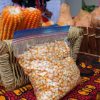
Biofortified Food, a Business Boost for Smallholder Farmers
A start-up in Zimbabwe is producing high nutrition foods using biofortified crops in a bid to fight micronutrient deficiency. Vitamin A deficiency (VAD) leads to night blindness, illness and death from childhood infections. In Zimbabwe, 36 percent of children under five years of age suffer from Vitamin A deficiency, according to the World Health Organisation (WHO).
Care for Economic Development, Then Care for Food Nutrition, Food Researcher Tells Africa’s Politicians
More than 2 billion people in the world are suffering from malnutrition. This is the result of diets lacking essential micronutrients such as vitamins, iron and zinc, which are vital for the body to function, according to the Food and Agriculture Organization (FAO).
Water Is Worth More than Milk in Extrema, Brazil
"They called me crazy" for fencing in the area where the cows went to drink water, said Elias Cardoso, on his 67-hectare farm in Extrema, a municipality 110 km from São Paulo, Brazil's largest metropolis.
Running from the Storm – How Bangladesh’s Climate Migrants are Becoming Food Secure
It was almost a decade ago when Ruma Begum and her family left their home in Bangladesh’s coastal Tazumuddin upazila or sub-district and travelled some 50 km away to start a new life. They had been driven out of their home by an extreme and changing climate that has continued to ravage the district of Bhola.
Social Protection Necessary to Quickly End Poverty, Hunger
Historically, most social security systems have developed in the formal sector of rich economies. However, most of the poor and hungry in the world live in rural areas, surviving in the informal economy.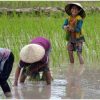
A 650 Million Dollar Pledge Aimed at Eradicating Extreme Hunger by 2030
When a coalition of international donors pledged more than $650 million to provide assistance to over 300 million smallholder farmers in developing countries, the primary aim was to help increase agricultural and livestock production besieged by droughts, floods and other natural disasters triggered by climate change-- mostly in sub-Saharan Africa and South Asia.
Evo Morales: Hero or Villain?
To be president in a country like Bolivia might be like a precarious act performed by a tightrope-dancer between “the Devil and the deep blue sea”. After 23 years as Bolivia’s President, Evo Morales finally lost his foothold and ended up as political refugee in Mexico, adding his name to a long list of previous revolutionary exiles, like Augusto Sandino, Fidel Castro, and most prominently – Leon Trotsky. The last one was murdered, though the others came back, something Evo Morales has promised to do:
Winning the ‘No Food Loss’ Battle: The Case of Japan
Humankind since almost the time that there is recorded history has grappled with the question of ‘how many is too many?’ The response is expectedly complex as it varies across time and space. The pace of population growth was slow till about approximately 250 years or so. It is only since the middle of the eighteenth century that there has been a palpable acceleration in population growth.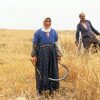
Net Food Importer Turkey Grapples with Challenges of Food Self-sufficiency
Despite latest research showing Turkey lagging in overall food sustainability, progress in sustainable agriculture appears to be a bright spot in the country’s troubled agriculture industry.
The Global Economy of Pulses: Impressive Gains and the Way Forward
Pulses are highly nutritious and their consumption is associated with many health benefits. They are rich in proteins and minerals, high in fibre and have a low fat content. Pulses are produced by plants of the Leguminosae family. These plants have root nodules that absorb inert nitrogen from soil air and convert it into biologically useful ammonia, a process referred to as biological nitrogen fixation. Consequently, the pulse crops do not need any additional nitrogen as fertilizer and help reduce the requirement of fossil fuel-based chemical nitrogen fertilization for other crops. Expansion of pulse production, therefore, can play a vital role in mitigating the effects of climate change.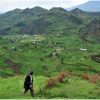
Will Artificial Intelligence Help Resolve the Food Crisis?
When UN Secretary-General Antonio Guterres made a global appeal for “zero hunger” on World Food Day last month, he provided some grim statistics rich in irony: more than 820 million people do not have enough to eat, he said, while two billion people are overweight or obese.
Rock Glaciers Supply Water to Highlands Communities in Argentina
In Argentina's Puna region, at 4,000 metres above sea level, the color green is rare in the arid landscape, which is dominated by different shades of brown and yellow. In this inhospitable environment, daily life has improved thanks to a system of piping water downhill from rock glaciers to local communities.
Nearly Half of Nepali Children Still Malnourished
For the first two decades after 1990, Nepal took great strides in reducing malnutrition. But progress has stalled.
Italy’s Olive-Oil Industry Sees Simmering Threats from Climate Change and Nasty Bacteria
On a warm Saturday morning in late October, the silver-green leaves of the 200 productive olive trees on a rolling country property in Umbria, in central Italy, sparkled in the brilliant sun. Fausto Venturi, a local farmer who devotes autumn weekends to making olive oil, could not have been happier.
Burkina Faso: Climate Change Triggers Rural Exodus
Ibrahim Harouna and his neighbours sit under a tree at his uncle’s house, playing chess and chatting amid the simmering heat of Ouagadougou, the capital of Burkina Faso.
The Fight for Bread Became a Fight for Freedom
My name is Alaa Salah. I am 22 years old and I grew up in Khartoum. Before the revolution, I was a student of architectural engineering. I did not grow up around politics, but in an ordinary middle-class family—my mother is a designer and my father owns a construction company.
How Can We All Hear That the World is on Fire?
The annual rhythm of the United Nations year peaks with the General Assembly in September. One month on, it’s a good time to reflect on this year’s gathering which was remarkable for its focus on fighting climate change, the transforming effect of one 16 year old girl telling it like it is, and the way people heard her words in a way they haven’t heard before.
Mother Earth’s Café Dares Climate Crises in India
The sun has barely risen when Phlida Kharshala shakes her 8-year-old grandson awake. He hoists an empty cone-shaped bamboo basket on his back, sets the woven strap flat across his forehead and off they go into the wilderness.
Climate Change to Further Escalate Violence in Western Africa
Nearly 50 million people in west Africa rely on agriculture and livestock for their livelihood but the land available for pastoral use has been rapidly shrinking.
Nutrition – the Best Investment for a Developing Africa
There is evident correlation between countries with high levels of children under five years of age who are stunted or wasted and the existence of political instability and/or frequent exposure to natural calamities, experts say. But current food systems in Africa are not addressing nutrition because of the combination of poor investment in the agriculture value chain, inadequate policies and lack of accountability in addressing malnutrition.
Insurance Scheme Offers Hope for Drought-stricken African Farmers
A partnership between United Nations and African Union (AU) agencies will help African economies insure themselves against the droughts and other extreme weather events that plague the continent, organisers say.« Previous Page — Next Page »





 Farming on the Outskirts of Juba. Credit: UN Photo/JC McIlwaine
Promoting human and planetary health is a central focus of the United Nations, as laid out in the 2030 Sustainable Development Goals (SDGs). World hunger and unsustainable farming practices continue to be pressing concerns for the world. According to the 2025 State of Food Security and Nutrition in the World report by the Food and Agriculture Organization (FAO), 673 million people faced hunger in 2024. There are stark regional disparities, with the FAO projecting that 60% of the world population facing hunger will reside in Africa by 2030. Globally, the prevalence of food insecurity has remained consistently higher for women than men.
Sustainable and efficient national food systems are essential in preserving health, education, environmental well-being, peace, economy, and security. However, creating sustainable food systems can be a challenging endeavor, as food production takes a heavy toll on the environment. The agricultural sector accounts for a significant portion of greenhouse gases. Finding safe, sustainable, and ethical strategies to feed the world is crucial in ensuring planetary longevity. A recent initiative from 2023, the EU Regulation on Deforestation-free Products (EUDR), seeks to advocate for sustainable food systems. The main driver of deforestation is the expansion of agricultural land used to produce commodities like cattle, wood, cocoa, coffee, etc. The EUDR is part of the 2020 European Green New Deal and the EU Biodiversity Strategy for 2030 and aims to limit Europe’s consumption of products linked with deforestation by requiring that companies prove that their products are deforestation-free. Despite aiming to achieve major strides in sustainability, policies such as EUDR also raise socioeconomic concerns for targeted countries. Many emerging Latin American economies are impacted by the policy, and have raised the question of how developing countries can grapple with the tensions between economic development and advancing sustainability.
IPS has been at the forefront of providing compelling and insightful stories on communities facing hunger as well as the cost of food production. IPS uses statistics from FAO, the World Food Programme (WFP) and the International Fund for Agricultural Development (IFAD) to bring relevant and hard-hitting facts to readers. This gathering of information and data from such organizations helps bring the best stories from IPS journalists working in the different regions in consultation with experts on the ground.

The Week with IPS

NEXT STOP - SDGs
Tracking global progress towards a sustainable world
Tracking global progress towards a sustainable world

