Languages
Wednesday, November 11, 2026



News and Views from the Global South
Food and Agriculture

Agro-tech Offers Answers for African Farmers at Iowa Meet
Experts vaunted new strains of seeds, drone aircraft and other technological breakthroughs as solutions-in-the-making for farmers in Africa, where hunger, drought and food price hikes are continent-wide problems.
Displaced by the Desert: An expanding Sahara leaves Broken Families and Violence in its Wake
Abdoulaye Maiga proudly displays an album showing photos of him and his family during happier times when they all lived together in their home in northern Mali. Today, these memories seem distant and painful.
Ghana’s Grains and Groundnuts Face Increasing Contamination Amid Increasing Temperatures
Adwoa Frimpomaah, a smallholder farmer from Dandwa, a farming community in Nkoranza, in Ghana's Bono East Region, and her two children have been consuming insect-infested and discoloured grains produced from their three-acre farm.
Let Plants be Thy Medicine – You Are What You Eat
United Nations World Food Day is celebrated around the world on October 16 under the theme: “Our Actions ARE Our Future. Healthy Diets for a Zero Hunger World”. This theme is timely, especially, because across Africa and around the world, there has been a gradual rise in malnutrition and diet-related non communicable diseases, as highlighted in The Lancet study and a United Nations Report published earlier this year.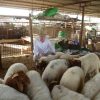
Global Challenges for the ‘NextGen’
Success has many parents – so the saying goes. In the case of the massive successes of international agricultural research, no one person can claim parentage. There are heroes along the way such as Norman Borlaug and his early cereal breeding, and the team that eliminated the cattle disease Rinderpest from the world – smallpox is the only other disease that has been totally eradicated. Another is the founder of The Crawford Fund, Derek Tribe, who was also instrumental in the creation of what is now the International Livestock Research Institute (ILRI), which I chair. However, it would be more correct to highlight the thousands of scientists who have contributed to the world’s greatest feat of feeding an extra three billion people when pundits said it was impossible.
A Major Step Forward in Reducing Food Loss and Waste is Critical to Achieve the SDGs
A new FAO report launched today by the UN Food and Agriculture Organization provides insights into how much food is lost - as well as where and why - at different stages of the food supply chain, calls for informed decisions for an effective reduction and offers new ways to measure progress.
Stop the Waste: UN Food Agencies Call for Action to Reduce Global Hunger
With one-third of food produced for human consumption lost or wasted, and millions still going hungry, the UN’s food-related agencies are shining a spotlight on the issue: on Monday, the Food and Agriculture Organization (FAO) published its annual State of Food and Agriculture report with findings that could lead to a reduction in food loss and waste, and, earlier in October, the World Food Programme (WFP) launched its awareness-raising #StopTheWaste campaign.
Free Trade is Dead
In recent years, global trade and trade policy have become central socio-political issues. The planned EU-US trade agreement TTIP triggered an unprecedented storm of indignation and resistance.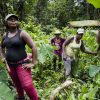
Rural Poverty Is Still a Scar on the Soul of Colombia, but a New Program Supporting Agri-Entrepreneurship Can Help Heal the Wounds
Rural poverty and inequality continue inflicting large swaths of population in Colombia, especially in rural areas. This situation, endemic since at least the beginning of the twentieth century, was at the root of the 50-year long conflict that shattered the country, leaving 220,000 deaths and 5.7 million displaced persons, and devastating a significant part of the rural areas, where government services and infrastructure vanished.
World Food Day 2019 – “Our Actions Are Our Future”
 Globalization and urbanization have had a staggering impact on human history, especially over the last decade.

The Superfoods of the Andes and the Himalaya
The nutritious grain that mountain peoples of the Americas and high Asia cultivated were displaced by wheat and rice, but they are staging a comeback thanks to growing public consciousness about health.
‘Salty’ Concern: Tackling High Salt Consumption in China
China’s almost meteoric transition from a being a low income to a middle income country within a span of four decades is often perceived as a miracle analogous to the post Second World War Japanese economic development experience.
Q&A: Holistic Land Management – Only a Movement can Prevent Desertification
Desertification is not cheap. It has social, cultural, environmental and of course economic costs to reverse what it destroys.
Can We Feed the World and Ensure No One Goes Hungry?
Enough food is produced today to feed everyone on the planet, but hunger is on the rise in some parts of the world, and some 821 million people are considered to be “chronically undernourished”. What steps are being taken to ensure that everyone, worldwide, receives sufficient food?
Combining Biogas and Solar, the Best Energy Deal in Brazil
"Biogas is the best energy, it has no contraindications," and if you combine it with solar it becomes "the best energy business," at least in Brazil, says Anélio Thomazzoni.
How to ‘Fix the Business of Food’ and Save the Planet
With up to one billion undernourished people around the world, and agriculture and land use systems increasingly vulnerable to climate change and land degradation, more companies within the global food industry need to start aligning their operations with the United Nations Sustainable Development Goals or SDGs.
Fighting Climate Change: We Must Not Forget the Soils
Around the world, citizens took to the streets to demand their governments address climate change. In the U.S., this widespread activism illustrates the findings of a newly released report by the Chicago Council on Global affairs which found for the first time that the majority of Americans consider climate change a threat and the most critical foreign policy issue facing the country.
We Need Biodiversity-Based Agriculture to Solve the Climate Crisis
The Earth is living, and also creates life. Over 4 billion years the Earth has evolved a rich biodiversity — an abundance of different living organisms and ecosystems — that can meet all our needs and sustain life.
In Southern Brazil, Need Becomes an Environmental Virtue
The state of Santa Catarina in southern Brazil is the largest national producer and exporter of pork and this year it also leads in exports of chicken, of which it is the second-biggest producer in the country.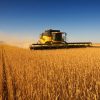
A Brief Guide to the Impacts of Climate Change on Food Production
Food may be a universal language – but in these record-breaking hot days, so too is climate change. With July clocking in as the hottest month on Earth in recorded history and extreme weather ramping up globally, farmers are facing the brunt of climate change in croplands and pastures around the world.
Key Changes in International Agriculture and Rural Development Issues: Three Priority Areas in the Context of the 2030 Development Agenda
Transformations in international agricultural and rural development issues Some major changes in international agricultural and rural development over the last 30-40 years need to be taken into account in efforts to promote sustainable development and an inclusive rural transformation (IFAD 2016) as we approach the third decade of the millennium. This opinion piece, drawing on a longer article published in Agriculture for Development Journal (Summer 2019 Issue), seeks to stimulate reflection and debate on how work to support agricultural and rural development can evolve to address key challenges and opportunities related to migration, sustainable urbanization and youth in a changing global policy context.« Previous Page — Next Page »





 Farming on the Outskirts of Juba. Credit: UN Photo/JC McIlwaine
Promoting human and planetary health is a central focus of the United Nations, as laid out in the 2030 Sustainable Development Goals (SDGs). World hunger and unsustainable farming practices continue to be pressing concerns for the world. According to the 2025 State of Food Security and Nutrition in the World report by the Food and Agriculture Organization (FAO), 673 million people faced hunger in 2024. There are stark regional disparities, with the FAO projecting that 60% of the world population facing hunger will reside in Africa by 2030. Globally, the prevalence of food insecurity has remained consistently higher for women than men.
Sustainable and efficient national food systems are essential in preserving health, education, environmental well-being, peace, economy, and security. However, creating sustainable food systems can be a challenging endeavor, as food production takes a heavy toll on the environment. The agricultural sector accounts for a significant portion of greenhouse gases. Finding safe, sustainable, and ethical strategies to feed the world is crucial in ensuring planetary longevity. A recent initiative from 2023, the EU Regulation on Deforestation-free Products (EUDR), seeks to advocate for sustainable food systems. The main driver of deforestation is the expansion of agricultural land used to produce commodities like cattle, wood, cocoa, coffee, etc. The EUDR is part of the 2020 European Green New Deal and the EU Biodiversity Strategy for 2030 and aims to limit Europe’s consumption of products linked with deforestation by requiring that companies prove that their products are deforestation-free. Despite aiming to achieve major strides in sustainability, policies such as EUDR also raise socioeconomic concerns for targeted countries. Many emerging Latin American economies are impacted by the policy, and have raised the question of how developing countries can grapple with the tensions between economic development and advancing sustainability.
IPS has been at the forefront of providing compelling and insightful stories on communities facing hunger as well as the cost of food production. IPS uses statistics from FAO, the World Food Programme (WFP) and the International Fund for Agricultural Development (IFAD) to bring relevant and hard-hitting facts to readers. This gathering of information and data from such organizations helps bring the best stories from IPS journalists working in the different regions in consultation with experts on the ground.

The Week with IPS

NEXT STOP - SDGs
Tracking global progress towards a sustainable world
Tracking global progress towards a sustainable world

