Languages
Sunday, November 15, 2026



News and Views from the Global South
Food and Agriculture

It’s Women’s Turn in Rural Development
Josefina Stubbs, from the Dominican Republic, may become the first woman to preside over the International Fund for Agricultural Development (IFAD), which is dedicated to eradicating rural poverty.
New, Aggressive Rust Imperils Wheat Crops in Europe, Africa, Asia
Wheat rust, a family of fungal diseases that can cause crop losses of up to 100 per cent in untreated susceptible wheat, is making further advances in Europe, Africa and Asia, according to two new studies produced by scientists in collaboration with the United Nations.
How a Spring Revival Scheme in India’s Sikkim Is Defeating Droughts
Bina Sharma, a member of the Melli Dhara Gram Panchayat Unit in the southern part of India’s northeastern Himalayan state of Sikkim, is a relieved woman.
Seeds Are Key to Improving Bean Production in Cuba
“You have to have good and varied seeds to test which one adapts best to each kind of soil,” says 71-year-old farmer Rubén Torres, who on his farm in central Cuba harvests 1.6 tons of organic beans every year, among other crops.
Kenyans Turn to Wild Fruits and Insects as Drought Looms
Too hungry to play, hundreds of starving children in Tiaty Constituency of Baringo County instead sit by the fire, watching the pot boil, in the hope that it is only a matter of minutes before their next meal.
Insecurity Fuelling Food Shortages in Lake Chad Basin: UN Coordinator
Children under five years of age are not surviving due to severe food shortages in some parts of the Lake Chad region, says Toby Lanzer, UN Assistant Secretary-General and Regional Humanitarian Coordinator for the Sahel.
Farmer Field Schools Help Women Lead on Climate Change
Discussions around climate change have largely ignored how men and women are affected by climate change differently, instead choosing to highlight the extreme and unpredictable weather patterns or decreases in agricultural productivity.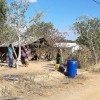
Drought Could Cost Sri Lanka Billions
The warnings are stark, the instructions, for a change, clear. Sri Lanka is heading into one of its worst droughts in recent history, and according some estimates the worst in 30 years. The reservoirs are running on empty, at 30 percent or less capacity. Only 12 percent of the island’s power generation is currently from hydropower and 85 percent comes from thermal, with a staggering 41 percent from coal.
Learning Alliances Help Climate-Smart Agricultural Practices Take Root
Development advocates and professionals are very keen on harnessing the power of agriculture to promote the cause of climate change these days. And rightly so, because agriculture is both a major emitter of greenhouse gases and so a potential force for mitigation, and because billions of people will need to eat, and so adaptation is an absolute necessity.
Guess How Much Water Your Daily Food Consumes
The facts are clear. So are the consequences. And the facts are that it takes between one and three tonnes of water to grow one kilogramme of cereal; that a kilogramme of beef takes up to 15 tonnes of water to produce; and that it is estimated that between 2,000 and 5,000 litres of water are needed to produce a person's daily food.
A Crisis of Overweight and Obesity in Latin America and the Caribbean
Obesity and overweight have spread like a wildfire throughout Latin America and the Caribbean, threatening the health, well-being and food and nutritional security of millions of people.
Zambia’s Armyworm Outbreak: Is Climate Change to Blame?
Surrender Hamufuba of Mwanamambo village in Pemba district recalls how he battled Armyworms in 2012. Fast-forward to 2016 and it is a similar story -- another pest infestation on an even larger scale.
Harvesting Peace: How Rural Development Works for Conflict Prevention
The year 2016 has seen a massive population flow, unprecedented in its range and reach. Millions of people have fled war-torn communities, natural disasters and violence, some overflowing neighboring countries’ refugee camps, some crossing perilous seas and walking hundreds of miles to reach safer grounds, others seeking refuge in countries half a world away. Thousands have died on their way to safety, countless more were victims of violence and abuse, among them many women and children.
360 Million of 625 Million People Are Overweight in Latin America and Caribbean
In Latin America and the Caribbean 360 million people are overweight, and 140 million are obese, warned the United Nations Food and Agriculture Organisation (FAO) and the Panamerican Health Organisation (PAHO).
It’s Time We Get Serious About Organic Farming
Conventional farming and food production practices in this country are creating serious environmental and public health problems. Every day, an industrial farming system spinning out of control confronts all Americans with serious challenges. Among these are the explosion in toxic algae blooms in sensitive waterways, cancer-causing pesticides on foods we feed our children, the rapid spread of antibiotic-resistant superbugs, and, of course, contaminated drinking water, all courtesy of corporate agribusiness.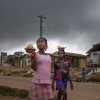
Inequality (II): “It Will Take 170 Years for Women to Be Paid as Men Are”
While just eight individuals, all of them men, own the same wealth as 3.6 billion people -- half of world’s total population -- it will take 170 years for women to be paid the same as men, warns a new major report on inequality.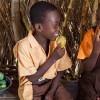
Is Cash Aid to the Poor Wasted on Tobacco and Alcohol?
Not at all. Or at least not necessarily. The fact is that cash transfer programmes –regular money payments to poor households—are meant to reduce poverty, promote sustainable livelihoods and increase production in the developing world. One in four countries on Earth are applying them. But are they effective?
When Your Healers Become Your Killers
There is a major though silent global threat to human and animal health, with implications for both food safety and food security and the economic well-being of millions of farming households. It is so-called anti-microbial resistance.
Native Seeds Sustain Brazil’s Semi-Arid Northeast
In his 76 years of life, Raimundo Pinheiro de Melo has endured a number of droughts in Brazil’s semi-arid Northeast region. And he remembers every one of them since 1958. “The worst one was in 1982 and 1983, the only time that the river dried up,” said Pinheiro do Melo, who has lived near the river since 1962. “The one in 1993 was also very bad,” he told IPS, because neither Bolsa Familia nor Networking in Brazil’s Semi-Arid Region (ASA) existed yet, which contribute to a less traumatic coexistence with droughts like the current one, which has dragged on for five years.
Threat of Famine Looms in Yemen
Millions of Yemenis could soon face widespread famine if no action is taken to improve food access through humanitarian or trade means, an early warning system has said.
No More Mass Deaths from Drought in Northeast Brazil
The drought that has plagued Brazil’s semiarid Northeast region since 2012 is already more severe than the 1979-1983 drought, the longest in the 20th century. But prolonged dry spells no longer cause the tragedies of the past.« Previous Page — Next Page »


 Farming on the Outskirts of Juba. Credit: UN Photo/JC McIlwaine
Promoting human and planetary health is a central focus of the United Nations, as laid out in the 2030 Sustainable Development Goals (SDGs). World hunger and unsustainable farming practices continue to be pressing concerns for the world. According to the 2025 State of Food Security and Nutrition in the World report by the Food and Agriculture Organization (FAO), 673 million people faced hunger in 2024. There are stark regional disparities, with the FAO projecting that 60% of the world population facing hunger will reside in Africa by 2030. Globally, the prevalence of food insecurity has remained consistently higher for women than men.
Sustainable and efficient national food systems are essential in preserving health, education, environmental well-being, peace, economy, and security. However, creating sustainable food systems can be a challenging endeavor, as food production takes a heavy toll on the environment. The agricultural sector accounts for a significant portion of greenhouse gases. Finding safe, sustainable, and ethical strategies to feed the world is crucial in ensuring planetary longevity. A recent initiative from 2023, the EU Regulation on Deforestation-free Products (EUDR), seeks to advocate for sustainable food systems. The main driver of deforestation is the expansion of agricultural land used to produce commodities like cattle, wood, cocoa, coffee, etc. The EUDR is part of the 2020 European Green New Deal and the EU Biodiversity Strategy for 2030 and aims to limit Europe’s consumption of products linked with deforestation by requiring that companies prove that their products are deforestation-free. Despite aiming to achieve major strides in sustainability, policies such as EUDR also raise socioeconomic concerns for targeted countries. Many emerging Latin American economies are impacted by the policy, and have raised the question of how developing countries can grapple with the tensions between economic development and advancing sustainability.
IPS has been at the forefront of providing compelling and insightful stories on communities facing hunger as well as the cost of food production. IPS uses statistics from FAO, the World Food Programme (WFP) and the International Fund for Agricultural Development (IFAD) to bring relevant and hard-hitting facts to readers. This gathering of information and data from such organizations helps bring the best stories from IPS journalists working in the different regions in consultation with experts on the ground.

The Week with IPS

NEXT STOP - SDGs
Tracking global progress towards a sustainable world
Tracking global progress towards a sustainable world

