Languages
Sunday, November 15, 2026



News and Views from the Global South
Food and Agriculture

How the US Government Subsidizes Obesity
Until the turn of the century, the United States of America (US) was the country with the highest share of overweight and obese people. Soon after the former president of Coca-Cola Mexico became the new president of his country, Mexico overtook the US.
Quality Water for All a Life and Death Issue in Bangladesh
There is no exaggerating how crucial water is for human survival, particularly in countries like Bangladesh, which is crisscrossed by rivers. The level of water in a river here directly affects the lifestyles and livelihoods of the people living on its two sides, so much so that rivers and water bodies of varied sizes are an inseparable part of Bengali culture and heritage.
Bio-Product Targeting Deadly Toxin Holds Hope for Africa’s Food
As food contaminants, aflatoxins are amongst the deadliest. Between 2004 and 2007, contaminated maize killed nearly 200 people in Kenya, left hundreds hospitalised and rendered millions of bags of maize unfit for consumption.
Communications Key to Successful Development Projects
Pumping money into development projects and rolling them out without having a good communications policy in place makes it unlikely the programmes will achieve their desired goals, as communications is vital to connect with stakeholders.
Agroecology Booming in Argentina
Organic agriculture is rapidly expanding in Argentina, the leading agroecological producer in Latin America and second in the world after Australia, as part of a backlash against a model that has disappointed producers and is starting to worry consumers.
Climate Change Needn’t Spell Doom for Uganda’s Coffee Farmers
Coffee production provides a quarter of Uganda’s foreign exchange earnings and supports some 1.7 million smallholder farmers, but crop yields are being undermined by disease, pests and inadequate services from agricultural extension officers, as well as climatic changes in the East African country.
A Pivotal Moment for Biofortification
This year’s World Food Prize pays tribute to biofortification, an intervention that strengthens efforts to address one of the world’s most insidious and pervasive public health challenges—hidden hunger. That is good news for the majority of the two billion people globally who suffer from hidden hunger, and likewise for those fighting to end the epidemic.
Feminism Helps Villagers Coexist with Drought in Northeast Brazil
“The vegetable garden changed my life,” said Rita Alexandre da Silva, in the village of Primeiro do Maio where 65 families have obtained land to grow crops since 1999, in this municipality in the state of Rio Grande do Norte, in Northeast Brazil.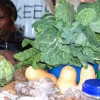
Food Insecurity: An Agent for Violent Conflict
Up to two billion people live in countries affected by violence, conflict and fragility. Often, such political instability goes hand in hand with food insecurity. “Conflicts have pushed over 56 million people either into crisis or emergency levels of food insecurity”, Kimberly Flowers, Director of the Global Food Security Project, said at this years’ John McGovern Lecture held at the Food and Agriculture Organization of the United Nations (FAO). The number continues to grow with the escalation of conflicts and violence in countries like Syria, Yemen or South Sudan.
Climate-Resistant Beans Could Save Millions
A global food watchdog works around the clock to preserve crop biodiversity, with a seed bank deep in the Colombian countryside holding the largest collection of beans and cassava in the world and storing crops that could avert devastating problems.
Nicaraguan Women Push for Access to Land, Not Just on Paper
A group of women farmers who organised to fight a centuries-old monopoly over land ownership by men are seeking plots of land to farm in order to contribute to the food security of their families and of the population at large.
Soil: Keeping Nutrients in Food and Carbon in the Ground
Healthy soil not only makes food more nutritious it also helps keep carbon out of the atmosphere by storing it underground.
Battle of the Desert (and III): UNCCD ‘s Louise Baker on The Silk Road
Marking this year's World Day to Combat Desertification last June, the United Nations announced the launch of a China-United Nations Convention to Combat Desertification (UNCCD) Belt and Road Joint Action initiative to curb Desertification along the Silk Road.
Climate Finance for Farmers Key to Avert One Billion Hungry
With climate change posing growing threats to smallholder farmers, experts working around the issues of agriculture and food security say it is more critical than ever to implement locally appropriate solutions to help them adapt to changing rainfall patterns.
Climate: Strong Commitment and New Global Action on Water Scarcity
“No country, irrespective of its size or strength, is immune from the impacts of climate change, and no country can afford to tackle the climate challenge alone.”
Battle of the Desert (II): A ‘Great Green Wall for Africa’
Desertification, land degradation, drought, climate change, food insecurity, poverty, loss of biodiversity, forced migration and conflicts, are some of the key challenges facing Africa—a giant continent home to 1,2 billion people living in 54 countries.
Rural Job Creation Holds the Key to Development and Food-Security Goals
Harvesting the benefits of core agricultural research, which often bears on improved crop varieties and plant diseases, increasingly depends on the social and economic conditions into which its seeds are sown. It is a sign of the times that Kanayo F. Nwanze, the president of the International Fund for Agricultural Development who started off as a cassava entomologist when ITTA posted him to Congo in the 1970s, was recently hailed for his efforts to create African billionaires.
New Fund Aims to Help Build Resilience to Climate Change
The world has been too slow in responding to climate events such as El Niño and La Niña, and those who are the “least responsible are the ones suffering most”, Mary Robinson, the special envoy on El Niño and Climate, told IPS at the United Nations Climate Change Conference in Marrakech (COP22).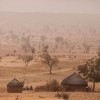
Battle of the Desert (I): To Fight or to Flee?
To fight or to flee? These are the stark choices Maria, a single mother from the Bangalala midlands of Tanzania, faces repeatedly. “After the rains failed for a few years, some neighbours claimed our trees were drawing too much water from the ground. We cut them down. Our harvests fell. My mother closed her stall at the local market. That is when my father and I moved from the midlands to the Ruvu Mferejini river valley.”
Phosphate Mining Firms Set Sights on Southern Africa’s Sea Floor
A persistent fear of diminishing phosphorus reserves has pushed mining companies to search far and wide for new sources. Companies identified phosphate deposits on the ocean floor and are fighting for mining rights around the world.
Thriving Rural Communities Is a Recipe for Healthy Cities
As the dust has settled on Habitat III and the summit in Quito, Ecuador, we now have a clear vision and a concrete road map for how to transform our cities into inclusive, safer and more productive environments. The New Urban Agenda comes at a propitious time. Urbanization is growing at a fast pace, particularly in developing countries, where the urban population is expected to double by 2050. In South Asia alone, the urban population grew by 130 million between 2001 and 2011, according to recent World Bank study. Another 250 million are expected to join them by 2030.« Previous Page — Next Page »


 Farming on the Outskirts of Juba. Credit: UN Photo/JC McIlwaine
Promoting human and planetary health is a central focus of the United Nations, as laid out in the 2030 Sustainable Development Goals (SDGs). World hunger and unsustainable farming practices continue to be pressing concerns for the world. According to the 2025 State of Food Security and Nutrition in the World report by the Food and Agriculture Organization (FAO), 673 million people faced hunger in 2024. There are stark regional disparities, with the FAO projecting that 60% of the world population facing hunger will reside in Africa by 2030. Globally, the prevalence of food insecurity has remained consistently higher for women than men.
Sustainable and efficient national food systems are essential in preserving health, education, environmental well-being, peace, economy, and security. However, creating sustainable food systems can be a challenging endeavor, as food production takes a heavy toll on the environment. The agricultural sector accounts for a significant portion of greenhouse gases. Finding safe, sustainable, and ethical strategies to feed the world is crucial in ensuring planetary longevity. A recent initiative from 2023, the EU Regulation on Deforestation-free Products (EUDR), seeks to advocate for sustainable food systems. The main driver of deforestation is the expansion of agricultural land used to produce commodities like cattle, wood, cocoa, coffee, etc. The EUDR is part of the 2020 European Green New Deal and the EU Biodiversity Strategy for 2030 and aims to limit Europe’s consumption of products linked with deforestation by requiring that companies prove that their products are deforestation-free. Despite aiming to achieve major strides in sustainability, policies such as EUDR also raise socioeconomic concerns for targeted countries. Many emerging Latin American economies are impacted by the policy, and have raised the question of how developing countries can grapple with the tensions between economic development and advancing sustainability.
IPS has been at the forefront of providing compelling and insightful stories on communities facing hunger as well as the cost of food production. IPS uses statistics from FAO, the World Food Programme (WFP) and the International Fund for Agricultural Development (IFAD) to bring relevant and hard-hitting facts to readers. This gathering of information and data from such organizations helps bring the best stories from IPS journalists working in the different regions in consultation with experts on the ground.

The Week with IPS

NEXT STOP - SDGs
Tracking global progress towards a sustainable world
Tracking global progress towards a sustainable world

