Languages
Monday, September 28, 2026



News and Views from the Global South
Health
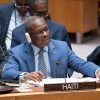
Haitian Government Faces Criticism for its Response to Gang Attack in Kenscoff
The humanitarian situation in Haiti continues to deteriorate as armed gangs expand their control in Port-Au-Prince and escalate acts of violence throughout the nation. Due to heightened insecurity, civilian displacement has reached new peaks, with hunger, disease, and the economic crisis having grown worse. With access to basic services diminished, approximately 5.5 million Haitians are dependent on humanitarian aid for survival. However, relief efforts have been severely hampered due to safety risks, restricted mobility and the vast scale of needs.
‘Reconciliation Will Require Robust Transitional Justice and Accountability Mechanisms’
CIVICUS discusses the ongoing conflict in Ethiopia’s Amhara region with Hone Mandefro, advocacy director at the Amhara Association of America, and Henok Ashagray, PhD candidate and project officer at the Centre for Human Rights at the University of Pretoria.

Why Trump’s Tariffs Can’t Solve America’s Fentanyl Crisis
Americans consume more illicit drugs per capita than anyone else in the world; about 6% of the U.S. population uses them regularly. One such drug, fentanyl – a synthetic opioid that’s 50 to 100 times more potent than morphine – is the leading reason U.S. overdose deaths have surged in recent years. While the rate of fentanyl overdose deaths has dipped a bit recently, it’s still vastly higher than it was just five years ago.
Afghanistan’s Humanitarian Crisis Expected to Worsen in 2025
The humanitarian crisis in Afghanistan has deteriorated significantly since the 2021 Taliban Offensive, an insurgency that resulted in the Taliban’s reclamation of power and the fall of the nation’s republic. In 2024, the Taliban issued further restrictions on human rights in Afghanistan, particularly for women and girls. These restrictions caused the country to enter a state of economic emergency. This, compounded with heightened insecurity and limited access to basic services, has left over 23 million people in dire need of humanitarian assistance.
America’s Scourge: An Ageing Elderly Population
Many Americans, especially the wealthy and successful, have discovered that the US is facing the scourge of an ageing elderly population that is seriously threatening the nation’s prosperity, economic growth and international standing.
The Road to and from Wuhan: Is Trump a Threat to Global Health?
On his first day in office, President Donald Trump signed an executive order withdrawing the U.S. from the World Health Organization (WHO) – a move experts say makes the U.S. and other countries less safe from infectious diseases and other public-health threats. It might thus be opportune to return to the global COVID 19 pandemic. Has the threat really gone away? Can something similar not erupt again?
Israel’s Ban on UNRWA Threatens to Undermine Ceasefire in Palestine
On January 19, Israel and Hamas implemented a three-phase ceasefire agreement that seeks to end the war between Israel and Palestine, facilitate the exchange of prisoners and hostages between the two nations, and begin a period of reconstruction in the Gaza Strip. Since the ceasefire took effect, humanitarian organizations have struggled to assist hordes of displaced Palestinians as they made their treacherous returns back home. Insecurity has reached new peaks as Gazans struggle to cope with inadequate levels of humanitarian aid and the dangers of unexploded ordnance. Furthermore, the Israeli Knesset’s ban on the United Nations Relief and Works Agency for Palestinian Refugees (UNRWA) is set to greatly exacerbate living conditions and access to aid.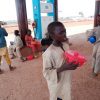
Malnutrition in Nigeria Rises Alarmingly, Urgent Action Needed
In June 2024, 26-year-old Zainab Abdul noticed her two-year-old daughter growing pale, losing weight, and battling diarrhea. She wasn’t surprised. Since jihadist-linked bandits had forced them out of their village in Kadadaba, Zamfara State, in northwestern Nigeria, her family had been living in a refugee camp with limited access to food.
Living Conditions in Syria Deteriorate During Transitional Period
Thirteen years of extended conflict, economic downturns, and multiple earthquakes, has left Syria in the midst of a severe humanitarian crisis. Hostilities remain abundant across all of Syria’s governorates, with each facing widespread civilian displacements and damage to critical infrastructures. Following the change of government in December of 2024, Syrian refugees have begun returning from neighbouring countries. However, this return has been marred with insecurity due to the sheer scale of unexploded ordnance, which has resulted in numerous civilian casualties.
The First Phase of Israel-Palestine Ceasefire Begins
On January 15, 2025, the long-awaited ceasefire proposal between Israel and Hamas was approved, bringing the first bout of relief for the people of the Gaza Strip after 15 months of conflict. This has allowed for the exchange of prisoners and hostages between the two nations as well as a greater flow of humanitarian aid to be directed to Gaza. Although this only accounts for the first phase out of the three phase plan, it is uncertain if Israel will continue to uphold the negotiations of a truce after the first phase is completed.
Food Systems Worsen Diets, Health
Corporate-dominated food systems are responsible for widespread but still spreading malnutrition and ill health. Poor diets worsen non-communicable diseases (NCDs), now costing over eight trillion dollars yearly!
Martin Luther King Jr’s Legacy on Health Equity Through the Eyes of a Black African Doctor
Every year, January 20 is celebrated as Martin Luther King Jr. Day. He was a leader in the Civil Rights Movement who fought for equality and justice, especially for Black people, through peaceful protests and powerful speeches. The day is observed annually on the third Monday of January, close to his birthday on January 15. It is a time to remember his work, reflect on his message of fairness and nonviolence, and engage in acts of service to help others in our communities.
2024 Marked An Escalation in Brutality for Haiti’s Gang War
2024 was a transitional period in Haiti’s history, marked by rampant political instability, brutal gang violence, and widespread civilian displacement. Since the eruption of hostilities in March 2024, the Caribbean nation has been in a state of emergency. In response, the United Nations (UN) Security Council approved The Multinational Security Support (MSS) Mission in Haiti to assist the Haitian government in deposing gang activity and restoring order. However, the support mission has been largely ineffective as gangs continue to seize more areas in Haiti.
Colombia’s Historic Child Marriage Ban
Colombia has just marked a historic milestone in the global campaign against child marriage, with the Senate passing one of Latin America and the Caribbean’s most comprehensive bans on child marriage and early unions. In a country where one in five girls under 18 and one in 10 under 14 are married or live in marriage-like conditions, the new law raises the minimum age to 18 with no exceptions, eliminating a 137-year-old Civil Code provision that allowed children over 14 to marry with parental consent. This achievement aligns with goal 5 of the Sustainable Development Goals (SDGs), which has a target of eliminating harmful practices like child marriage by 2030. The new law now awaits the signature of President Gustavo Petro to come into effect.
Sudan’s Humanitarian Crisis Expected to Worsen in 2025
As the Civil War rages on in Sudan, the nationwide humanitarian crisis continues to worsen. Armed conflict has caused an escalation in civilian casualties and displacement in the past few months. Additionally, famine looms in the nation’s most conflict-impacted areas, which is exacerbated by tightened restrictions that impede humanitarian aid deliveries. Despite numerous calls for a cessation of hostilities by the international community, relief efforts are severely underfunded.
Carter’s Virtue Trumps Mendacity
The fireplace in the State Dining Room of the White House that says, “May none but honest and wise men ever rule under this roof.” President John Adams wrote that in a letter to his wife Abigail in 1800.
Remembering Jimmy Carter: a UN Perspective
Former American President Jimmy Carter was a man of peace and principles. He presided over a tumultuous period in American history from 1977 to 1981, working hard to restore trust in government after the Watergate scandal and the divisive era of the Vietnam War. He brokered a landmark peace deal between Israel and Egypt and negotiated a historic treaty to hand over the Panama Canal to Panama.
IPS – Year End Video, 2024

The world’s troubles deepened in 2024. Civilians bore the brunt of war. Violence in Gaza, Sudan, Ukraine, Haiti, and more displaced over 100 million people worldwide.

U.S. Wins Controversial Ruling in GM Corn Dispute with Mexico
A tribunal of trade arbitrators has ruled in favor of the United States in its complaint that Mexico’s restrictions on genetically modified corn violate the terms of the U.S.-Mexico-Canada trade agreement (USMCA). The long-awaited ruling in the 16-month trade dispute is unlikely to settle the questions raised by Mexico about the safety of consuming GM corn and its associated herbicide.
Trapped on a Runaway Train: Looking Back on 2024
Do you sometimes feel like a hamster on its wheel, or perhaps stuck on a runaway train hurtling towards the abyss? Whatever metaphor one might choose for our world looking back on 2024, rainbows don’t easily spring to mind.
Water Deprivation Looms in Gaza
As talks of a ceasefire between Israel and Palestine intensify, bombardments in Gaza continue, raising the number of civilian casualties and internal displacements. A December 19 report from Human Rights Watch (HRW) condemned Israeli authorities for committing acts of genocide upon the people in the Gaza Strip, including the deprivation of water and the destruction of critical water sanitation infrastructures.« Previous Page — Next Page »


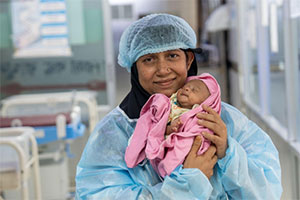 Bangladesh: Sarid, born one month early, receives specialized newborn care and grows stronger every day. Credit: UNICEF/UNI944397/Mojumder
Since the onset of the 2000s, global life expectancy has seen an overall rise, attributed to significant technological and scientific innovations in healthcare. Due to an increased understanding of different conditions as well as a rise in cooperation among healthcare experts around the world, there have been major strides made in ensuring that as few people die from chronic illnesses as possible. Despite the belief that healthcare is a fundamental human right, people from low- or middle-class backgrounds, marginalized groups, and underdeveloped countries have far more limited access to basic healthcare services.
The COVID-19 pandemic showed how marginalized communities are disproportionately affected by health crises, proving that we have much work to do in ensuring that no one dies of terminal conditions. While the global response to the coronavirus saw significant strides in immunization and vaccine development, the global outbreak of mpox in 2022 and its upsurge in parts of Africa in 2024 must remind us to remain vigilant.
Other major disease outbreaks in recent years have been linked to the destruction of infrastructure during warfare. Notably, in 2024, the Gaza Strip witnessed a return of the poliovirus since its eradication in the region 25 years ago. Israel’s blockade on Gaza has resulted in the collapse of the region’s sewage plants and desalination plants, and also destroyed healthcare capacities. The UN stated that this lack of clean water and sanitation would lead to an outbreak of cholera and other deadly infectious diseases. The 2026 OCHA Humanitarian Situation Report confirmed that the over two years of conflict in Gaza has produced a catastrophic health emergency, with millions remaining dependent on relief aid amid tight restrictions and no functioning public health system.
IPS is committed to providing full and comprehensive coverage on healthcare challenges around the world. IPS seeks to address the multifaceted causes of such challenges, including unprecedented pandemics, conflict-driven disease outbreaks, as well as socioeconomic barriers to equal healthcare access. IPS is also dedicated to reporting on innovations in the healthcare industry.

The Week with IPS

NEXT STOP - SDGs
Tracking global progress towards a sustainable world
Tracking global progress towards a sustainable world
