Languages
Thursday, November 19, 2026



News and Views from the Global South
Health

INDIA: Agitation Challenges Asbestos Import
Activists hope that a popular agitation against the setting up of a factory to manufacture asbestos products in the eastern Bihar state will result in a nationwide ban on the large-scale import into this country of the deadly mineral fibre.VENEZUELA: Biopiracy Leaves Native Groups Out in the Cold
Millions of cancer patients around the world benefit from a medication called Paclitaxel (Taxol), which may begin to be produced from a new source: fungi found at the summit of Venezuela's flat-topped mountains. But the indigenous communities who have lived in that area since time immemorial will receive no benefits, and were not even consulted on the matter.U.N. Intensifies Campaign Against Female Genital Mutilation
The United Nations is intensifying its global campaign to eliminate one of the most widely-condemned religious and cultural rituals in the world today, mostly in Africa and Asia: female genital mutilation/cutting (FGM/C).Rising Food Prices May Not Signal New Crisis
As food prices rose for the seventh month in a row in January, contributing to recent popular unrest in the Middle East and a spike in commodities purchases by developing countries last week, some analysts are quick to make comparisons to the dry years of 2007-2008.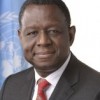
Q&A: Meeting a World of Seven Billion with Optimism
Before the end of 2011 there will be more humans on earth than in all of the planet's 4.5-billion-year history. As the world steels itself to support its seven billion-strong population, Dr. Babatunde Osotimehin, the new executive director of the United Nations Population Fund (UNFPA), greets the impending challenges with gusto.ZIMBABWE: Filtering Fact From Fiction About D.I.Y. Water Treatment
The southern Zimbabwean city of Bulawayo has not been spared the heavy rains that have fallen across Southern Africa; the water is welcome in this semi-arid part of the country, but the coming of the rainy season has provoked fresh memories of the 2008 cholera epidemic.SOUTH AFRICA: Delayed Drug Registration Could Affect Region
Delays in drug registration by the country's Medicines Control Council (MCC), contribute to depriving South African HIV patients of important fixed dose combination antiretroviral (ARV) drugs. But there are indications that the effects of the delays are being felt even farther afield.HEALTH-PERU: Cost of Medicines Out of Control
When the price of medicines for treating cancer soared by up to 64 percent in 2010, the Peruvian government set up a watchdog commission that will also monitor prices of drugs for diabetes and HIV/AIDS.MALAWI: Women’s Voices to the Fore in New Development Policy
As Malawi works on its second development blueprint, the Malawi Development and Growth Strategy (MDGS II), the country’s women are hoping health and education will be prioritised and given proper attention in implementation.Latin Americans ‘Guinea Pigs’ for Foreign Clinical Trials
Leonor, a Mexican citizen, took part in a 2006 clinical trial of a drug to treat kidney disease, designed by a transnational pharmaceutical company.Rampant Speculation Inflated Food Price Bubble
Billions of dollars are being made by investors in a speculative "food bubble" that's created record food prices, starving millions and destabilising countries, experts now conclude.
PERU: Environmental Crime Doesn’t Pay
A legislative bill in Peru aims to channel the fines for environmental crimes to repair the damages to rivers, soils and other public goods that directly affect the population. Until now, the fines collected have ended up elsewhere in the government.AFPAK: Polio Rises With Border Flows
Pakistan became the world’s top polio-endemic country in 2010 and is now the biggest source of the polio virus to countries declared polio-free many years ago. Due to the unrestricted movement of children along the long and porous Afghanistan-Pakistan border, both countries have begun to put in place a joint strategy to stem the tide of the ailment.HEALTH: Battle Against Dengue Finds a New Front
When an outbreak of dengue fever occurred in the hot and humid north of Australia’s Queensland state in late 2008, Nicola Strange was among hundreds of locals that contracted the mosquito-borne disease.CUBA: Shock at Deaths and Corruption in Psychiatric Hospital
The trial of staff at the Havana Psychiatric Hospital for the deaths of 26 patients who died of cold and neglect revealed a dark chapter in an institution that was once a shining symbol of Cuba's much lauded health care system, and drew reactions of shock and criticism.CHINA: Children Cry Out for Protection
A growing number of reports in China’s state media have thrust the issue of child abuse into the national spotlight. Many young parents and teachers today have shifting attitudes about corporal punishment, but incidents of abuse are being reported across the country. Affected children are virtually unprotected under the law.
PHILIPPINES: ‘Wanted, Full-Time Mothers’
It’s definitely not your typical job advertisement. "Wanted: Mothers; must be mature, strong and stable, self-confident, humorous and know how to cook; must have a positive and cheerful attitude towards life; must be willing to work as a full-time mother for the long term."MIDEAST: Hamas Guards Women’s Health – for the Wrong Reasons
When the Hamas government of Gaza imposed restrictions on shisha (water pipe) smoking several months ago, it wasn’t for health reasons – even though the habit is pervasive in the densely populated strip of land. Rather, the ban targeted only women – and it is being widely ignored despite the firm grip of the conservative Islamic government.
COTE D’IVOIRE: Protecting Public Health Despite Political Impasse
The political stand-off between Alassane Ouattara, certified by the United Nations as winner of Nov. 28 elections, and the incumbent president, Laurent Gbagbo, who has refused to step down, is stretching into its eighth week.SOUTH AFRICA: How Better ARV Prices Were Won
South Africa’s recently-awarded tender for antiretroviral drugs halved drug costs for the world’s largest ARV programme. Driven by a better-prepared and more aggressive government, the deal may stand up to criticism better than initially thought.EAST EUROPE: Midwives Struggle to Deliver Home Births
Women’s rights in Eastern Europe have been put into the spotlight as a Hungarian midwife faces five years in prison for assisting with home births.« Previous Page — Next Page »


 Bangladesh: Sarid, born one month early, receives specialized newborn care and grows stronger every day. Credit: UNICEF/UNI944397/Mojumder
Since the onset of the 2000s, global life expectancy has seen an overall rise, attributed to significant technological and scientific innovations in healthcare. Due to an increased understanding of different conditions as well as a rise in cooperation among healthcare experts around the world, there have been major strides made in ensuring that as few people die from chronic illnesses as possible. Despite the belief that healthcare is a fundamental human right, people from low- or middle-class backgrounds, marginalized groups, and underdeveloped countries have far more limited access to basic healthcare services.
The COVID-19 pandemic showed how marginalized communities are disproportionately affected by health crises, proving that we have much work to do in ensuring that no one dies of terminal conditions. While the global response to the coronavirus saw significant strides in immunization and vaccine development, the global outbreak of mpox in 2022 and its upsurge in parts of Africa in 2024 must remind us to remain vigilant.
Other major disease outbreaks in recent years have been linked to the destruction of infrastructure during warfare. Notably, in 2024, the Gaza Strip witnessed a return of the poliovirus since its eradication in the region 25 years ago. Israel’s blockade on Gaza has resulted in the collapse of the region’s sewage plants and desalination plants, and also destroyed healthcare capacities. The UN stated that this lack of clean water and sanitation would lead to an outbreak of cholera and other deadly infectious diseases. The 2026 OCHA Humanitarian Situation Report confirmed that the over two years of conflict in Gaza has produced a catastrophic health emergency, with millions remaining dependent on relief aid amid tight restrictions and no functioning public health system.
IPS is committed to providing full and comprehensive coverage on healthcare challenges around the world. IPS seeks to address the multifaceted causes of such challenges, including unprecedented pandemics, conflict-driven disease outbreaks, as well as socioeconomic barriers to equal healthcare access. IPS is also dedicated to reporting on innovations in the healthcare industry.

The Week with IPS

NEXT STOP - SDGs
Tracking global progress towards a sustainable world
Tracking global progress towards a sustainable world
