Languages
Thursday, November 19, 2026



News and Views from the Global South
Health
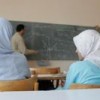
No Sex Education Please, We’re Arab
Civil society has warned of adverse social and health consequences after the Egyptian government ordered the removal of content related to male and female anatomy, reproductive health and sexually transmitted diseases (STDs) from the school curriculum.
LATIN AMERICA: Community Projects Want to Graduate to Public Policy
"On Dec. 15, we will make the great leap ahead when we present our health programme, our hospital boat, to the country," Caetano Scannavino announced in the name of a community project that has achieved one of its aims: to be included in the Brazilian government's social policies.MEXICO: Road Accidents Top Cause of Death Among Young
If Canadian filmmaker David Cronenberg were interested in making a sequel to his 1996 film "Crash", in which the main characters derive sexual pleasure from car crashes, Mexico could be an ideal location, due to the large number of traffic accidents in this country.“Perfect Storm” Spurred 2007-08 Food Crisis, Study Says
Rising food prices have not yet reached crisis levels but they are expected to remain very volatile for about the next decade, researchers said Thursday.U.S. Regulators Omit Wider Implications of GM Salmon
U.S. regulators are poised to decide as early as next week whether to approve a genetically modified salmon for human consumption.EL SALVADOR: Political Tug-of-War Over Medicines
Two initiatives of the administration of President Mauricio Funes in El Salvador, aimed at increasing competition in the pharmaceutical industry in order to bring down the cost of medicines, are being fought by the opposition in Congress.Funding Cuts on Horizon for Global Health, AIDS
Over the past several years, the number of people needing treatment for HIV/AIDS has risen, but so has the amount of funding for the treatment and prevention of the disease. The United States has been at the forefront of that funding, but with the new emphasis in Washington on reducing government spending that may be about to change.U.S.: Health and Privacy Concerns Dog Airport Body Scanners
Privacy advocates called on the U.S. Transportation Security Administration (TSA) Tuesday to end its controversial new initiative of whole-body scans and enhanced pat-downs of airline passengers, calling the programme "dangerous to health, ineffective and unconstitutional".Malawi Struggling to Address Paediatric HIV
There are 91,000 children living with HIV in Malawi. A shortage of resources means that many do not receive proper treatment and care.
HAITI: Anger Erupts at U.N. as Cholera Toll Nears 1,000
"People are going to take the body to MINUSTAH to show them what they did," Jean-Luc Surfin told IPS by phone as riots erupted against Haiti's U.N. peacekeeping force on Monday in the northern city of Cap-Haitien.Latin America at Forefront of War on Tobacco
Latin America and the Caribbean are taking firm steps against the use of tobacco with the adoption of no smoking laws, bans on advertising, and graphic pictorial warnings on cigarette packets.
AFRICA: New Drugs To Speed TB Treatment
Researchers are testing a new combination of tuberculosis drugs on patients in South Africa which they are hoping will shorten the treatment term of the disease to six months.
Illness Plagues Gulf Residents in BP’s Aftermath
Increasing numbers of U.S. Gulf Coast residents attribute ongoing sicknesses to BP's oil disaster and use of toxic dispersants.Vaccines Make Gradual Headway Against Child Pneumonia
It had seemed her kids had the flu or a cold. But when it got worse, she took little Abigail to hospital. It was already too late; Abigail died in her mother's arms.
CONGO: Polio Kills 100
An emergency vaccination campaign against polio begins Nov. 12 in the Republic of Congo, where an epidemic centred on the southern city of Pointe-Noire has killed at least 100 people since the beginning of October.
AFRICA: Church Leaders An Obstacle To Preventing Maternal Deaths
The resurgence in religious fundamentalism and the inordinate influence of certain church leaders over public health policy present major obstacles to the prevention of needless deaths and injuries of women from unsafe abortion on the African continent.
Toxic Hotspots Require Global Superfund
One of the world's biggest health threats is also one of the least recognised - more than 100 million people who literally breathe and eat toxic pollutants like lead, mercury, chromium every day, according to the first-ever detailed assessment.
PAKISTAN: Pneumonia Season Takes Toll on Poor Children
Asleep in her mother’s lap, three-year-old Amna Ghafoor looks at peace with the world. But mother and child are at Karachi’s National Institute of Child Health (NICH), and a plastic cannula inserted in the child’s tiny left wrist is a sure sign that all is not well.
LAOS: For Cluster Bomb Survivors, War Far From Over
Eighteen-year-old Phongsavath Manithong rubbed his eyes with the back of his arms as he described how his life changed forever.New Staple Crop Varieties Take Aim at Malnutrition
When the Green Revolution took root in the 1960s and 1970s, plant biologists' main concern was increasing the yield of the staple crops on which people in poor countries depended. This, it stood to reason, would increase the amount of food available to the world's poor – and decrease hunger.ARGENTINA: Show Drives Home the Reality of Obesity
"I can't even walk because I run out of breath. Food is my drug," says a 31-year-old man who weighs 215 kilos. "I hide to eat; it's something I can't control," says a 21-year-old woman who weighs 152 kilos.« Previous Page — Next Page »


 Bangladesh: Sarid, born one month early, receives specialized newborn care and grows stronger every day. Credit: UNICEF/UNI944397/Mojumder
Since the onset of the 2000s, global life expectancy has seen an overall rise, attributed to significant technological and scientific innovations in healthcare. Due to an increased understanding of different conditions as well as a rise in cooperation among healthcare experts around the world, there have been major strides made in ensuring that as few people die from chronic illnesses as possible. Despite the belief that healthcare is a fundamental human right, people from low- or middle-class backgrounds, marginalized groups, and underdeveloped countries have far more limited access to basic healthcare services.
The COVID-19 pandemic showed how marginalized communities are disproportionately affected by health crises, proving that we have much work to do in ensuring that no one dies of terminal conditions. While the global response to the coronavirus saw significant strides in immunization and vaccine development, the global outbreak of mpox in 2022 and its upsurge in parts of Africa in 2024 must remind us to remain vigilant.
Other major disease outbreaks in recent years have been linked to the destruction of infrastructure during warfare. Notably, in 2024, the Gaza Strip witnessed a return of the poliovirus since its eradication in the region 25 years ago. Israel’s blockade on Gaza has resulted in the collapse of the region’s sewage plants and desalination plants, and also destroyed healthcare capacities. The UN stated that this lack of clean water and sanitation would lead to an outbreak of cholera and other deadly infectious diseases. The 2026 OCHA Humanitarian Situation Report confirmed that the over two years of conflict in Gaza has produced a catastrophic health emergency, with millions remaining dependent on relief aid amid tight restrictions and no functioning public health system.
IPS is committed to providing full and comprehensive coverage on healthcare challenges around the world. IPS seeks to address the multifaceted causes of such challenges, including unprecedented pandemics, conflict-driven disease outbreaks, as well as socioeconomic barriers to equal healthcare access. IPS is also dedicated to reporting on innovations in the healthcare industry.

The Week with IPS

NEXT STOP - SDGs
Tracking global progress towards a sustainable world
Tracking global progress towards a sustainable world
