Languages
Wednesday, November 11, 2026



News and Views from the Global South
Health

Reimagining a Post COVID World: Key Principles for the Future
In her book, ‘A World Made New: Eleanor Roosevelt and the Universal Declaration of Human Rights,’ Mary Ann Glendon tells the beautiful story of how out of the ashes of the Second World War emerged the world’s pre-eminent rights framework. The Declaration recognises the inherent dignity of every human being and was born out of the shared horror felt by the international community with war crimes and genocide on an unprecedented scale. It acknowledged that fundamental change was needed to make the world fit for future generations.
Coronavirus: Six Key Factors Poor Countries Should Focus on
Since the outbreak of coronavirus pandemic late last year in Wuhan, China, the global community has witnessed unprecedented policy responses to curtail, contain and control the disease. Many have proven to be successful. But others required critical context consideration.
The Theology of Pandemics
Ingmar Bergman’s 1957 film The Seventh Seal is set in medieval Sweden, as the bubonic plague ravages the countryside. In one famous scene, a procession of zombie-like flagellants enters a village and interrupts a comic stage-show.
Covid-19: Brazil’s Bolsonaro trumps Trump
Brazil’s President Jair Bolsonaro appointed medical entrepreneur Nelson Teich his new health minister on 17 April. The businessman quickly echoed his boss’ desire to resume business as usual regardless of its potentially lethal consequences.
Haunting Forest Spirits – is Mother Nature Striking Back?
Epidemic diseases are not random events that afflict societies capriciously and without warning, on the contrary, every society produces its own specific vulnerabilities. To study them is to understand the importance of a society's structure, its standard of living, and its political priorities. […] Epidemics are a mirror, they show who we really are: Our ethics, beliefs, and socio-economic relationships. Frank Snowden 1
BCG Vaccine Fighting Coronavirus in South Asia
Numerous studies in many parts of the world have linked the BCG (Bacillus Calmette-Guerin) vaccination, widely used in the developing world with fewer Coronavirus cases. This is good news for countries that have universal BCG vaccination in tropical Asia and Africa.
Global Leaders Must Prioritise Children’s Wellbeing amid Coronavirus Pandemic – UN
United Nations Secretary General António Guterres on Thursday pleaded with global leaders and families to ensure the protection of the world's children, millions of whom he says are vulnerable to a myriad of threats as a result of the shutdown arising from the global coronavirus pandemic.
Multilateralism Through Public-Private Partnerships Are Key to Flattening the COVID-19 Curve
The UN Secretary-General Antonio Guterres has said that now is “a defining moment for modern society. History will judge the efficacy of the response not by the actions of any single set of government actors taken in isolation, but by the degree to which the response is coordinated globally across all sectors for the benefit of our human family.”
On Watching Contagion: What Do We Learn?
Contagion is a 2011 film by US director Steven Soderbergh (Erin Brockovich, Traffic, Che) that has proved very popular viewing during the first few weeks of the Coronavirus crisis. Set in a fictional global pandemic – modelled on the outbreak of a bat-borne Nipah virus identified in 1999 that killed around 100 people in Malaysia - the film is a tightly-written topical drama with a great castthat includes Matt Damon, Gwyneth Paltrow, Jude Law, Laurence Fishburne, Kate Winslet, Marion Cotillard and Jennifer Ehle.
Concerns for the Nearly 400 Rohingya Refugees Rescued off the Coast of Bangladesh
Nearly 400 Rohingya refugees have been rescued in Bangladesh after being at sea for two months.
COVID-19: Maintaining Food Security in Asia Pacific
COVID-19 has disrupted supply chains that are essential to assure food security in the Asia Pacific region, yet countries overall seem to have managed, so far, to keep supermarkets stocked with food and feed those who can afford it. The Asia Pacific region is home to over 60% of humanity and also contains sub-regions with among the highest frequencies of severe weather events and some of the most challenging environments for agriculture. As a region it is characterized by diverse food systems and a multiplex of supply chains. Under normal circumstances, food security is already threatened by a multitude of factors.
No Space for Social Distancing in Rohingya Refugee Camps
Nine-year-old Mohammad Rafique used to collect vegetables from Kutupalong Bazaar and sell them at a market inside Kutupalong camp, a camp of some 600,000 Rohingyas, in Bangladesh’s Cox’s Bazar.
In His Fight Against WHO, Trump Plays Politics with Human Lives
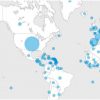
President Donald Trump’s threat to abruptly cut all US funding to the World Health Organization (WHO) has been described as ‘reckless and deadly”—particularly at a time when the Geneva-based UN agency was engaged in an uphill battle against the spreading coronavirus.
COVID-19. No school meals, millions of kids at risk of food insecurity
For millions of children around the world, the COVID-19 outbreak means not getting the most important, if not the only, meal of the day.
The COVID-19 Cash Crisis: Will the UN Cease to Exist?
The coronavirus pandemic has set off an unprecedented institutional crisis at the United Nations – funds are drying up, key meetings are cancelled and the world body is fighting for its future.
India’s Liberal Abortion Law, Nullified by Social Stigma
Arti Zodpe is from the Tamasha (folk dance-drama) theatre in Sangli, in India’s Maharashtra state. After evening performances, some of the singers and dancers offer sex work services to the audience.
Vietnam Winning New War Against Invisible Enemy
Vietnam, just south of coastal China, is the 15th most populous country in the world with 97 million people.According to its Ministry of Health (MoH), as of 13 April, there were 262 confirmed cases of COVID-19, with 144 recovering or discharged from hospitals, and no deaths.
Q&A: How to #BeActive during COVID-19 Lockdown
Growing up in Ramallah in Palestine, Maher Nasser, Director of Outreach Division at the United Nations Department of Global Communications, never really liked running. "I only ran when I needed to: to catch a bus or to run from soldiers," he tells IPS. But now with three marathons under his belt -- which raised thousands for scholarships for Palestinian women’s education -- Nasser is still running, albeit on his balcony.
Debunking 9 Popular Myths Doing the Rounds in Africa About the Coronavirus
In the second week of March the World Health Organisation (WHO) declared COVID-19 a pandemic. By mid-March the disease had spread rapidly in many countries around the world.
Unesco to Support Cultural Sector Hit by COVID-19
The United Nations Educational, Scientific and Cultural Organization (UNESCO) has announced it is “launching initiatives” to support cultural industries and cultural heritage, sectors hit hard by the COVID-19 pandemic. “COVID-19 has put many intangible cultural heritage practices, including rituals and ceremonies, on hold, impacting communities everywhere,” the organization stated April 9. “It has also cost many jobs, and across the globe, artists … are now unable to make ends meet.”
How Can We Support Sanitation Workers During COVID-19?
In addition to healthcare professionals, there is another group of people at the frontlines of the global crisis caused by COVID-19. They put their lives at risk every day and play a critical role in preventing the spread of the virus, by ensuring our streets, parks, public spaces, sewers, septic tanks, communities, and public toilets are kept clean and hygienic.« Previous Page — Next Page »





 Bangladesh: Sarid, born one month early, receives specialized newborn care and grows stronger every day. Credit: UNICEF/UNI944397/Mojumder
Since the onset of the 2000s, global life expectancy has seen an overall rise, attributed to significant technological and scientific innovations in healthcare. Due to an increased understanding of different conditions as well as a rise in cooperation among healthcare experts around the world, there have been major strides made in ensuring that as few people die from chronic illnesses as possible. Despite the belief that healthcare is a fundamental human right, people from low- or middle-class backgrounds, marginalized groups, and underdeveloped countries have far more limited access to basic healthcare services.
The COVID-19 pandemic showed how marginalized communities are disproportionately affected by health crises, proving that we have much work to do in ensuring that no one dies of terminal conditions. While the global response to the coronavirus saw significant strides in immunization and vaccine development, the global outbreak of mpox in 2022 and its upsurge in parts of Africa in 2024 must remind us to remain vigilant.
Other major disease outbreaks in recent years have been linked to the destruction of infrastructure during warfare. Notably, in 2024, the Gaza Strip witnessed a return of the poliovirus since its eradication in the region 25 years ago. Israel’s blockade on Gaza has resulted in the collapse of the region’s sewage plants and desalination plants, and also destroyed healthcare capacities. The UN stated that this lack of clean water and sanitation would lead to an outbreak of cholera and other deadly infectious diseases. The 2026 OCHA Humanitarian Situation Report confirmed that the over two years of conflict in Gaza has produced a catastrophic health emergency, with millions remaining dependent on relief aid amid tight restrictions and no functioning public health system.
IPS is committed to providing full and comprehensive coverage on healthcare challenges around the world. IPS seeks to address the multifaceted causes of such challenges, including unprecedented pandemics, conflict-driven disease outbreaks, as well as socioeconomic barriers to equal healthcare access. IPS is also dedicated to reporting on innovations in the healthcare industry.

The Week with IPS

NEXT STOP - SDGs
Tracking global progress towards a sustainable world
Tracking global progress towards a sustainable world
