Languages
Monday, November 9, 2026



News and Views from the Global South
Humanitarian Emergencies

Hopes of Controlling Sierra Leone’s Ebola Outbreak Remain Grim
The fight against the deadly Ebola epidemic ravaging West Africa seems to be hanging in the balance as Sierra Leone’s Minister of Health and Sanitation Dr Abubakar Fofana told IPS that the government is overwhelmed by the outbreak.
Growing Up Among the Dead
The walls of the Association for the Martyrs of Serekaniye are covered with the portraits of those fallen in combat in this northern Syrian town. Ali Khalil has buried everyone and each of them with the help of Diar, his 13-year-old son.
Lacklustre Early Warning System Brings Tragedy to a Languid Mountainside
When early warning systems fail, death comes quickly to unsuspecting victims of natural disasters. It is a reality that millions of Sri Lankans have experienced repeatedly in the last decade, and yet those responsible for preventing human fatalities continue to make the same mistakes.
St. Vincent Takes to Heart Hard Lessons on Climate Change
Glenda Williams has lived in the Pastures community in eastern St. Vincent all her life. She's seen the area flooded by storms on multiple occasions.
Deadly Floods and Climate Change Resilience in St. Vincent
 In the last three years, St. Vincent and the Grenadines has been forced to spend more than 600 million dollars to rebuild its battered infrastructure. Landslides in April 2011, followed by December 2013 floods that also affected Dominica and St. Lucia and left 13 people dead, may be just the beginning, as climate change brings more extreme weather events to the Caribbean.

OPINION: Ebola, Human Rights and Poverty – Making the Links
The catastrophic Ebola crisis unfolding in West Africa offers many lessons, not least for global anti-poverty efforts. These will culminate in a set of targets, to be agreed by the United Nations in 2015, known as the Sustainable Development Goals (SDGs).
Asia: So Close and Yet So Far From Polio Eradication
The goal is an ambitious one – to deliver a polio-free world by 2018. Towards this end, the multi-sector Global Polio Eradication Initiative (GPEI) is bringing out the big guns, sparing no expense to ensure that “every last child” is immunised against the crippling disease.
Kashmir Flood Carries Away Humble Dreams
Rafiqa Kazim and her husband Kazim Ali had a simple dream – to live a modest life, educate their four children and repay the bank-loan that the couple took out to sustain their small business.
U.S. Destroys Its Own Weapons in Enemy Hands
When the Islamic State of Iraq and the Levant (ISIL) captured a treasure trove of U.S. weapons from fleeing Iraqi soldiers last month, one of the rebel leaders with a morbid sense of humour was quoted as saying rather sarcastically: "We hope the Americans would honour their agreements and service our helicopters."
Despite Media, Rightwing Ebola Hype, U.S. Public Resists Total Panic
Despite media hype, missteps by federal health agencies, and apparent efforts by right-wing and some neo-conservatives to foment fear about the possible spread of the Ebola virus in the U.S., most of the public remain at least “fairly” confident in the authorities’ ability to deal with the virus.
Ebola Outbreak Threatens Food Crisis in West Africa
The widespread outbreak of Ebola in West Africa, which has resulted in over 4,500 deaths so far, is also threatening to trigger a food crisis in the three countries already plagued by poverty and hunger.
We Must Think of “Security” in New Ways
Recent events in the Arab world and elsewhere have underscored the point that traditional notions of security being dependent solely on military and related apparatus are outmoded.
U.S. Airdrops to Kobani Kurds Mark New Stage in ISIL Conflict
The U.S. air drop Sunday of new weapons and supplies to Kurdish fighters in the besieged border town of Kobani marks an important escalation in Washington’s efforts to “degrade and destroy” the Islamic State of Iraq and the Levant (ISIL).
OPINION: Iraq’s Minorities Battling for Survival
Through all of Iraqi President Saddam Hussein’s campaigns of ‘Arabization’, they survived. The diverse Iraqi communities inhabiting the Nineveh plains – Yezidis, Turkmen, Assyrians and Shabak, as well as Kurds – held on to their unique identities and most of their historic lands.
Pressure Building on Obama to Impose Ebola Travel Ban
President Barack Obama is under significant pressure to impose a range of restrictions on travellers coming to the United States from West African countries affected by the current Ebola outbreak.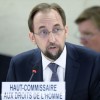
Cash-Strapped Human Rights Office at Breaking Point, Says New Chief
After six weeks in office, the new U.N. High Commissioner for Human Rights (UNHCHR) Zeid Ra'ad al-Hussein of Jordan launched a blistering attack on member states for insufficient funding, thereby forcing operations in his office to the breaking point "in a world that seems to be lurching from crisis to ever-more dangerous crisis."
Cycle of Death, Destruction and Rebuilding Continues in Gaza
When the international pledging conference to rebuild a devastated Gaza ended in Cairo over the weekend - the third such conference in less than six years - the lingering question among donors was: is this the last of it or are there more assaults to come?
ANALYSIS: Europe’s Migrant Graveyard
Since the end of the Cold War, the Mediterranean has become the most lethal of Europe’s barriers against irregular migration, having claimed nearly 20,000 migrant lives in the last two decades.
Displacement Spells Danger for Pregnant Women in Pakistan
Imagine traveling for almost an entire day in the blistering sun, carrying all your possessions with you. Imagine fleeing in the middle of the night as airstrikes reduce your village to rubble. Imagine arriving in a makeshift refugee camp where there is no running water, no bathrooms and hardly any food. Now imagine making that journey as a pregnant woman.
Thirsty Land, Hungry People
 Gazing out over the parched earth of Sri Lanka’s Northern Province, one might think these farmlands have not seen water in years. In fact, this is not too far from the truth.
Floods Wash Away India’s MDG Progress
The northeastern Indian state of Assam is no stranger to devastating floods. Located just south of the eastern Himalayas, the lush, 30,000-square-km region comprises the Brahmaputra and Barak river valleys, and is accustomed to annual bouts of rain that swell the mighty rivers and spill over into villages and towns, inundating agricultural lands and washing homes, possessions and livestock away.
« Previous Page — Next Page »





 MONUSCO Peacekeepers and FARDC Soldiers Patrol Fataki Area. Credit: UN Photo/Jorkim Jotham Pituwa
Conflict, human rights violations, natural disasters, and famine have been at the forefront of concerns for humanitarian organizations. The escalation of humanitarian crises has led to over 239 million people in need of humanitarian assistance at the start of 2026, as estimated by OCHA’s Global Humanitarian Overview. The 2025 humanitarian appeal received only $12 billion, the lowest funding in over a decade, which has left 24 million fewer people reached in comparison to 2024. Conflict has remained the primary driver of crisis.
Humanitarian emergencies massively impact progress towards the Sustainable Development Goals (SDGs), adversely affecting economic development, inequality, education, planetary well-being, and poverty. Millions of people are faced with reduced access to essential services, including shelter, food, healthcare, and access to clean drinking water. UN Organizations such as UNHCR and the United Nations Children’s Fund (UNICEF) are committed to providing direct relief to affected communities when state governments cannot.
The United Nations 2024 Summit of the Future discussed measures that will be taken to reduce global inequality and promote peacekeeping efforts around the world. The recent UN Climate Change Conference (COP30) in Belém, Brazil, agreed to mobilize $1.3 trillion annually for climate action by 2035, operationalize the loss and damage fund, and triple adaptation finance. However, a fossil fuel transition commitment was not secured, despite climate change and the greenhouse effect being major contributors to humanitarian crises worldwide.
Countries across the world have also rallied to end humanitarian crises, as witnessed in conflicts such as Palestine and Ukraine. IPS is committed to providing relevant and in-depth reports of humanitarian emergencies around the world and their implications.

The Week with IPS

NEXT STOP - SDGs
Tracking global progress towards a sustainable world
Tracking global progress towards a sustainable world

