Languages
Tuesday, May 5, 2026



News and Views from the Global South
Humanitarian Emergencies

Trafficked and Trapped in Libya: A Nigerian Woman’s Story
 Miriam* hoped for a better life in Europe. Instead, her journey ended in Libya, where, double-crossed by traffickers she was raped and abused. She has returned to Nigeria and shared her experiences with Sam Olukoya.
The Future of an Entire Generation Hangs in the Balance
COVID-19 has upended our world, threatening our health, destroying economies and livelihoods, and deepening poverty and inequalities. It also created the single largest disruption to education systems that the world has ever seen.
Youth at Forefront of Climate Change Action Will Make Biggest Impact
On Gladys Habu’s birthday, she filmed a message to world leaders while standing waist-deep in the sea next to a dead tree stump – the only remnant of Kale Island now submerged underwater due to climate-change-induced sea-level rise.
Cool Scheme to Reduce Food Waste in Nigeria
Food spoilage forced smallholder farmers out of pocket and out of business – until an entrepreneur came up with a cool idea.
Greed-Driven Pandemic Still Killing Millions
Failure to vaccinate most in poor countries sustains the COVID-19 pandemic. Rich country greed and patent monopolies block developing countries from affordably making the means to protect themselves. Mutant menace The SARS-CoV-2 virus has been mutating as it replicates. Numerous replications in hundreds of millions of hosts have generated many variants. Some mutations are more resilient than others, and better able to overcome human defences.
CPJ’s Census on Jailed Journalists Reveals Distressing “Intolerance of Independent Journalism”
Governments are determined to control information and are prepared to imprison journalists to achieve this mission, the Committee to Protect Journalists (CPJ) said following the release of their annual global census tracking journalists who were imprisoned and killed in 2021.
Noorjehan Niaz and Zakia Soman: Bonded to Change the Trajectory of Muslim Women in India
Discriminated in society and concerned about the discrimination of women in their homes, the two women who co-founded the Bhartiya Muslim Mahila Andolan (BMMA) started the movement to further Muslim women’s leadership and help them reclaim their rights.
ECW Interviews UK Special Envoy for Girls’ Education, Helen Grant
Helen Grant became actively involved in politics in 2006 and was elected as Member of Parliament for the Kent constituency of Maidstone & The Weald at the 2010 General Election.
ECW Joins Call to Action on Protection from Gender-Based Violence in Emergencies: Global Community Urged to Orange the World and End Gender-Based Violence Now
The statistics are dire: One in three women have experienced a form of gender-based violence in their lifetime, be it sexual violence, physical violence, or child marriage. The message is clear: Women and girls deserve a safer, brighter future – free from gender-based violence.
Refugee Voices Matter – Nothing about Us, Without Us
Over the past two years, the global refugee response has been tested. The world is being rocked by the greatest pandemic in over a century, while waves of refugees have fled from Afghanistan, Myanmar, Belarus, and Tigray. So, where do we go from here? Next week, the international community will convene to take stock of the successes and shortcomings of the Global Compact on Refugees (GCR), a unique multilateral mechanism built to ensure the protection of one of the most vulnerable populations. This marquee Compact is up for review, but unlike other review processes, the participation of the people whose lives are shaped by the decisions to be made in the review process will be marginal. Unfortunately, only 1 in 50 of the invited attendees at the UNHCR High-Level Official’s Meeting (HLOM) to discuss the GCR are refugees.
Zero-Leprosy in Pandemic: Experts, Advocates Discuss New Strategies
As 2021 nears its end, public health systems worldwide remain severely strained by COVID 19, which is showing no sign of ending. But even as countries battle to control the deadly pandemic, they must also maintain the progress made against other diseases, including leprosy, global leprosy experts and advocates have urged.
Act to Save Children Living Precarious Lives in Cameroon’s Forgotten and Neglected Conflict
Education is under attack in Cameroon. As one of the most complex humanitarian crises in the world unfolds, Education Cannot Wait’s director Yasmine Sherif and the Secretary-General of the Norwegian Refugee Council, Jan Egeland, say the children are pawns for grown men in a political conflict.
What Will it Take to Turn Farmers Toward Climate-Resilient Superfood Millet?
Millet could be Africa’s silver bullet for combating anaemia – and apart from health benefits, it is climate-resilient.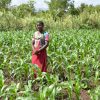
High Global Fertiliser Prices Overshadow Malawi’s Farm Subsidy Programme
Ellena Joseph, a small-scale maize farmer in Chiradzulu District in Southern Malawi, finished preparing her field early in October.
School Meals Coalition Hopes to Provide a Meal to Every Child
Meals at schools not only give each child a nutritious meal but increase enrolments, among other benefits.
Ethiopia’s Civil War Fueled by Weapons from UN’s Big Powers
In Hollywood movies, the legendary Wild West was routinely portrayed with gunslingers, lawmen and villains—resulting in the ultimate showdown between the “good guys and the bad guys”. Linda Thomson-Greenfield, US ambassador to the UN, told the Security Council early this month that the warring parties in the devastating 12-month-long civil war in Ethiopia involve the Ethiopian National Defense Forces, the Eritrean Defense Forces, the Amhara Special Forces, and the Tigrayan People’s Liberation Front.
It’s Time to Find Solutions to the Gendered Consequences of the Pandemic
The COVID-19 pandemic has had devastating effects across the globe, but the data and evidence show that women have borne the brunt of the crisis. While inequalities in health, economic power, and other areas existed long before the pandemic began, the pandemic has widened these gaps.
Hunger, Desperation in Lebanon as Food Prices Rocket
On the streets of Beirut, Hadi Hassoun begs for a few pounds to feed his five children. He has little hope of a job, especially now that the economic crisis in Lebanon has destroyed wealth.
WTO Finished Without TRIPS Waiver
Quickly enabling greater and more affordable production of and access to COVID-19 medical needs is urgently needed in the South. Such progress will also foster much needed goodwill for international cooperation, multilateralism and sustainable development.
Rich Food from Poor Fish, Making Food and Health Sustainable
During the COVID-19 lockdown in Uganda, a breastfeeding mother struggled to improve the health of her malnourished child. With the closure of her local health centre, she worried the child could die without urgent medical treatment.
Education Cannot Wait Interviews Patricia Danzi, Director General of the Swiss Agency for Development and Cooperation
Patricia Danzi was appointed Director General of the Swiss Agency for Development and Cooperation (SDC) in May 2020. For nearly three decades, she has dedicated her career to serving the world’s vulnerable populations.« Previous Page — Next Page »