Languages
Sunday, November 8, 2026



News and Views from the Global South
Development & Aid
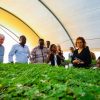
Smallholder Farmers Are Key to CGIAR Response to Hunger Crisis
Dr Ismahane Elouafi has her work cut out. As the new executive managing director of CGIAR, a global network of agricultural research centers, her mandate, simply put, is to tackle the world’s most severe hunger crisis in modern history. And it is in Africa that the former Chief Scientist of FAO with a PhD in durum wheat genetics faces her greatest challenges, both in terms of developing science-based innovations and technologies and lobbying governments to adopt responsible policies.
Making Chile’s Economy More Dynamic, Greener, and Inclusive
Chile’s economy is at a crossroads. Strong policies have successfully brought down high inflation and reduced the large current account deficit that emerged during the pandemic. Increases in social benefits have provided some relief in response to discontent over inequality.
Inequality Also Afflicts Clean Energy in Latin America
The specter of blackouts hovers over the Mexican city of La Paz, the capital of the state of Baja California Sur in Mexico's far northwestern corner, as summer approaches, due to increased electricity demand from air conditioning and insufficient capacity in the local grid.
South Africa vs Israel: ICJ Declines SA’s New Application But Says Israel Duty Bound to Protect Civilians
The International Court of Justice has declined the South African government's urgent application for further measures to prevent an "unprecedented military offensive against Rafah,” but reiterated that Israel is bound to protect civilians in the country. South Africa argued in an urgent application that this military offensive “announced by the State of Israel, has already led to and will result in further large-scale killing, harm, and destruction in serious and irreparable breach both of the Genocide Convention" and of the Court's Order of January 26, 2024.
Local Knowledge and Women’s Leadership are Key to Food Justice: Activists
Manjula Dungdung is explaining why she is fighting for land and agricultural rights for herself and other members of the Kharia tribe, who grow the food they eat. “Women’s right to land is especially important because it is an issue of our dignity, and since we are the ones who do most of the agricultural work, it is to maintain food security.”
Educate an Africa Fit for the 21st Century
As we lead into the Africa Year of Education, and under the leadership of Africa, world leaders have an opportunity to solidify commitments to ‘Educate an Africa Fit for the 21st Century’. That means to empower Africa to deliver on the goals outlined in the 2030 Agenda for Sustainable Development, Paris Agreement and Convention on the Rights of the Child, and to invest in an end to inequity through the power of quality education and lifelong learning.
Grassroots Voices Unite to Call for Climate Justice
Kiprotich Peter from the East African country of Kenya is trying to convey his climate crisis message using the platform of the World Social Forum (WSF) taking place in the mountain nation of Nepal, which has also been battered by the impacts of climate change.
Unveiling the Power Play: Non-Profit Funding as a Strategic Tool for Agenda Setting
In the realm of public discourse, non-profit organizations often serve as the torchbearers of societal change, championing causes ranging from environmental conservation to social justice. Yet, beneath the altruistic facade lies a complex interplay of interests, where non-profit funding emerges as a potent tool for shaping the narrative and driving the agenda.
World Social Forum Insists: Another World is Possible!
These are the worst of times, but they can become the best of times, said speaker Dr. Walden Bello, seeking to inspire thousands of progressives who gathered for the World Social Forum (WSF) in Kathmandu on Thursday with the planet under clouds of armed conflict and assaults on democracy.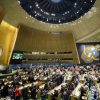
UN Tax Convention is Historic Opportunity at Risk of Failing
In late November, the UN General Assembly passed a landmark resolution signaling a start on working on a UN framework convention on taxation.
Tracking Global Development in Child Benefits Through New Monitoring and Information Platform
Inclusive social protections for children would be a positive signifier of social development in a time where 1.4 billion children globally are denied them. A step towards realizing this has been taken through a new monitoring tool on current social protection and child poverty statistics.
What if Super Bowl 2025 Attendees and All Stadium Food Selling Stores Carry Food Grown In Urban Areas?
Recently, a group of non-profit organizations launched the Inaugural Souper Bowl of Caring - a nationwide movement to address hunger-related challenges. It was an opportunity for VIP guests to engage and lend their support to end food insecurity as part of the Super Bowl. The goal is to encourage every viewer of the Super Bowl to contribute $1 or one can of soup.
Last Chance Saloon? Myanmar Junta Imposes Military Conscription
The news travelled like wildfire. In the teashops, bars, and market stalls that make Thailand’s border town of Mae Sot feel far more Burmese than Thai, the feared rumours circulating at the weekend were suddenly confirmed. Military conscription would be imposed on young men and women for two to five years, regime-controlled broadcasters in Myanmar announced on the Saturday night airwaves. Details were sparse.
Women, Girls Equal Partners in HIV Responses, Says Activist
UNAIDS Executive Director, Winnie Byanyima, recently made an impassioned call for governments to support women and girls from marginalized communities at the frontlines of the defence of human rights, to help ensure, among others, that global health is protected.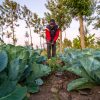
Start-ups Powering up Africa’s Solar Energy Ecosystem
Often referred to as the “Sun continent,” Africa receives more hours of bright sunlight than any other continent. But even with 60 per cent of the world’s solar resources, Africa has only one per cent of solar generation capacity, according to the International Energy Agency (IEA).
North Ignores ‘Perfect Storm’ in Global South
A gathering ‘perfect storm’ – due to various developments, several quite deliberate – now threatens much devastation in the global South, likely to most hurt the poorest and most vulnerable.
World Social Forum Seeks to Reemerge as an Influential Gathering of Diversity
The World Social Forum (WSF) is today "more necessary than ever," according to Oded Grajew, promoter and co-founder of the global civil society meeting - a festival of diversity that has not yet succeeded in fomenting or designing the "other possible world" that it predicted when it was created and adopted that motto.
Nepal Farmers Face Another Year of ‘Agricultural Drought’, Threatening Food Security
Najboon Khatun looks up at the sky every day, searching for the possibility of rain. Clouds come and go without a drop of water. “Winter crops like wheat and vegetables need water, but like last year, there has been no rainfall yet,” says 65-year-old Khatun, expressing her anguish. In her village in Dhanusha, one of the agricultural hubs in the southern plains of Nepal, farmers mostly depend on rain as a source of irrigation. However, they are facing yet another year of drought, affecting winter crops, including wheat, mustard, lentils, and vegetables.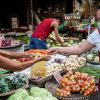
History’s Inflation Lessons
In the early 1970s, conflict in the Middle East set off a spike in oil prices that left central banks around the world scrambling to control inflation. After a year or so, oil prices stabilized and inflation started to retreat. Many countries believed they had restored price stability and loosened policy to revive their recession-hit economies only to see inflation return. Could history repeat?
What Is It Like to Live in Ecuador, One of the Most Violent Countries?
"For a couple of years now we've been seeing the violence growing so fast," said José, who asked not to give his last name for fear of reprisals he may face in Monte Sinai, a low-income neighborhood in Ecuador's most populous city, Guayaquil.
State of the World’s Migratory Species Report ‘Alarming’ Threats, Global Action Urged
A groundbreaking State of the World’s Migratory Species report is calling for accelerated global conservation measures to counter the threat of extinction faced by 1 in 5 of all migratory species.« Previous Page — Next Page »





 2026 High-level Political Forum on Sustainable Development. Credit: UN Photo/Eskinder Debebe
In 2015, the United Nations and its Member States adopted the Sustainable Development Goals (SDGs) in an effort to make the world a more sustainable and peaceful place for future generations. Progress on the 17 SDGs has been uneven, and inequality persists across the globe. 10 years after adoption, the 2025 UN SDGs Report revealed that only 35% of the SDG targets are on track, with more than half moving too slowly, and 18% moving backwards from the 2015 baseline. Poverty remains one of the world’s most pressing issues, with hunger, violence, and inequality impeding the opportunities for all people to achieve success. In September 2024, the United Nations Summit of the Future introduced a new goal: to eradicate global poverty by 2030, ensure universal rights to basic services, and increase the overall standard of living in terms of industrialization, economic well-being, citizen health, and literacy. Furthermore, recent shifts in United States foreign aid policy – notably, major budget cuts to USAID and the termination of thousands of development programmes– have severely threatened vital lifelines of financial aid to impoverished communities around the world. Additionally, the United States’ withdrawal from the Paris Climate Agreement has undercut international efforts at sustainable development. With the upcoming 2030 deadline, the UN Secretary-General has called for urgent multilateralism across six priority areas: food systems, energy, digital connectivity, education, jobs and social protection, and climate and biodiversity. IPS sheds light on marginalized communities that struggle on a daily basis to survive and have their stories heard and respected.
Updated by Yilan Batista and Shuli Wong August 2026

The Week with IPS

NEXT STOP - SDGs
Tracking global progress towards a sustainable world
Tracking global progress towards a sustainable world
