Languages
Sunday, November 8, 2026



News and Views from the Global South
Development & Aid

Discrimination, a Killer of Dreams for People Affected by Leprosy
Tuji Sode detached himself from his family and hid himself from the public, embarrassed by his condition, which in biblical times meant exclusion from society and even death. Sode, a university student in Ethiopia, has Hansen’s Disease, also commonly known as leprosy. Leprosy is a bacterial disease that, left untreated, can cause severe disability and deformity.
Prospects for Commonwealth Countries, Addressing Gaps and Shaping Expectations for COP29
The 28th Conference of Parties (COP28) to the United Nations Framework Convention on Climate Change (UNFCCC) marked a pivotal moment in the global efforts to combat climate change. Held in Dubai, United Arab Emirates (UAE) with the participation of delegates from around the world, COP28 showcased a commitment to drive genuine strides in climate action, bringing optimism and progress to the forefront. Here we explore the implications of COP28 outcomes for small and other vulnerable Commonwealth countries and identify the gaps that still need attention. Additionally, it will discuss concrete expectations for COP29, focusing on critical discussions held at COP28.
Onerous Debt Making Poorest Poorer
Contractionary economic trends since 2008 and ‘geopolitical’ conflicts subverting international cooperation have worsened world conditions, especially in the poorest countries, mainly in Africa, leaving their poor worse off.
How Asia Can Unlock $800 Billion of Climate Financing
Countries in the Asia-Pacific region face a shortfall of at least $800 billion in climate financing. With public finances depleted by the pandemic, policymakers must unlock the vast potential of private capital to join the fight more effectively against global warming.
Blinken’s Visit to Africa: Is US Counterterrorism Counterproductive?
US Secretary of State Antony Blinken’s week-long tour across four African countries was aimed at strengthening the US-Africa relationship—a relationship, according to some commentators, already waning as China and Russia are increasing their influence.
Funding for UN Palestinian Relief Agency is Threatened While Investigations Continue
The consequences of the investigation into the 12 United Nations Relief and Works Agency for Palestine Refugees in the Near East (UNRWA) staffers allegedly linked to the October 7 Hamas attack in Israel have led to major donor countries pulling their support from the UN agency. However, the agency has appealed to the governments to continue the aid in the face of the humanitarian crisis in Gaza.
Building a More Resilient Work Force to Meet Challenges of Tomorrow
Quadrupling in size since 1950, the working age population in Asia and the Pacific now accounts for 67.2 per cent of the total population in the region and is set to peak at 3.3 billion by the mid-2030s.
Higher Education in Central America: Poor Quality and Unaffordable for the Poor
Decades of civil wars and a lack of long-term public education policies, among other problems, have made higher education in Central America precarious and costly in general. In this region, made up of Belize, Costa Rica, El Salvador, Guatemala, Honduras, Nicaragua, and Panama, home to some 50 million inhabitants, the quality of education offered by public and private universities is poor, while costs are high even for those who can afford them.
Should We Attribute All Climate-Related Disasters Only to Global Warming?
The Republic of Mauritius, an island nation, experienced its latest flash floods since the last bad one in 2013. These floods resulted in the loss of lives and hefty bills for car insurers with over 3000 cars have been damaged.
Snow Tales: ‘Too Little, Too Late,’ Say Climate Experts
Alpine skier, 28-year-old Muhammad Karim, has spent the winter with his eyes skyward, wishing and hoping for deep and abundant snow. “My bread and butter depend on the snow,” said the Olympian, who is also a ski trainer, at Naltar Ski Resort, in the valley by the same name nestled in the Gilgit-Baltistan’s Karakoram mountain range.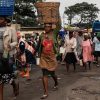
How to Ease Rising External Debt-Service Pressures in Low-Income Countries
As 2024 starts, the good news is that there haven’t been any notable requests by a low-income country for comprehensive debt relief since Ghana’s, more than a year ago. Despite this, vulnerabilities remain, with high debt servicing costs a growing challenge for low-income countries.
Illegal Artisanal Mining Threatens Amazon Jungle and Indigenous Peoples in Brazil
Artisanal mining, or "garimpo" as it is known in Brazil, has returned to the headlines as a factor in the deaths of Yanomami indigenous people, whose territory in the extreme north of Brazil suffers constant encroachment by miners, which has intensified in recent years.
ICJ Orders Israel to Take All Measures to Prevent Genocide in Gaza
The International Court of Justice today told Israel to take all measures within its power to prevent a genocide in the Gaza Strip. Judge Joan E. Donoghue, the court's president, read the order directing the State of Israel to abide by temporary measures to stop the humanitarian crisis facing the Palestinian population in Gaza from worsening.
International Court of Justice Set to Deliver Order in Genocide Case
The International Court of Justice will deliver it's order for provisional measures submitted by South Africa in the case of South Africa versus Israel today.
Under the Scorching Sun Kenyan Farmers Find New Ways to Beat Climate Change
In the tranquil village of Kotiang, perched on the shores of Lake Victoria in Kenya's lakeside region, Yvonne Atieno, a dedicated mother in her early thirties, tends to her fish pond under the relentless equatorial sun. Her young daughter eagerly joins her mother in this nurturing endeavor. Yvonne, a certified accountant by profession, reflects on how her decision to embrace regenerative farming has not only enriched her life but also imparted invaluable life lessons.
Ban or Restrict? Quandary Facing Governments as Vaping Entices Teens Worldwide
A hot debate on electronic smoking devices is expected to engage governments, scheduled to meet in Panama from 5-10 February for the tenth session of the Conference of Parties (COP) to the WHO Framework Convention on Tobacco Control (WHO FCTC).
Why Land Matters with Ede Ijjasz-Vasquez

Land rights are fundamental for three things. One: economic development. No country in the world has gone from low income to Middle income to high income without clear land and property rights and markets. It is a core part of the economy.

Addressing the Dual Challenge of Food Waste and Food Insecurity: Here’s Some Ideas
Ten percent of Americans live in food-insecure households. At the same time, the average U.S. family of four spends $1,500 each year on food that ends up uneaten. Food is the single most common material found in landfills; and food waste is responsible for 58% of landfill methane emissions released to the atmosphere. Food insecurity and food waste create a paradox that necessitates us to creatively address these two interlinked issues.
Rights Coalition Calls for Israel Arms Embargo to End Gaza Carnage
A coalition of 16 leading human rights organizations issued a joint statement Wednesday calling on all nations to immediately stop sending weapons to both Israel and and Palestinian militants, warning that continued arms transfers risk exacerbating what's already one of the worst humanitarian crises in modern history.
Beyond the Farm: How Empowering Women Farmers Drives Change in Jordan and Beyond
Dr. Zeinab Al-Momany, a prominent social entrepreneur, sheds light on the journey of empowering women farmers in Jordan and the Arab world, where women often work long hours for low pay and lack labour recognition.
Learning for a Lasting Peace
Education is the bedrock of peace, the foundation of strong societies, and the building block for a better world. This year, as we celebrate the Sixth International Day of Education under the theme of ‘learning for a lasting peace’, we call on world leaders to end wars and armed conflicts and focus on our common humanity to embrace the vast potential learning offers in uniting our world.« Previous Page — Next Page »





 2026 High-level Political Forum on Sustainable Development. Credit: UN Photo/Eskinder Debebe
In 2015, the United Nations and its Member States adopted the Sustainable Development Goals (SDGs) in an effort to make the world a more sustainable and peaceful place for future generations. Progress on the 17 SDGs has been uneven, and inequality persists across the globe. 10 years after adoption, the 2025 UN SDGs Report revealed that only 35% of the SDG targets are on track, with more than half moving too slowly, and 18% moving backwards from the 2015 baseline. Poverty remains one of the world’s most pressing issues, with hunger, violence, and inequality impeding the opportunities for all people to achieve success. In September 2024, the United Nations Summit of the Future introduced a new goal: to eradicate global poverty by 2030, ensure universal rights to basic services, and increase the overall standard of living in terms of industrialization, economic well-being, citizen health, and literacy. Furthermore, recent shifts in United States foreign aid policy – notably, major budget cuts to USAID and the termination of thousands of development programmes– have severely threatened vital lifelines of financial aid to impoverished communities around the world. Additionally, the United States’ withdrawal from the Paris Climate Agreement has undercut international efforts at sustainable development. With the upcoming 2030 deadline, the UN Secretary-General has called for urgent multilateralism across six priority areas: food systems, energy, digital connectivity, education, jobs and social protection, and climate and biodiversity. IPS sheds light on marginalized communities that struggle on a daily basis to survive and have their stories heard and respected.
Updated by Yilan Batista and Shuli Wong August 2026

The Week with IPS

NEXT STOP - SDGs
Tracking global progress towards a sustainable world
Tracking global progress towards a sustainable world
