Languages
Sunday, November 8, 2026



News and Views from the Global South
Development & Aid
Palestine: Nothing Can Justify Genocide, It’s Not the Time for Silence
Far from the mayhem, destruction, and humanitarian crisis in Gaza, the South African government argued in the International Court of Justice in the Hague that it had an obligation and a right to bring a case to halt a genocide by the Israeli government and its military.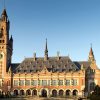
South Africa’s Genocide Case Against Israel at the International Court of Justice
The Institute for Middle East Understanding (IMEU) published the following Q&A with human rights attorney and political analyst Diana Buttu on South Africa’s genocide case against Israel at the International Court of Justice ICJ). The court is scheduled to hold hearings on the petition January 11-12.
Where Does the International Criminal Court Stand on Charges of Mass Killings in Gaza?
The continued devastation of Gaza by Israel has triggered widespread charges of war crimes, genocide, forced displacement, ethnic cleansing, starvation as a weapon of war and mass killings of civilians – over 22,000 at last count—compared to 1,200 killings by Hamas. These accusations have prompted growing demands for intervention by the International Criminal Court (ICC) in The Hague, which has remained silent while its Prosecutor Karim Khan is accused of double standards and playing politics.
How Afghan Women Connect and Learn in the Face of Taliban Restrictions
The prevalence of social media usage among Afghan women and girls has surged since the Taliban assumed control of the country in August 2021. Faced with restrictions confining them to their homes, many women find solace in the messaging app WhatsApp.
Assessing Public Debt Sustainability with a Long-Term View
When students from poor families in developing countries are offered places at prestigious universities, they are often faced with a tough choice. One option is to accept the offer and create more debt, likely through borrowing from a loan shark, to pay for tuition fees. Another option is to forgo this opportunity, which could be the first in family generations, and start working as low-wage workers.
Cooperative Farming Makes Bangladesh’s Coastal Women Farmers Climate-Resilient
In the past, Salma Begum, 40, lost her crops every year due to natural disasters. She lives with her five-member family in Ashabaria village under Rangabali upazila, a remote coastal island in Patuakhali district. “We did not have enough livelihood options in the coastal area where we live. Cyclones, coastal floods, and tidal surges have been having adverse impacts on agriculture, making it difficult for my wage-laborer husband to find work regularly,” she said.
Ready or Not, America, Your Population Is Also Aging
As the signs of population aging are crystal clear and widely available, many countries are taking steps to address the far-reaching effects of that momentous demographic trend. A notable exception is the United States, a country that seems neither ready nor willing to deal with the aging of its population.
From Chemical Engineer to Climate Justice Avenger: A Journey with Yamide Dagnet
As a child on the French-Caribbean island of Guadeloupe, Yamide Dagnet dreamed of launching rockets into space. She stuck to science, discovering her path in chemical engineering. She became a scientist focused on critical reactions to solving real-world problems like improving water quality in the United Kingdom.
Technology Transfer Critical to Revolutionizing Africa’s Pharma Industry
An agreement signed between the Rwandan government and the Africa Pharmaceutical Technology Foundation (APTF) gives impetus to Africa’s domestic industry with the hope of helping the continent tackle vaccine inequity and fill the critical gap in vaccine manufacturing.
Time to End the Israeli-Palestinian Conflict with a Two State-One Nation Solution
Since October 9 2023, Israel’s war on Gaza has displaced over 1.8 million, according to UN estimates and killed almost 22,000 people in Gaza as of 2 January 2024, most of them women and children, according to the Hamas-run territory’s health ministry. Hamas' October 7 surprise attacks on Israel killed 1,200 people.
2024 Demands Swift Action to Stem Sudan’s Ruinous Conflict
Nearly nine months of war have tipped Sudan into a downward spiral that only grows more ruinous by the day. As the conflict spreads, human suffering is deepening, humanitarian access is shrinking, and hope is dwindling. This cannot continue.
Homeless Families Now a Growing Issue in Zimbabwe
It is do or die on the streets of Zimbabwe as homeless families battle for survival solely depending on begging. Such is the life of 69-year-old Gladys Mugabe, who lives with her disabled son in Harare Gardens, a well-known recreational park in the Zimbabwean capital, Harare. Over the decades, Zimbabwe’s economy has underperformed. It started in 2000 with the departure of white commercial farmers, and the country has experienced subsequent periods of hyperinflation, which the International Monetary Fund estimated reached 172% in July last year.
There Is No Democracy Without Gender Equality
Violence against women and girls is one of the most widespread and persistent abuses of fundamental rights at a global level that, to a certain extent, derives from what we consider "normal" in our societies. In addition to firmly condemning that every three women in the world suffer from physical or sexual violence, we must question what we are normalizing as a society for this to happen.
Nigeria Prioritizes Climate Action to Mitigate Natural Disasters
In 2022 alone, flooding killed at least 662 people, injured 3,174, displaced about 2.5 million, and destroyed 200,000 houses individuals. As far back as 2012, the World Bank reported that erosion was affecting over 6,000 square kilometres of land in the country, with about 3,400 square kilometres highly exposed.
Europe’s Shift to the Far Right and its Impact on Immigration
The recent elections in the Netherlands signals the increasing power of the far right in Europe. The populist party of Geert Wilders, the Party for Freedom, won a decisive, albeit unexpected, victory taking 37 seats out the 150 seat in parliament. Wilders will likely be the head of the next Government. His policies include stopping all immigration into the Netherlands, holding a referendum on leaving the EU, and banning mosques and the Quran.
US Hypocrisy Over Russian and Israeli Killings
When US President Joe Biden lambasted “the largest aerial assault,” which hit “a maternity hospital, a shopping mall and residential areas killing innocent people”, he was not talking of the devastating Israeli attacks on Gaza but criticizing the most recent Russian military assault on Ukraine.
Amidst a Horrendous 2023, Civil Society is Fighting Back Society
The year 2023 has brought so much tragedy, with incomprehensible loss of lives, whether from wars or devastating ‘natural’ disasters, while our planet has seen yet more records broken as our climate catastrophe worsens. And so as the clock ticks towards the (mostly western) New Year, readers are traditionally subjected by media outlets like ours to the 'yearender'—usually a roundup of main events over the previous 12 months, one horror often overshadowed by the next.
Catastrophic Shortage of Food in Gaza—Starvation as a Weapon of War
As the killings of civilians in Gaza rose to over 20,000, the besieged city—which has been virtually reduced to rubble by Israeli bombardments—is also being ravaged by hunger and starvation. In new estimates released on December 21, the Integrated Food Security Phase Classification (IPC), a global partnership that includes the World Health Organization (WHO), said Gaza is facing “catastrophic levels of food insecurity,” with the risk of famine “increasing each day.”
South Asian Women, Girls Need Responsive Legal System to Gender Violence
Criminal justice systems in South Asia are failing women, despite stark statistics on the prevalence of violence. WHO estimates translate to one in every two women and girls in the region experiencing violence daily.
What’s in Store for Indian Farmers After Cop 28’s Conclusion in Dubai?
Durga Das*, a 59-year-old farmer from the Indian state of Maharashtra, committed suicide last year by ingesting a poisonous substance. He was unable to repay the loan he had taken from the bank for the renovation of his single-story house. This year, his 32-year-old son, Pradeep Das, a father of two children, is equally desperate. The family owns half an acre of cultivated land where they grow cotton. The harvest has been devastated due to intense heat waves, leaving farmers like Dass and his son Pradeep in dire straits. The loan the family had taken is yet to be paid, and the land they had mortgaged in the bank is about to be confiscated. This means no crops, no cultivation, no business, and no food.
The Opaque Chain of Electric Cars Assembled in Mexico
The city of Austin, Texas, on the U.S.-Mexico border, had 945,000 residents in 2021 and on average each household owned two cars, hundreds of them electric. Among the manufacturers of these electric vehicles are companies such as the US Tesla, Ford and General Motors (GM).« Previous Page — Next Page »





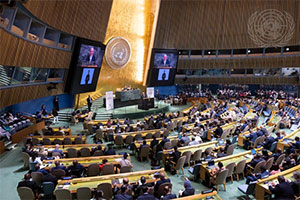 2026 High-level Political Forum on Sustainable Development. Credit: UN Photo/Eskinder Debebe
In 2015, the United Nations and its Member States adopted the Sustainable Development Goals (SDGs) in an effort to make the world a more sustainable and peaceful place for future generations. Progress on the 17 SDGs has been uneven, and inequality persists across the globe. 10 years after adoption, the 2025 UN SDGs Report revealed that only 35% of the SDG targets are on track, with more than half moving too slowly, and 18% moving backwards from the 2015 baseline. Poverty remains one of the world’s most pressing issues, with hunger, violence, and inequality impeding the opportunities for all people to achieve success. In September 2024, the United Nations Summit of the Future introduced a new goal: to eradicate global poverty by 2030, ensure universal rights to basic services, and increase the overall standard of living in terms of industrialization, economic well-being, citizen health, and literacy. Furthermore, recent shifts in United States foreign aid policy – notably, major budget cuts to USAID and the termination of thousands of development programmes– have severely threatened vital lifelines of financial aid to impoverished communities around the world. Additionally, the United States’ withdrawal from the Paris Climate Agreement has undercut international efforts at sustainable development. With the upcoming 2030 deadline, the UN Secretary-General has called for urgent multilateralism across six priority areas: food systems, energy, digital connectivity, education, jobs and social protection, and climate and biodiversity. IPS sheds light on marginalized communities that struggle on a daily basis to survive and have their stories heard and respected.
Updated by Yilan Batista and Shuli Wong August 2026

The Week with IPS

NEXT STOP - SDGs
Tracking global progress towards a sustainable world
Tracking global progress towards a sustainable world
