Languages
Tuesday, November 10, 2026



News and Views from the Global South
Development & Aid
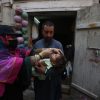
Vaccine Refusal, Floods Impact Polio Drive in Pakistan
Vaccine refusal is impacting the eradication of polio in Pakistan. Pakistan has vaccinated about 35 million children during its door-to-door campaign, but about 500,000 remained unvaccinated due to refusal by their parents, Jawad Khan Polio officer in Khyber Pakhtunkhwa, recorded in 2022 so far.
Can Asia and the Pacific Get on Track to Net Zero?
The recent climate talks in Egypt have left us with a sobering reality: The window for maintaining global warming to 1.5 degrees is closing fast and what is on the table currently is insufficient to avert some of the worst potential effects of climate change. The Nationally Determined Contribution targets of Asian and Pacific countries will result in a 16 per cent increase in greenhouse gas emissions by 2030 from the 2010 levels.
UN Assessed Contributions Needed to Generate Core Funding for Climate Loss & Damage
For decades, there have been non-conclusive deliberations regarding how the international community could support poor and vulnerable countries in their efforts to cope with and recover from the havoc wreaked on their territory by the ill-effects of global warming such as severe droughts, floods, storms, or rising sea levels.
AGRA Gets Make-Up, Not Make-Over
Despite its dismal record, the Gates Foundation-sponsored Alliance for a Green Revolution in Africa (AGRA) announced a new five-year strategy in September after rebranding itself by dropping ‘Green Revolution’ from its name.
Digital Human Rights Need to be Enshrined in Law
The upcoming consultation on the Global Digital Compact presents a unique opportunity to ensure that human rights in the digital world are protected in international common standards.
UN Deploys Unarmed Weapon in Humanitarian & Peacekeeping Operations
A sign outside the United Nations reads, perhaps half-seriously, that it is a “No Drone Zone”—and “launching, landing or operating Unmanned or Remote-Controlled aircraft in this area is prohibited”. The “warning” comes even as Unmanned Aerial Vehicles (UAVs) – or drones – are some of the new weapons of war deployed mostly by the US, and more recently, by Iran, Ukraine and Russia in ongoing military conflicts.
Black ‘Fraud-Days’ and the Shocking Cost of Staying Fashionable
Please take a quick look at this short report before rushing to shop on a Black Friday, Christmas sales and all those long chains of big discounts and wholesales, most of them are fake, as often denounced by consumers organisations that report that the business usually inflates prices before launching such deals.
The World Cup of Opportunity
The sun is shining, and the temperature sits at an idyllic 28 degrees Celsius. The Uber driver taking me to work is from Pakistan and devastated about the recent loss to England in the T20 Cricket World Cup final in Australia.
Was COP27 a Success or a Failure?
It’s finally over. After the anticipation and build-up to COP27, the biggest climate meeting of the year is now in our rear-view mirror. The crowds of delegates that thronged the Sharm el-Sheikh international convention center for two long weeks have all headed home to recover. Many will be fatigued from long hours and sleepless nights as negotiators tried to seal a deal that would move the world forwards. Did all this hard work pay off? In our opinion, COP 27 was both better and worse than we’d hoped.
For this Caribbean Island, Ozone Protection is a Year-Round Mission
For countries across the globe, September 16th is a day to reflect on progress in protecting the ozone layer. The United Nations designated day for the preservation of the ozone layer is marked by speeches, and educational and social media campaigns.
Pandemic Aggravated Violence against Women in Latin America
Violence against women has failed to decline in the Latin American region after the sharp rise recorded during the COVID-19 pandemic, while preventing the causes of such violence remains a major challenge.
Balancing Diversity and Meritocracy
Countries worldwide, and as different as India, Indonesia, Iraq, Iran, Ireland, Israel and Italy, are struggling with the issue of how best to balance diversity and meritocracy across disparate ethnic, racial, caste, linguistic and religious subgroups in their populations.
Ugandan Women Tackle Domestic Violence with Green Solutions
Constance Okollet Achom, a Ugandan woman from Tororo, a rural village located in Eastern Uganda, has helped several dozens of her peers affected by domestic violence to address the issue by equipping victims with skillsets to manufacture eco-friendly biofuels from agro-forestry waste.
Pan-African Approach Needed to Tackle Food Insecurity Arising from Conflict and Climate Shocks
Upheaval on the global stage, the war in Ukraine, conflict in the Horn of Africa, severe climatic shocks, high international inflation, increasing global commodity prices, high prices of agricultural inputs and low intra-continental trade are fuelling food insecurity across Africa.
COP27: Landmark Win on Loss and Damage Fund
COP 27 delivered on what was the ‘litmus test’ for its success – consensus on the establishment of a fund on loss and damage. What seemed impossible was made possible, largely due to the unity of the G77 and China and the role of the Egyptian Presidency. Also important were efforts by civil society groups who put pressure on the United States, the main blocker to having the fund.
Open Veins of Africa Bleeding Heavily
The ongoing plunder of Africa’s natural resources drained by capital flight is holding it back yet again. More African nations face protracted recessions amid mounting debt distress, rubbing salt into deep wounds from the past. With much less foreign exchange, tax revenue, and policy space to face external shocks, many African governments believe they have little choice but to spend less, or borrow more in foreign currencies.
Every Child Has a Right to Realize the Human Potential
On World Children’s Day, we must remember what it means to be a child born with a right to reach the human potential. Nothing is more precious, more priceless, than a child growing towards that potential. And nothing is more despicable than to ignore the innocence and learning needs of a child in the process of becoming…
Crimes Against Children
An indisputable truth is that no child has ever chosen where to be born, which colour of skin to have, which ethnic community to belong to, what religion to practice and language to speak, or how safe or dangerous the context to grow up in. A child is the most innocent and defenceless human being.
A Looming Debt Crisis is Threatening Global Health Security. It is time to Drop the Debt
In this moment of profound challenge in international relations, it was understandable that the conclusion of the G20 meeting left leaders feeling relieved that the meeting took place without a breakdown. Leaders were justifiably proud too of important steps forward they made including the launch of the new pandemics fund.
US to Fight Sexual Abuse in International Organizations
The United States, which recently laid down a set of guidelines to monitor sexual exploitation and abuse (SEA) by US citizens in international organizations, including the United Nations and its agencies worldwide, has implicitly accused the UN of faltering on a high-profile case last month.
Peruvian Women Still Denied Their Right to Abortion
No woman in Peru should have to die, have her physical or mental health affected, be treated as a criminal or have an unwanted pregnancy because she does not have access to abortion, said Dr. Rocío Gutiérrez, an obstetrician who is the deputy director of the Manuela Ramos Movement, a non-governmental feminist center that works for gender rights in this South American country.« Previous Page — Next Page »





 2026 High-level Political Forum on Sustainable Development. Credit: UN Photo/Eskinder Debebe
In 2015, the United Nations and its Member States adopted the Sustainable Development Goals (SDGs) in an effort to make the world a more sustainable and peaceful place for future generations. Progress on the 17 SDGs has been uneven, and inequality persists across the globe. 10 years after adoption, the 2025 UN SDGs Report revealed that only 35% of the SDG targets are on track, with more than half moving too slowly, and 18% moving backwards from the 2015 baseline. Poverty remains one of the world’s most pressing issues, with hunger, violence, and inequality impeding the opportunities for all people to achieve success. In September 2024, the United Nations Summit of the Future introduced a new goal: to eradicate global poverty by 2030, ensure universal rights to basic services, and increase the overall standard of living in terms of industrialization, economic well-being, citizen health, and literacy. Furthermore, recent shifts in United States foreign aid policy – notably, major budget cuts to USAID and the termination of thousands of development programmes– have severely threatened vital lifelines of financial aid to impoverished communities around the world. Additionally, the United States’ withdrawal from the Paris Climate Agreement has undercut international efforts at sustainable development. With the upcoming 2030 deadline, the UN Secretary-General has called for urgent multilateralism across six priority areas: food systems, energy, digital connectivity, education, jobs and social protection, and climate and biodiversity. IPS sheds light on marginalized communities that struggle on a daily basis to survive and have their stories heard and respected.
Updated by Yilan Batista and Shuli Wong August 2026

The Week with IPS

NEXT STOP - SDGs
Tracking global progress towards a sustainable world
Tracking global progress towards a sustainable world
