Languages
Thursday, November 12, 2026



News and Views from the Global South
Development & Aid

Increasing Revenue & Protecting Public Health During the COVID-19 Pandemic
The COVID-19 pandemic has taken its toll on millions of families and damaged the economy of countries around the globe. Rich countries with higher vaccination rates have opened up their economy ahead of poor countries that are still struggling to fight the pandemic.
After Vilifying the UN, US Returns to the World Body
Ed Koch, a sharp-tongued Mayor of New York city (1978-89), once stopped short of using a four-letter word to denounce the United Nations. Instead, he opted for a five-letter word dismissing the UN as a “sewer” relegating it to the lower depths of degradation.
WTO Inches Closer To Agreement on Harmful Fishing Subsidies
After more than 20 years of negotiations, the World Trade Organization (WTO) has moved a step closer to an agreement on ending harmful fishing subsidies. The deal would set new rules for the global fishing industry and limit government funding that contributes to unsustainable fishing and the depletion of global fish stocks.
When Branded as a Born Criminal: The Plight of India’s De-Notified Tribes
Branded as being born ‘criminal’ 150 years ago under British colonial rule, De-Notified Tribes (DNTs) continue to bear the brunt of the various laws that stigmatised them since 1871.
Civil Society Leading Covid-19 Mask Campaign in South Asia – Podcast
 Footage of flames engulfing bodies at makeshift funeral pyres and stories of people dying in cars as drivers desperately raced from hospital to hospital seeking a bed. These scenes marked the second wave of the Covid-19 pandemic in India just months ago.

What Public Health Officials Can Learn from a New Long COVID Survey
A new survey on public awareness of long COVID by ‘Resolve to Save Lives” showed that among the 40% of Americans who were not vaccinated, seeing testimonials of those who suffer from long COVID inspired nearly two-thirds to consider the vaccine. A representative sample of nearly 2,000 Americans 18 and older took the survey between May 21 and June 10, 2021.
Are UN’s Sustainable Development Goals in the Doldrums Due to the Corona Virus?
A short answer to this question is yes, but it is obvious and predictable failure was visible for some time. This debate started before 2015, the year in which the Sustainable Development Goals (or SDGs) were adopted as successors to the Millennium Development Goals (MDGs) agreed in 2000. The 8 MDGs were expanded to 17 massive goals and 169 targets.
DR Congo, Ituri. Fleeing War, Weaving Life in IDP Camps of Bunia
He moves aside the curtain, thin as gauze, and then bends over. The darkness dazzles for a few seconds when one enters the house—actually, a den made of earth where air and light filter through the narrow entrance. Jean de Dieu Amani Paye holds her tiny baby, wrapped in an elegant fabric, in his arms. He was a teacher of French and Latin and had a small business. He also cultivated the land: cassava, corn, sorghum, and beans.
Alarming Crisis of Impunity for Crimes Against Journalists in DRC
The Democratic Republic of Congo is one of the most hostile and dangerous regions for journalists. A complex conflict, deeply rooted in the country’s past, allows very little freedom, both movement and the press.
Revamped UN System Crucial for a Changing World
From an international humanitarian perspective, the first half of 2021 has been disappointing. We’re no further ahead in ending the conflict in Syria and Yemen. From the fledgling democracy that it had become, Myanmar has descended into what most of its people had hoped was a bygone era of military rule. And in Ethiopia, where its Prime Minister, Ably Ahmed, was awarded the Nobel Peace Prize in 2019, armed conflict in Tigray is preventing the 2020 winners of the very same prize, the World Food Programme, from delivering the food needed to stop at least 350,000 Ethiopians from starving to death.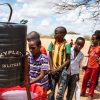
Water Scarcity: Coming Soon
In 1995, a highly-respected water expert in South Africa, Bill Pitman, in very concise terms illustrated that the country, already battling a growing lack of water then, would likely run out in 25 years if it did not increase its supply.
German Development Agency Raises Awareness of Teen Pregnancy in Burkina Faso
 In Burkina Faso, Honorine Meda has been trained by the German Development Agency (GIZ) to raise awareness among teenage girls about pregnancy. While the Universal Declaration of Human Rights says all children have a right to education, adolescent girls who fall pregnant in Sub Saharan Africa tend to drop out of school. Meda and a group of model parents, also trained by GIZ, play an essential role in preventing teenage pregnancies and supporting learners, who fall pregnant, to get back to school.

To Prevent Teenage Pregnancies in Sub Saharan Africa, It Takes a Whole Village to Raise a Child
Honorine Meda is 23. Cycling through her hometown of Dissin, in Burkina Faso’s verdant southwest, she smiles, waves and stops to chat with one of the girls she counsels.
Golden Rice: Triumph for Science
After almost two decades, Golden Rice was approved last week by the Philippines authorities for use as food. This together with the approval of the bioengineered Bt eggplant represents a landmark victory of science over misinformation; it will provide consumers with improved nutrition (Golden Rice) and safer food (Bt eggplant).
Water Poverty: The Political Connection
The water we drink and the air we breathe are the basis of life. With universal access to clean water and sanitation, we will be healthier, our economies will be stronger, gender equality will be more achievable, and more children will stay in school.
Child Rights’ Experts Warn that Displaced Children and Young People Risk Being Wiped Out of the Education System
The difficulties in accessing education faced by children and young people forcibly displaced from their homes were today laid bare in a virtual high-level roundtable convened by UNHCR, the UN Refugee Agency, Education Cannot Wait (ECW), the UK and Canada.
Honour Killings – Religion or Culture?
There is nothing honourable about murder. And murdering someone of your own family, your own child - a daughter, someone you held in your arms and rocked to sleep when they were babies? This is such a horrifying crime that there are no words to describe it – certainly not the word Honour. And yet it happens! It happens in Pakistan and to the shame of all of us in the diaspora, it has been brought to Italy.
Stepping Up to Meet Low-Income Countries’ Pandemic Recovery Needs
Low-income countries have been hard hit by the pandemic. Their large financing needs are only likely to grow as they deal with the crisis and its economic aftermath.
Latin America Sets an Example in Welcoming Displaced Venezuelans
The exodus of more than five million Venezuelans in the last six years has led countries in the developing South, Venezuela's neighbours, to set an example with respect to welcoming and integrating displaced populations, with shared benefits for the new arrivals and the nations that receive them.
Protecting Plants Will Protect People and the Planet
Back-to-back droughts followed by plagues of locusts have pushed over a million people in southern Madagascar to the brink of starvation in recent months. In the worst famine in half a century, villagers have sold their possessions and are eating the locusts, raw cactus fruits, and wild leaves to survive.
Beware UN Food Systems Summit Trojan Horse
Undoubtedly, the world needs to reform existing food systems to better serve humanity and sustainable development. But the United Nations World Food Systems Summit (UNFSS) must be consistent with UN-led multilateralism. For the first time ever, the World Economic Forum (WEF), a partnership of some of the world’s most powerful corporations, is partnering the UN in launching the Summit, now scheduled for September, with its ‘Pre-Summit’ beginning today.« Previous Page — Next Page »





 2026 High-level Political Forum on Sustainable Development. Credit: UN Photo/Eskinder Debebe
In 2015, the United Nations and its Member States adopted the Sustainable Development Goals (SDGs) in an effort to make the world a more sustainable and peaceful place for future generations. Progress on the 17 SDGs has been uneven, and inequality persists across the globe. 10 years after adoption, the 2025 UN SDGs Report revealed that only 35% of the SDG targets are on track, with more than half moving too slowly, and 18% moving backwards from the 2015 baseline. Poverty remains one of the world’s most pressing issues, with hunger, violence, and inequality impeding the opportunities for all people to achieve success. In September 2024, the United Nations Summit of the Future introduced a new goal: to eradicate global poverty by 2030, ensure universal rights to basic services, and increase the overall standard of living in terms of industrialization, economic well-being, citizen health, and literacy. Furthermore, recent shifts in United States foreign aid policy – notably, major budget cuts to USAID and the termination of thousands of development programmes– have severely threatened vital lifelines of financial aid to impoverished communities around the world. Additionally, the United States’ withdrawal from the Paris Climate Agreement has undercut international efforts at sustainable development. With the upcoming 2030 deadline, the UN Secretary-General has called for urgent multilateralism across six priority areas: food systems, energy, digital connectivity, education, jobs and social protection, and climate and biodiversity. IPS sheds light on marginalized communities that struggle on a daily basis to survive and have their stories heard and respected.
Updated by Yilan Batista and Shuli Wong August 2026

The Week with IPS

NEXT STOP - SDGs
Tracking global progress towards a sustainable world
Tracking global progress towards a sustainable world
