Languages
Thursday, November 12, 2026



News and Views from the Global South
Development & Aid

Violence Casts Shadow Over South Africa’s Post-Apartheid Democratic Gains
Twenty-seven years after South Africa’s first democratic elections, the country finds itself reflecting on the catalysts of a week of looting and destruction of property resulting in more than 200 deaths and US$ 1.3 billion in damage.
Need for the Creation of a Real National Public Health System in Nepal
Following the Supreme Court’s decision to reinstall the House of Representatives and appoint-- after a prolonged and nasty legal battle-- a new Prime Minister, Sher Bahadur Deuba, there is high probability that a government of national unity will be put together in Nepal.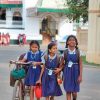
It’s Time To Reopen Primary Schools in India
“The government should open schools, even if it’s for an hour, to facilitate some student-teacher interaction. Most teachers feel that students should be encouraged to come to school.
Rwandan Farmers Pin Hopes on New Tech to Tackle Food Losses
Rwanda is trying to reduce post-harvest loss by relying on new technologies to increase the amount of food available for consumption and help smallholder farmers confront some challenges caused by the overproduction of staple crops.
We Can Prevent the Bankruptcy of the Sacred – Dare we Try?
The UN High Level Political Forum (HLPF) came to a conclusion on July 15th. Another HLPF, another series of declaration, and commitments and concerns articulated by governments.
Shortages Reveal Low Priority of Women’s Health in Nepal
One year after Nepal’s Ministry of Health (MoH) appealed to international organisations in the country to urgently supply a drug used to stop excessive bleeding after childbirth, a UN agency has delivered $1 million worth of contraceptives to prevent another shortage.
Vaccines Delayed are Vaccines Denied
“Vaccine equity is the challenge of our time,” Tedros Adhanom Ghebreyesus, Director-General of the World Health Organization (WHO), told the gathering in opening remarks. “And we are failing”at a special ministerial meeting of the Economic and Social Council.
Myanmar Struggles in the Grip of Coup and Covid
The third wave of Covid-19 is sweeping through Myanmar, from the high narrow buildings of the commercial capital Yangon to bamboo houses in rural areas.
Conceptual Advances for United Nations 2.0
The UN Secretary-General’s forthcoming “Our Common Agenda” report, to be released before this year’s UN General Assembly High-Level Week, is expected to offer ambitious recommendations to accelerate the realization of the UN75 Declaration as the world comes to grips with the COVID-19 pandemic.
European Duplicity Undermines Anti-Pandemic Efforts
Despite facing the world’s worst pandemic of the last century, rich countries in the World Trade Organization (WTO) have blocked efforts to enable more affordable access to the means to fight the pandemic.
El Salvador’s Bitcoin Mining Proposal Faces Many Hurdles
That a country like El Salvador, poor and with many social needs, would embark on an effort to attract so-called bitcoin mining, which demands a huge amount of energy and does not generate large numbers of jobs, is an extravagance that many find hard to digest.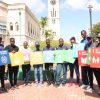
Cleantech Entrepreneurs Driving a Green Recovery in Barbados
Prior to the COVID-19 pandemic, the Eastern Caribbean island nation, famed for its beautiful landscapes, pristine white-sand beaches and temperate climate, attracted around a million tourists each year.
The Future of Food is in Our Hands
With its political and economic clout, the G20 should lead in delivering sustainable food systems as the world grapples with rising hunger, malnutrition and inequality.
Striving for Sustainability in Global Food Systems
As the global community gears up for the 2021 UN Food Systems Summit in September, it is significant that preparations are also underway by Global Reporting Initiative to deliver a new sector reporting standard for agriculture, aquaculture, and fishing.
Fighting COVID-19, But Thinking About the Post-COVID-19 World
Europe, the United States and other countries have made important progress in reducing the dramatic impact of COVID-19 in key sectors of the economy and population. However, in some parts of Africa, Latin America, Asia and the Middle East, the devastating effects of the pandemic continue to severely affect these sectors. One sector in particular, the food and agriculture sector, has been deeply impacted.
At the UN, Climate Change & Security Must Be Tackled Together
Could the next wars be triggered by climate change? Until recently, the question might have seemed like science fiction, but now it is very real. Ethiopia and Egypt are locked in an upward spiral of tensions over the Nile, as a combination of dams and shifting weather patterns pose existential risks to both countries.
Papua New Guinea Battles COVID-19 and Health Workers’ Vaccine Scepticism
Papua New Guinea (PNG), like many other Pacific Island countries, successfully held COVID-19 at bay last year, aided by early shutting of national borders. However, by March this year, the pandemic was surging in the most populous Pacific Island nation, and by July, it had reported 17,282 cases of the virus and 175 fatalities.
“If Only the Fighting Would Stop “ A Sudanese Woman’s Wish
With her bare hands, Roda clears debris and forages scraps from her wrecked teashop after attackers scorched Gumuruk, a town in the Greater Jonglei region where conflict frequently disrupts daily life and stifles progress.
Rich Country Hypocrisy Exposed by Vaccine Inequities
‘No one is protected from the global pandemic until everyone is’ has become a popular mantra. But vaccine apartheid worldwide, due to rich countries’ policies, has made COVID-19 a developing country pandemic, delaying its end and global economic recovery.
Pacific Islands Making the Move to Electronic Data Collection
Between 2010 and 2020, many Pacific Islands and Territories have updated their traditional data collection processes, embracing new technologies. The island nations Kiribati and Vanuatu, among others, successfully switched to computer-assisted personal interviewing (CAPI), a new data management system and a survey monitoring dashboard. The innovations implemented with support from the Pacific Community helped to weather the impact of the pandemic on census activities and to become fit for the purpose of tracking the Sustainable Development Goals (SDGs).
Combating COVID-19 and Ensuring No One is Left Behind
If the world wants to beat back the COVID-19 pandemic and ensure no one is left behind in the recovery, two issues thrown into sharp relief by the pandemic need attention: digitalization and regional cooperation.« Previous Page — Next Page »





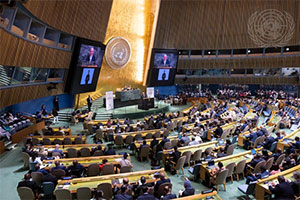 2026 High-level Political Forum on Sustainable Development. Credit: UN Photo/Eskinder Debebe
In 2015, the United Nations and its Member States adopted the Sustainable Development Goals (SDGs) in an effort to make the world a more sustainable and peaceful place for future generations. Progress on the 17 SDGs has been uneven, and inequality persists across the globe. 10 years after adoption, the 2025 UN SDGs Report revealed that only 35% of the SDG targets are on track, with more than half moving too slowly, and 18% moving backwards from the 2015 baseline. Poverty remains one of the world’s most pressing issues, with hunger, violence, and inequality impeding the opportunities for all people to achieve success. In September 2024, the United Nations Summit of the Future introduced a new goal: to eradicate global poverty by 2030, ensure universal rights to basic services, and increase the overall standard of living in terms of industrialization, economic well-being, citizen health, and literacy. Furthermore, recent shifts in United States foreign aid policy – notably, major budget cuts to USAID and the termination of thousands of development programmes– have severely threatened vital lifelines of financial aid to impoverished communities around the world. Additionally, the United States’ withdrawal from the Paris Climate Agreement has undercut international efforts at sustainable development. With the upcoming 2030 deadline, the UN Secretary-General has called for urgent multilateralism across six priority areas: food systems, energy, digital connectivity, education, jobs and social protection, and climate and biodiversity. IPS sheds light on marginalized communities that struggle on a daily basis to survive and have their stories heard and respected.
Updated by Yilan Batista and Shuli Wong August 2026

The Week with IPS

NEXT STOP - SDGs
Tracking global progress towards a sustainable world
Tracking global progress towards a sustainable world
